Personalized Medical Care & Dedicated International Patient Concierge


Medical Guide
Encore Under-Eye Fat Repositioning: A Patient Guide
What Encore under-eye fat repositioning is, how the transconjunctival laser approach works, who it suits, and what recovery looks like week by week.
Schedule a ConsultationWhat Is Encore Under-Eye Fat Repositioning?

Medically reviewed by Dr. Joong-Ha Ryu, Director and Medical Advisor, Surgeon, MD, PhD
Encore under eye fat repositioning is a surgical procedure that moves protruding fat beneath the eyes into the hollow areas just below it, creating a smoother transition between the lower eyelid and the cheek. It is performed through the inner surface of the lower eyelid rather than through an external skin incision, an approach surgeons call transconjunctival. At Youth&Young Clinic Cheongdam in Seoul, the procedure takes approximately 30 to 60 minutes and is performed under local anesthesia. This guide explains what the operation does, how the access route works, who it suits, and what the months after it realistically look like.
The Idea Behind Repositioning Rather Than Removing
Under-eye bags are usually not a skin problem. They are a fat problem, or more precisely a problem of where fat sits relative to the bone beneath it.
Three fat compartments sit behind the lower eyelid, described in StatPearls as lateral, central, and medial, held back by a thin sheet of tissue called the orbital septum. When that septum loses integrity, the fat behind it pushes forward. The result is the bulge people recognize as a bag.
Immediately below that bulge, in many faces, is a groove. StatPearls describes the aging periorbital region as a combination of soft-tissue deflation and descent, limited by fixed retaining ligaments, and notes that patients typically read the resulting concavity as under-eye darkness rather than as a depression. So the same face often has two opposite problems within a centimeter of each other: too much projection above, too little below.
That geometry is the whole argument for repositioning. Taking the fat out addresses the bulge but leaves the groove, and if too much is removed the groove deepens. Moving the fat downward uses the excess to fill the deficit. The transition flattens because the volume has been redistributed, not discarded.
Why the Incision Goes Inside the Eyelid
The transconjunctival approach reaches the fat compartments through the conjunctiva, the moist inner lining of the lower lid, instead of through the skin below the lashes.
The practical consequence is that there is no external skin incision line. For patients whose main concern is fat protrusion rather than loose skin, this is the route that matches the problem: the surgery is happening behind the skin, so the skin does not need to be opened.
It is worth being precise about what this does and does not buy you. Avoiding an external incision avoids an external scar. It does not remove the surgical risks that come with operating on an eyelid, and Youth&Young Clinic Cheongdam states this plainly in its own procedure description. Swelling, bruising, dry eyes, irritation, bleeding, infection, asymmetry, persistent contour irregularities, and the possible need for revision surgery remain on the list. Less common but more serious complications include eyelid malposition and vision changes.
The American Society of Plastic Surgeons sets out a wider list of what eyelid surgery as a category can address, covering upper-lid skin heavy enough to fold or interfere with vision, eyelid puffiness from fatty deposits, under-eye bags, a lower lid that has dropped far enough to show white beneath the iris, and lower-lid skin that has loosened and finely wrinkled. Encore addresses one item on that list well. It does not address all of them, which is why the candidacy section below matters more than the technique section.
Where the CO₂ Laser Fits In
A CO₂ laser is used for access during the procedure. Youth&Young Clinic Cheongdam works with UltraPulse Alpha equipment, the fourth generation of the UltraPulse platform the clinic has used in practice.
Two things are worth separating here. The laser is a tool for making the access and working in tissue; it is not a separate treatment layered on top, and it is not what produces the contour change. The contour change comes from moving fat. StatPearls notes separately that CO₂ or Erbium YAG laser resurfacing can be used to treat lower eyelid skin laxity, but describes that as typically reserved for milder cases and notes that CO₂ resurfacing suits a limited range of skin types. That is a different procedure with different indications, and conflating the two is a common source of confusion when patients research laser eyelid work.
Dr. Joong-Ha Ryu, the clinic's Director and Medical Advisor, has more than 30 years of clinical experience in laser-assisted lower eyelid fat repositioning and CO₂ laser resurfacing, and has worked across four generations of the UltraPulse system. He trained in 1990 under Dr. David Laurence, a cosmetic laser surgeon and founder of the International Society for Cosmetic Laser Surgeons, holds ISCLS full membership dating from 1995, and holds a Lumenis Global Key Doctor designation — a designation from the device manufacturer. He presented lower eyelid transconjunctival laser fat repositioning at ISCLS workshops held in Seoul and Busan in 1994.
Who the Procedure Suits
The clinic describes suitable candidates as adults with prominent lower eyelid fat, under-eye bags, and hollowness who want a smoother contour without an external skin incision. The technique may be especially appropriate when the main concern is fat protrusion and there is little excess skin to remove.
That last clause does most of the work. A patient whose problem is a bulge with a groove under it is the patient the operation was designed around. A patient whose problem is loose, crepey skin is not, because repositioning fat does nothing about skin that has lost its elasticity.
The clinic also lists situations calling for further assessment or an alternative approach:
- Significant excess lower eyelid skin, which may need a different or additional technique
- Certain eye conditions
- Severe dry eye
- Impaired healing
- Uncontrolled medical conditions
- Eyelid laxity
These are described as considerations for surgical evaluation, not automatic exclusions. The American Society of Plastic Surgeons frames eyelid-surgery candidacy in similar terms, listing healthy individuals with no medical conditions that can impair healing, nonsmokers, people with realistic goals, and people without serious eye conditions, and noting that a drooping upper lid can also stem from forehead and brow relaxation or from stretching of the eyelid muscle — the latter being eyelid ptosis, which requires a different surgical treatment. The distinction matters: dry eye, for instance, is something a surgeon assesses and factors into planning rather than a closed door. StatPearls identifies dry eye as a common complication after lower eyelid surgery because eye closure and blinking are transiently impaired, and describes the Schirmer test as a way to quantify baseline dryness before surgery — which is precisely why a history of frequent tearing, grittiness, or ocular discomfort belongs in the consultation.
Eyelid laxity appears on the list for a related reason. StatPearls sets out two bedside measures for it. In the first, the lid is drawn away from the globe and let go; needing a blink before it reseats points to tendon or lid laxity. In the second, a lid that can be drawn further than 5 mm off the globe is reported as lax. A lax lid behaves differently after surgery than a taut one, so this is measured rather than estimated.
What the Consultation Covers
Youth&Young Clinic Cheongdam describes its assessment as starting with fat protrusion, hollowness, and skin condition, followed by an individually planned approach. A complete assessment also reviews eye health, medical history, medications, allergies, previous procedures, eyelid position, and expectations.
StatPearls adds detail on why the medication review is not a formality. Bleeding tendency is documented and optimized before surgery where possible, specifically to reduce the risk of retrobulbar hemorrhage and the vision loss that can follow it. Blood-thinning medication decisions belong to the prescribing clinician, never to the patient alone — a point the clinic also makes in its own pre-procedure guidance, which instructs patients not to stop prescribed medication without medical approval.
The Procedure, Step by Step
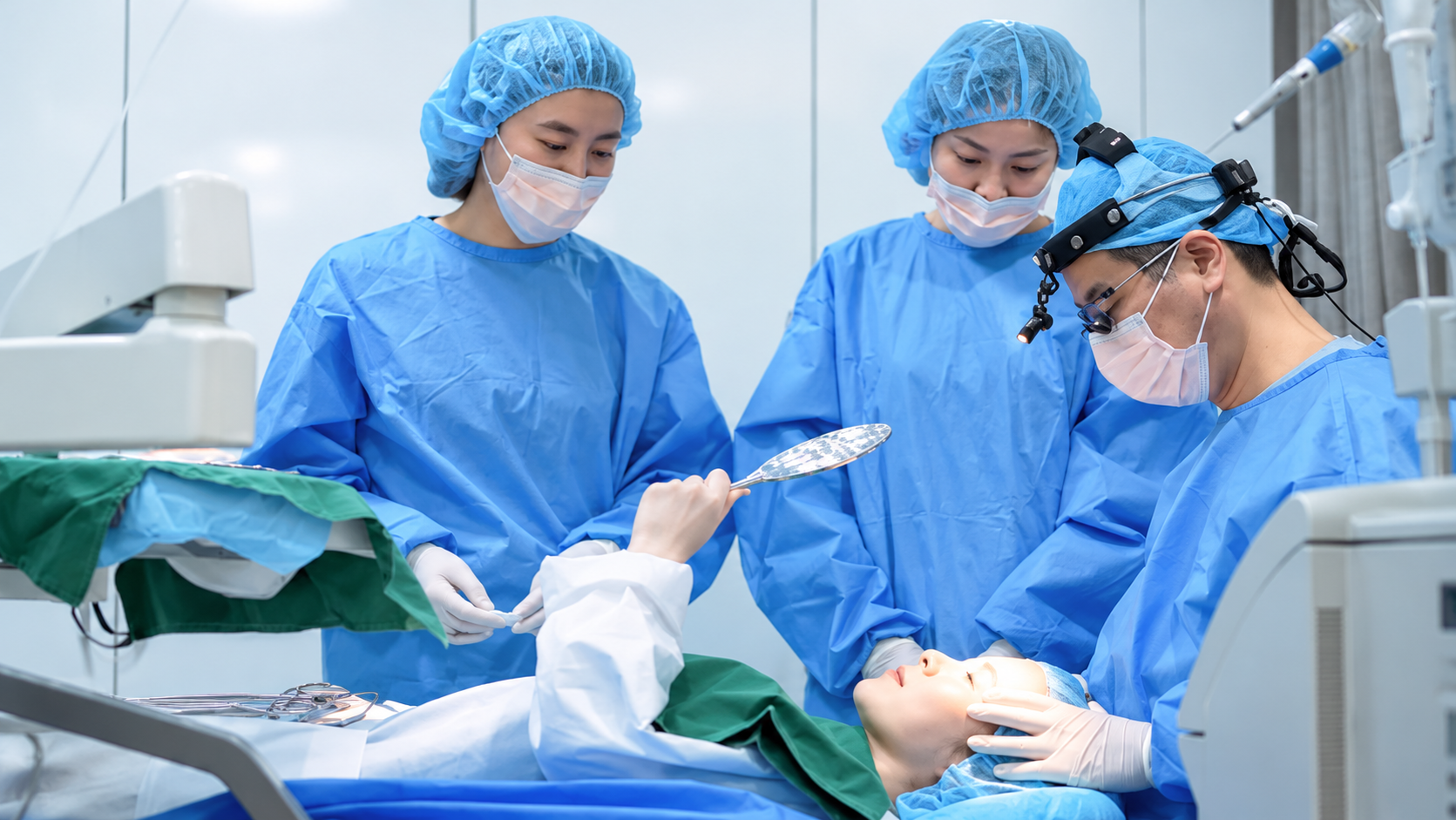
The clinic sets out the sequence as follows:
- The surgeon evaluates under-eye fat, hollowness, and skin condition.
- The repositioning plan is customized to the individual.
- The surgeon accesses the lower eyelid through its inner conjunctival surface.
- A CO₂ laser is used for access.
- Protruding fat is repositioned into hollow areas.
- The patient receives postoperative instructions and follow-up care.
The exact surgical method depends on the individual case. Anesthesia is local. The procedure takes approximately 30 to 60 minutes. A resident anesthesiologist is present at surgery; Dr. Young-yeon Hwang, a board-certified specialist in anesthesiology and pain medicine, has been with the clinic since 2018.
The procedure uses absorbable sutures, so there is no stitch-removal appointment. For a patient who has traveled to Seoul, that single detail changes the shape of the trip. Settle scheduling questions of this kind before booking flights; the clinic's consultation and booking channel handles them in English.
Recovery, in Realistic Intervals
The clinic gives the following timeline:
- First few days. Swelling, bruising, and irritation may occur.
- Around 1 to 2 weeks. Many patients feel comfortable returning to routine activities, depending on how recovery is going.
- Several weeks to a few months. Residual swelling may continue to settle.
For results specifically, initial improvement may be noticeable within 1 to 2 weeks, with the outcome becoming clearer over 3 to 4 months as swelling resolves. That three-to-four-month figure is the one to hold onto. The face in the mirror at week two is not the result.
Aftercare follows the clinic's eye-care and medication instructions. Cold compresses and lubricating products may be recommended. Strenuous activity is avoided for the period the surgeon advises, the eye area is protected from sunlight, and scheduled follow-ups are attended. The American Society of Plastic Surgeons similarly describes early healing after eyelid surgery as involving swelling, bruising, irritation, dry eyes, and discomfort managed with medication, cold compresses, and ointment, and advises diligent sun protection with darkly tinted sunglasses until healing is complete.
Some symptoms require immediate attention rather than patience. Sudden vision changes, severe eye pain, or rapidly worsening swelling mean urgent medical care, not a wait-and-see approach.
What Encore Does Not Fix
This is the section most worth reading twice.
The clinic states that the procedure may not resolve dark circles caused by pigmentation, thin skin, or visible blood vessels. Under-eye darkness has several independent causes, and only one of them — shadowing from the bulge-and-groove contour — is a fat problem. Pigment is not. Visible vessels under thin skin are not. StatPearls notes that lower eyelid skin measures less than 1 mm thick and has no subcutaneous fat layer, which is why what lies beneath it shows through so readily.
A patient whose darkness is mostly pigment can have a technically excellent repositioning result and still see darkness afterward. Establishing which cause dominates is part of the consultation, and it is the reason the clinic assesses skin condition alongside fat and hollowness rather than looking at contour alone. The clinic's published treatment photographs give a sense of what the contour change looks like once settled, with the obvious caveat that no two faces start from the same anatomy.
Results also depend on anatomy and healing, and the procedure does not stop the face from aging.
The Bottom Line
- Encore under-eye fat repositioning moves protruding lower-eyelid fat into the hollow beneath it rather than removing it, addressing the bulge and the groove together.
- Access is through the inner surface of the lower eyelid, so there is no external skin incision — but the surgical risks of eyelid surgery still apply.
- It takes approximately 30 to 60 minutes under local anesthesia, with a resident anesthesiologist present and absorbable sutures that need no removal visit.
- Best suited to prominent fat with little excess skin; significant loose skin, severe dry eye, or eyelid laxity call for further assessment or a different approach.
- Initial improvement appears within 1 to 2 weeks; the result becomes clear over 3 to 4 months. Dark circles from pigment, thin skin, or visible vessels are a separate problem the procedure may not resolve.
Frequently Asked Questions

Is Encore the same operation as lower blepharoplasty?
They overlap but are not identical. Lower blepharoplasty is the broader category and may involve removing or repositioning fat, removing excess skin, or adjusting eyelid support, with incisions placed either below the lashes or inside the eyelid. Encore is specifically the transconjunctival fat-repositioning version, which works through the inner eyelid surface and does not remove skin.
Why would a surgeon reposition fat instead of removing it?
Because removal treats only half the problem in many faces. The clinic notes that fat removal may reduce prominent bags but can leave hollowness if too much fat is taken, whereas repositioning moves existing fat into nearby depressed areas. Which is appropriate depends on how much hollowness sits below the bulge.
Does avoiding a skin incision mean there is no scar at all?
There is no external skin incision line, which is the specific claim the clinic makes. The conjunctival surface inside the lid is still incised and heals internally. Avoiding an external incision does not eliminate the other surgical risks, including asymmetry, contour irregularity, or the need for revision.
Will I need to come back to have stitches taken out?
Not for this procedure. Encore uses absorbable sutures, so no stitch-removal appointment is scheduled. Follow-up is still arranged, and the clinic advises international patients to confirm the recommended schedule directly.
How soon will I look like myself again?
Many patients feel comfortable returning to routine activities around 1 to 2 weeks, though this varies. Visible swelling and bruising are expected in the first few days, and residual swelling can persist for several weeks to a few months before the contour settles.
Can this procedure treat my dark circles?
Only if the darkness comes from contour shadowing. Darkness caused by pigmentation, thin skin, or visible blood vessels is a different problem, and the clinic states that the procedure may not resolve those. A consultation that assesses skin condition as well as fat and hollowness is how the dominant cause is identified.
Who should think twice before having this done?
Anyone with significant excess lower eyelid skin, certain eye conditions, severe dry eye, impaired healing, uncontrolled medical conditions, or eyelid laxity. The clinic frames these as considerations requiring further assessment rather than automatic exclusions, so the answer comes from an examination rather than from a checklist.
This article is for general informational purposes and does not constitute individualized medical advice. Surgical candidacy, technique, and expected outcomes can only be determined through a consultation with a qualified physician. It is not a self-diagnosis tool.
More Articles
Continue reading our clinical guides.

Under-Eye Bags After 40, 50, and 60: Candidacy by Decade
How age changes what causes under-eye bags and which technique fits: fat protrusion in the forties, skin and tendon laxity later, and what that means for you.
Learn More

Encore Under-Eye Fat Repositioning: A Patient Guide
What Encore under-eye fat repositioning is, how the transconjunctival laser approach works, who it suits, and what recovery looks like week by week.
Learn More

Dissolvable Stitches After Under-Eye Surgery and Flying Home
Encore under-eye fat repositioning uses absorbable sutures, so no stitch-removal visit is scheduled. What that changes about trip length and the flight home.
Learn More