Personalized Medical Care & Dedicated International Patient Concierge


Eyelid & Under-Eye Surgery · Consultation Required
Double Eyelid Surgery
Double eyelid surgery is a cosmetic surgical procedure that creates or defines a crease in the upper eyelid.
Schedule a ConsultationDouble Eyelid Surgery in Seoul

Medically reviewed by Dr. Joong-Ha Ryu, MD, PhD.
Youth&Young Clinic Cheongdam, Gangnam-gu, Seoul
Double eyelid surgery Korea enquiries are really questions about a line: where the upper eyelid should fold, how high, and whether the two sides will match. Eyelid crease surgery Seoul clinics perform creates or defines that fold, using either a suture technique or an incision-based one depending on the eyelid in front of the surgeon. This Asian eyelid surgery is offered at Youth&Young Clinic Cheongdam under Eyelid & Under-Eye Surgery.
What Is Double Eyelid Surgery?
Double eyelid surgery is a cosmetic surgical procedure that creates or defines a crease in the upper eyelid.
The technique is chosen for the eyelid: skin thickness, how much excess skin or fat is present, and the appearance being aimed at all bear on it.
A non-incisional suture method and an incision-based method are both in use, and they behave differently over time.
The aim is the planned crease, weighed against natural appearance, symmetry and eyelid function.
The operation takes approximately 30 minutes to two hours.
Local anesthesia is used.
What this surgery can do is create or define an upper-eyelid crease, change its shape or height, and improve the appearance of crease symmetry. What cannot be promised is perfect symmetry, a particular appearance copied from a photograph, or a guaranteed result. Eyelids are not symmetrical to begin with, they heal at slightly different rates, and the honest version of this conversation says so at the start.
Who Performs Double Eyelid Surgery at Youth&Young Clinic Cheongdam
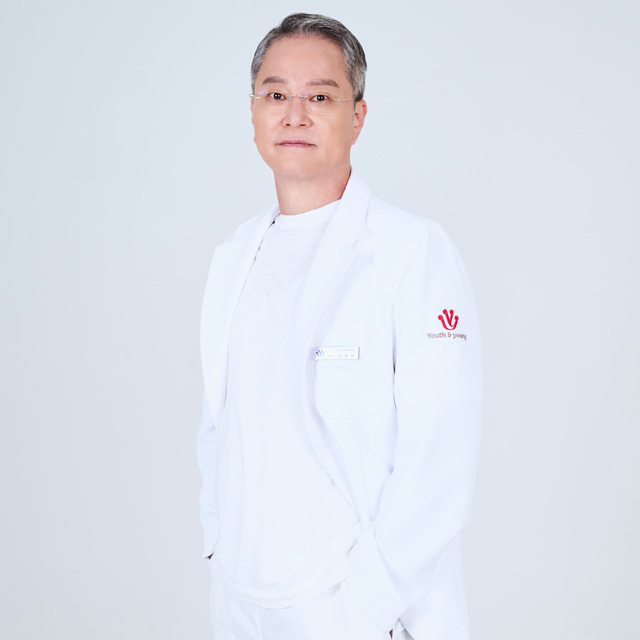
Dr. Joong-Ha Ryu, MD, PhD
Plastic Surgeon
Dr. Joong-Ha Ryu leads this service.
Dr. Ryu holds MD and PhD degrees and is the clinic’s Director and Medical Advisor. His more than thirty years of practice have been built on laser cosmetic surgery and on eyelid work, with laser-assisted lower-eyelid fat repositioning and CO₂ laser resurfacing as his named subspecialties. He also founded and leads Youth&Young Academy, the clinic’s training programme for physicians, which covers patient selection, surgical design, anesthesia and recovery management, and complication handling. Surgical design is the part of that list this operation lives or dies by.
This page does not claim one doctor performs every session.
Double Eyelid Surgery Options / Types Available
The clinic sets out four positions, and the fourth is a real one.
Method | How it works | What to weigh |
|---|---|---|
Suture | No long external incision; sutures are placed to form the crease | May suit selected patients with appropriate eyelid anatomy, but the crease may loosen over time |
Partial incision | A shorter incision allows some tissue adjustment while limiting incision length | A middle position between the other two |
Full incision | Broader access to the eyelid tissues | May be appropriate where excess skin or fat needs adjusting; involves an incision and a scar-healing period |
No surgery | Keeping the eyelid you have | A valid option, and one a good surgeon will put on the table |
National guidance describing upper-eyelid surgery notes that the cut is made along the eyelid crease, and that most people having eyelid surgery go home the same day (NHS). Which of the first three methods applies to you is a surgical judgement based on your anatomy, and it should be discussed with a qualified surgeon rather than selected from a menu.
Who Is a Good Candidate for Double Eyelid Surgery?
Adults seeking a change in upper-eyelid crease definition, with realistic expectations about what a crease will and will not change about a face.
People with suitable eyelid anatomy and good overall health.
People whose skin thickness, excess skin or fat, eyelid muscle function and eye health have been examined, since candidacy depends on all four.
People who have a clear idea of the crease they want and can describe it, which is what makes the design conversation possible.
Treatment or further assessment may be needed first where there is:
An uncontrolled medical condition.
An active eye or eyelid infection.
Untreated significant dry eye.
Any other condition that could raise the surgical risk.
Two non-medical reasons also appear on the clinic's list: expectations that cannot be met, and an inability to follow the aftercare. Both are legitimate grounds for a surgeon to decline, and suitability is determined individually in every case.
What to Expect: Procedure, Recovery, and Results Timeline
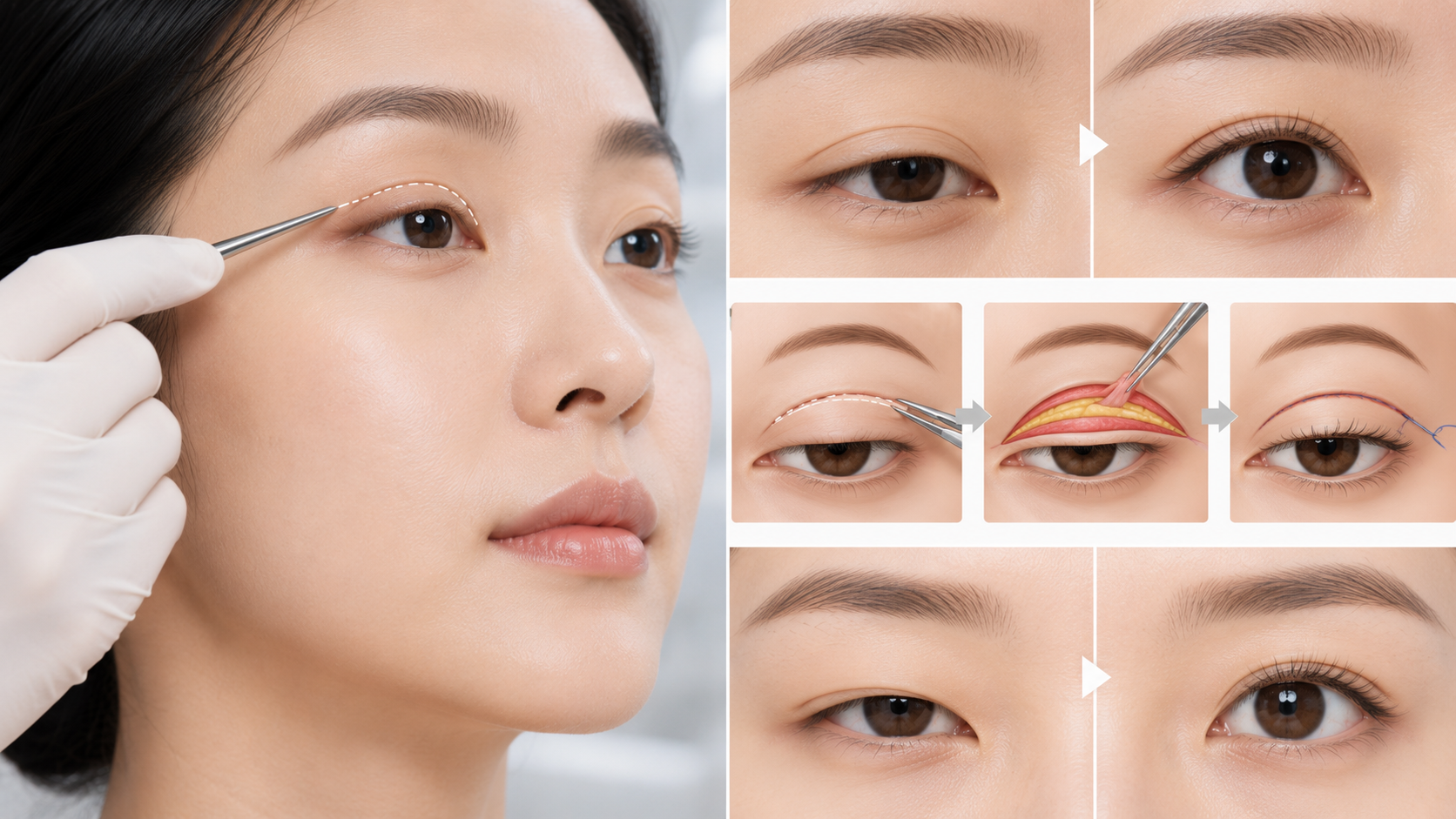
The consultation is unusually specific for an aesthetic procedure, because the output is a measurement. You discuss the crease you want — its shape, its height, how symmetrical it should look, and what outcome you are picturing. Medical and eye history, medications, allergies, previous eye surgery and contact lens use are reviewed. The examination covers eyelid skin, fat distribution, how a crease currently forms and how the eyelid moves, with dry eye and other eye concerns assessed where indicated. Technique options, risks, recovery and costs are explained before consent is taken.
Preparation follows the surgeon's instructions on medications, smoking, fasting and skincare. Do not stop a prescribed medicine on your own, particularly a blood thinner, without guidance from the prescribing clinician and the surgical team. Report any new illness, eye infection, skin irritation near the surgical area, or change in your health before the day. Arrange transport home if sedation or anything else would make driving unsafe.
Stage | What typically happens |
|---|---|
Marking | The planned crease is marked while eyelid shape and symmetry are assessed |
In the operating room | The area is cleaned and anesthetised; sutures are placed to form a crease, or an incision is made to create it and adjust tissue where appropriate |
Closing | The surgeon checks the crease and closes any incisions, then gives postoperative instructions and follow-up arrangements |
Around 1–2 weeks | Initial recovery, and the point at which the result starts to be visible |
Weeks to months | The crease settles as swelling subsides; final results may take several months to stabilise |
Pain is modest but not absent. There may be a brief sting as the anesthetic goes in, then pressure or pulling sensations during the operation. Afterwards, mild pain, tightness, swelling and bruising can occur, and how much depends on the technique and on you.
Aftercare has more restrictions than most eyelid procedures. Follow the clinic's wound-care and medication instructions, use cold compresses only as directed, keep the head elevated if advised, and avoid rubbing or putting any pressure on the eyes. Eye make-up, contact lenses, swimming and strenuous activity all wait until the surgeon confirms they are safe. Attend the scheduled follow-ups. Sudden or worsening vision changes, severe or increasing pain, or rapidly increasing swelling need urgent medical assessment.
Longevity depends on the technique used, on skin elasticity, on aging and on individual anatomy. The suture method in particular carries the possibility that the crease loosens, which is the main reason the choice of method is a long-term decision rather than a recovery-length one.
The stay in Korea for this operation is longer than for most of the clinic's eyelid work: plan for approximately fourteen to sixteen days, with the flight home around the same point. That is a fortnight in Seoul, and it should be budgeted in holiday time and accommodation before anything is booked. Incheon International Airport is the gateway, and the nonstop return runs roughly eleven to thirteen hours to the West Coast and fourteen to sixteen hours to the East Coast.
Safety, Precision, and Clinic Standards
Expected temporary effects can include swelling, bruising, tenderness, and tightness. Other risks include infection, bleeding, scarring, asymmetry, an unsatisfactory or disappearing crease, visible or irritating sutures, dry eyes, and difficulty fully closing the eyes. Vision changes and serious bleeding around the eye are uncommon but potentially urgent complications. The risk profile varies by technique, which is one more reason to know which technique is planned for you.
Temporary numbness, irritation, watery eyes and dryness are also ordinary in the weeks after eyelid surgery, and some patients notice temporary blurred vision — including blurring caused simply by the ointment applied afterwards. Knowing that in advance saves an alarming morning.
The clinic holds Korean business registration number 720-46-00344. It is a Registered Medical Institution for Attracting Foreign Patients under the Ministry of Health and Welfare, in compliance with the Medical Overseas Expansion and Foreign Patients Attraction Act. That is a registration for treating international patients; it is not a facility accreditation.
An unsatisfactory crease is a named risk, not a rumour
Among the listed complications is one that is specific to this operation: a crease that is unsatisfactory, or that disappears. It belongs in the open rather than in small print, because it changes how the method decision should be made. A suture technique avoids a long incision and accepts that the crease may loosen; an incision-based technique accepts a scar-healing period in exchange for a more structural result. Neither is the better operation in the abstract. Ask directly what happens if the crease does not hold, and what a revision would involve, before you choose.
Designing the line
The height and shape of a crease are decisions, and they are taken by two people. The clinic's consultation process explicitly includes the desired crease shape, height, symmetry and expected outcome. Arrive able to describe what you want in your own words, and ask to see the marking before anything else happens. Where the design has been discussed properly, the result is judged against the plan; where it has not, it is judged against whatever the patient had privately imagined, and those two standards are rarely the same.
What to establish before you commit
Hold to the baseline that national guidance describes for cosmetic procedures: an account of what the operation involves, of what will be used, and of what can go wrong, followed by the interval you are owed before you say yes to any of it (NHS). For patients travelling from the United States the clinic records a further set of standing concerns: the surgeon's procedure-specific experience, anesthesia and safety arrangements, a clear written estimate without unexpected charges, realistic before-and-after material with no guaranteed-outcome claims, consent explained in English, and careful handling of clinical photographs and personal information.
Privacy deserves particular attention for this operation. Eyelid before-and-after images show the whole face in a way that under-eye close-ups do not, so settle how yours will be stored and whether they may be used, in writing, before the first set is taken.
The fortnight after, and the months after that
Treatment in another country comes with a specific warning attached to aftercare: it may not be given at all, it may be given at a different standard, and nobody at home has to take the case on. Fix the complication plan, the place the checks happen and the cost of them beforehand (NHS).
The clinic says it provides English aftercare instructions, clear downtime expectations, travel and sun-exposure guidance, potential remote follow-up after you return, and a defined route for international patients who need advice after leaving Korea. Since the final crease takes months to stabilise and you will be home long before then, that remote route is not a fallback here — it is the main channel through which the rest of your recovery is reviewed. Ask how it works before you fly.
The Bottom Line
Double eyelid surgery creates or defines an upper-eyelid crease and may change its shape, its height or the appearance of symmetry.
A suture method, a partial incision and a full incision are all available, and the right one depends on eyelid anatomy rather than preference.
The operation runs about 30 minutes to two hours under local anesthesia, with initial recovery around one to two weeks.
An unsatisfactory or disappearing crease is a listed risk, and the suture method in particular can loosen over time.
The recommended stay in Korea is approximately 14 to 16 days, longer than for the clinic's other eyelid operations.
Frequently Asked Questions
Which method will I have? Whichever your eyelid supports. A suture technique avoids a long external incision but the crease may loosen; a partial incision limits incision length while allowing some tissue adjustment; a full incision gives broader access when excess skin or fat needs adjusting. The surgeon decides with you after examining skin thickness, fat, muscle function and your desired crease.
Can my eyelids be made perfectly symmetrical? No, and a surgeon who promises it is overpromising. The procedure may improve the appearance of crease symmetry, but perfect symmetry, a specific look or a guaranteed result cannot be committed to. Asymmetry also appears on the list of possible complications.
Why is the recommended stay two weeks? Because the clinic's guidance for this operation is approximately fourteen to sixteen days, with the flight home around that point. Initial recovery takes one to two weeks, and the stay is built around being seen during it rather than around when you feel able to board a plane.
Does it hurt? There is usually a brief sting as the anesthetic is injected, followed by pressure or pulling during the procedure itself. Mild pain, tightness, swelling and bruising can follow, varying with the technique used and with the individual.
When can I wear eye make-up and contact lenses again? Only when the surgeon confirms it is safe. Eye make-up, contact lenses, swimming and strenuous activity are all restricted during healing, as is rubbing or pressing on the eyes, and the timing is given to you individually rather than by a general rule.
Will the crease last? That depends on the technique used, on your skin elasticity, on aging and on your anatomy. An unsatisfactory or disappearing crease is a recognised risk, and it is more associated with the suture method than with the incisional ones.
My vision is blurry and I am on ointment — is that normal? Temporary blurred vision can occur after eyelid surgery, including from the ointment applied afterwards. What is not routine is vision that is suddenly or progressively worse, pain that is increasing, or swelling that is rising fast; those need urgent assessment.
Who do I contact once I am back home? Contact the clinic through its contact page, by phone on +82-2-545-9393, or by email at info@youthandyoungcheongdam.com. Keep the written procedure details and medication list with you, since a clinician in the United States will want them before advising you.
Book a Consultation at Youth&Young Clinic Cheongdam
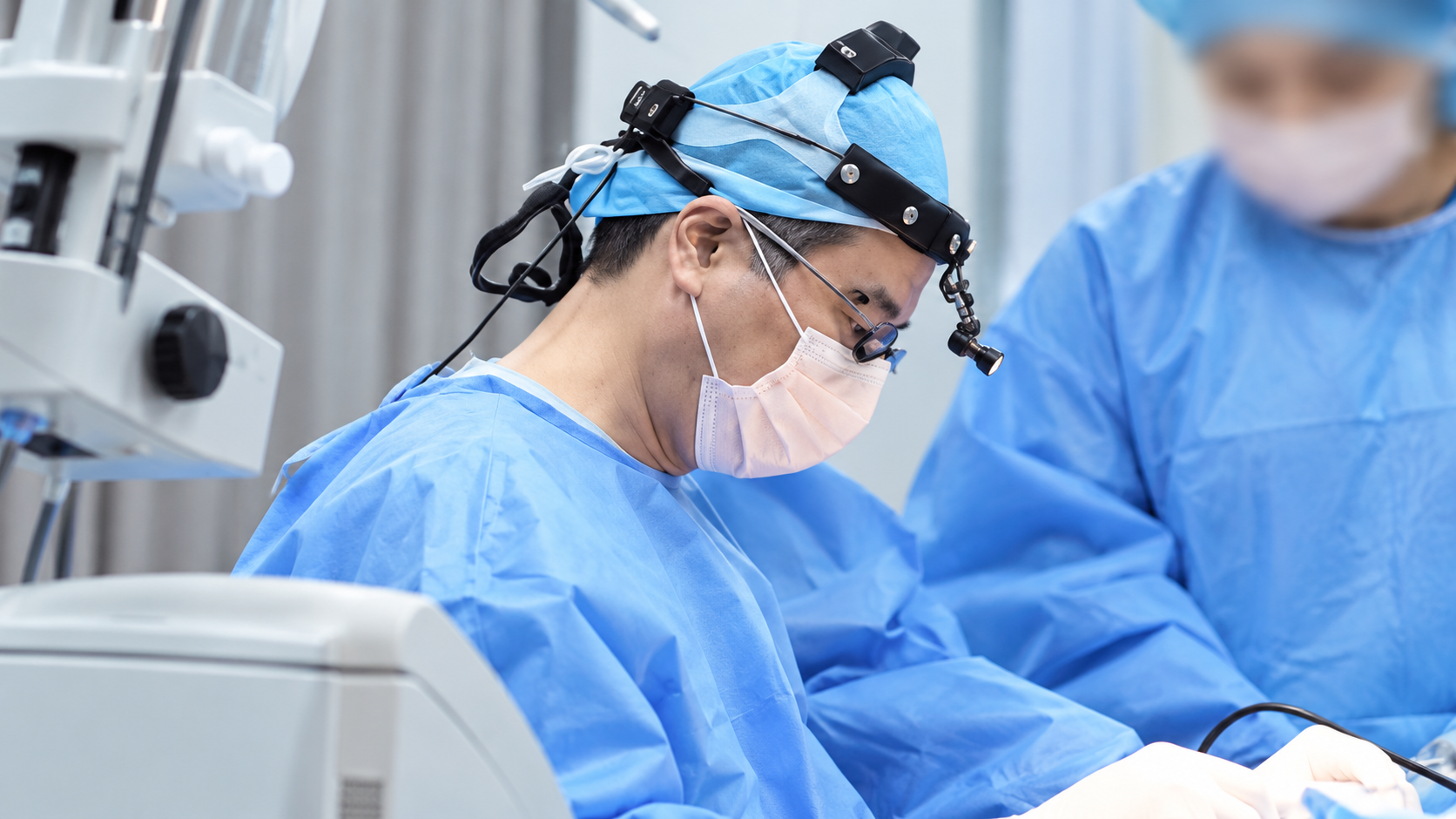
Double eyelid surgery in Seoul begins with a design conversation, and the quality of that conversation predicts the result more reliably than anything else on this page. Consultations are available in English, photographs can be reviewed for an initial assessment before you travel, and the clinic can set out which technique your eyelid anatomy supports and what the fourteen-to-sixteen-day stay would involve. Book through the clinic contact page, or call +82-2-545-9393. The clinic is at 2F, 49 Dosan-daero 55-gil, Gangnam-gu, Seoul 06014, Republic of Korea, and is open Monday, Tuesday, Thursday and Friday from 10:00 to 19:00 KST, and Saturday from 10:00 to 15:00 KST, excluding the second and fourth Saturdays of each month.
Disclaimer
This page is for general informational purposes and does not constitute individualized medical advice. Candidacy, technique, and expected outcomes can only be determined through a consultation with a qualified physician.
Sources & Further Reading
Other Services
Explore additional treatments offered by our specialists.

Sub-Brow Lift
A sub-brow lift is a surgical procedure that removes selected excess skin, and sometimes a limited amount of underlying tissue, from the upper eyelid through an incision just below the eyebrow.
Learn More

Stem Cell Skin Treatment
Stem cell skin treatment is a broad term used for aesthetic procedures marketed to improve skin quality, texture, hydration, or visible signs of aging using cell-based materials or products described as stem-cell-derived.
Learn More
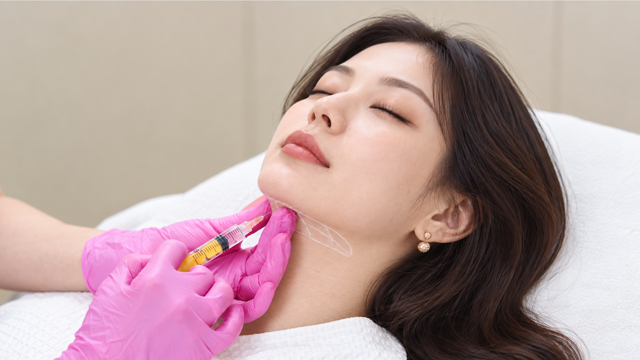
Stellate Ganglion Block
Stellate ganglion block is an injection-based procedure that delivers local anesthetic near the stellate ganglion, a group of sympathetic nerves located in the lower neck, temporarily interrupting certain sympathetic nerve signals.
Learn More