Personalized Medical Care & Dedicated International Patient Concierge


Skin Regeneration & Rejuvenation · Consultation Required
Stem Cell Skin Treatment
Stem cell skin treatment is a broad term used for aesthetic procedures marketed to improve skin quality, texture, hydration, or visible signs of aging using cell-based materials or products described as stem-cell-derived.
Schedule a ConsultationStem Cell Skin Treatment in Seoul

Medically reviewed by Dr. Joong-Ha Ryu, MD, PhD.
Youth&Young Clinic Cheongdam, Gangnam-gu, Seoul
Stem cell skin treatment is a broad term used for aesthetic procedures marketed to improve skin quality, texture, hydration, or visible signs of aging using cell-based materials or products described as stem-cell-derived. The actual procedure may involve different materials and application methods, and evidence, safety and regulatory approval vary considerably by product and technique. At Youth&Young Clinic Cheongdam in Seoul it sits under Skin Regeneration & Rejuvenation.
What Is Stem Cell Skin Treatment?
Stem cell skin treatment is not one procedure. It is a label covering several, united by the description of what is applied rather than by how it is applied or by what it has been shown to do.
The material may be applied topically, delivered with needles, or introduced through microneedling, depending on the product.
Non-invasive topical application may need no anesthesia; needle-based methods may use topical numbing cream.
A session may take approximately 30 to 90 minutes once consultation, preparation, numbing, treatment and immediate aftercare are included — a broad planning estimate rather than a standard duration.
The number of sessions and their spacing depend on the specific protocol and should be confirmed with the clinic.
The clinic's record lists no specific technology or proprietary technique for this treatment, and none is supplied here.
Because the term covers so much, the only useful version of the question "what is it?" is the one asked about a named product in a specific consultation. This page sets out what can honestly be said at the category level, and where the category's limits are.
Where the evidence actually stands
This section exists because the category is marketed well beyond what is established, and a patient reading a clinic page deserves the same framing the field itself uses.
Approval status in the United States is narrow, and the U.S. Food and Drug Administration states it precisely. Products in this field generally require its approval. The approved set consists of blood-forming cells sourced from umbilical cord blood, cleared for conditions affecting how the body produces blood — and, the agency adds, not for anything else. Its alert also records that no exosome product has been approved at all.
The International Society for Stem Cell Research makes the clinical point for patients. Very few of these treatments, its patient guidance says, have been proven safe and effective; the diseases on that proven list are few, and blood stem cell transplantation is the best-defined and most widely used entry among them. Everything else, in the society's words, is yet to be proven in clinical trials and should be considered highly experimental (International Society for Stem Cell Research).
Those statements describe the treatment category internationally. They are not findings about this clinic or about any procedure performed here, and nothing in them should be read as approving or disapproving of a particular treatment. What they establish is the standard a patient is entitled to apply anywhere: ask what is known, ask who established it, and treat "experimental" as a real answer rather than a disclaimer.
The clinic's own documentation is consistent with that caution. For this treatment it records no approved claim and no clinic-specific technique, and it states directly that benefits cannot be guaranteed and that claims of skin regeneration, scar reversal, or long-term rejuvenation require treatment-specific evidence. Those gaps are reported here rather than filled.
Who Performs Stem Cell Skin Treatment at Youth&Young Clinic Cheongdam
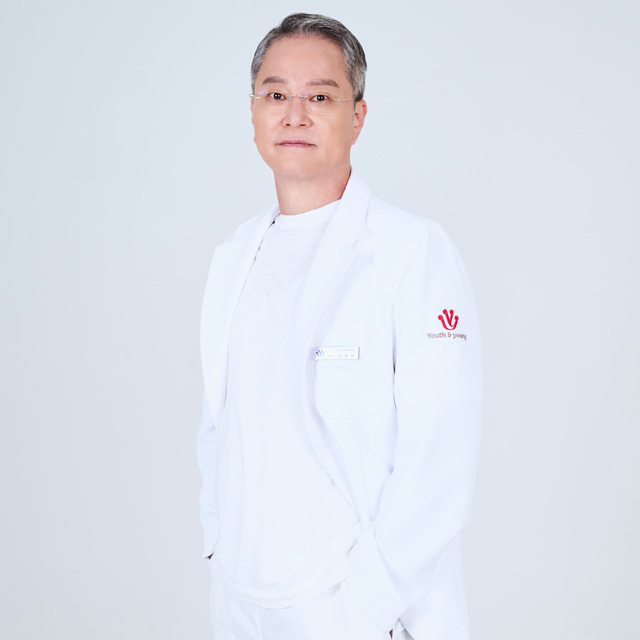
Dr. Joong-Ha Ryu, MD, PhD
Plastic Surgeon
The clinic assigns Dr. Joong-Ha Ryu to this specialty as lead.
Dr. Ryu, Director and Medical Advisor, holds MD and PhD degrees and has worked in laser cosmetic surgery for more than thirty years, with UltraPulse CO₂ equipment in use since 1993.
Dr. Ryu’s documented expertise is not in cell-based aesthetics specifically, and this page does not imply otherwise. What his record supports is the part of this consultation that matters most: a clinician who can assess the skin, say what else would address the concern, and distinguish a product’s marketing from its evidence. This page does not claim one specific doctor personally performs every session of this service. Which clinician you will see, and when, is a fair thing to confirm when the appointment is made.
Who Is a Good Candidate for Stem Cell Skin Treatment?
Adults seeking improvement in skin texture, hydration, fine lines, or visible signs of skin aging, subject to the specific product and a clinical assessment.
People whose medical history and skin condition have been reviewed against the particular treatment method proposed.
People who have understood that benefit is uncertain and have decided on that basis rather than despite it.
Treatment may be unsuitable for:
People with active skin infections or significant inflammation in the treatment area.
People with certain immune or blood-related conditions.
People with relevant allergies or other medical factors that increase risk.
Patients who are pregnant or breastfeeding, and patients on some medications, where postponement or additional assessment may be needed.
What to Expect: Procedure, Recovery, and Results Timeline
The clinic describes a sequence of seven steps. The clinician evaluates your skin concerns, medical history and suitability for the specific treatment. The product type, composition and suitability for the intended cosmetic use are confirmed. The treatment area is cleansed and prepared according to the clinic's protocol. Topical numbing cream may be applied if needles or microneedling are involved. The selected product is applied or delivered using the technique specified for it. The treated area is checked and instructions given for managing temporary redness, swelling or discomfort. Finally you receive guidance on skincare, sun protection and any follow-up appointments.
The second of those steps is the one to pay attention to. Product verification is listed as a distinct stage of the procedure, before anything is applied — which is the right place for it, and a reasonable thing to ask to have explained to you at the time.
Preparation means providing a complete medical and medication history, disclosing allergies and previous aesthetic treatments, and following the clinic's product-specific instructions. The clinician may advise avoiding certain irritating skincare products or temporarily adjusting selected medications where medically appropriate. Do not stop a prescribed medication without medical advice, and disclose any recent illness, infection or skin irritation before treatment.
Stage | What typically happens |
|---|---|
Session | Approximately 30 to 90 minutes including consultation, preparation, numbing, treatment and immediate aftercare |
1 to 3 days | Mild redness, swelling or tenderness usually improves |
1 to 2 weeks | Bruising or irritation may take this long to resolve, particularly after injections or microneedling |
2 to 3 days | Flying may be possible after an uncomplicated, minimally invasive session, if the treating clinician confirms fitness to travel |
Weeks or longer | If improvement occurs it may develop over this period; there is no universal timeline |
Aftercare follows the treating clinician's instructions for cleansing, moisturising, sun protection and resuming active skincare. Depending on the technique, you may need to avoid makeup, strenuous exercise, heat exposure, swimming or other potential irritants for a specified period.
On results, the clinic's own phrasing is worth keeping intact: the timing and duration of any benefit are uncertain and depend on the product, the technique, the skin condition and the available clinical evidence, and temporary improvements in hydration or surface appearance should not be confused with proven tissue regeneration. That last clause is the whole difficulty of this category in one sentence.
For international patients, a stay of approximately two to three days covers consultation, treatment and an initial follow-up if needed, and may need to be longer depending on the method and the clinic's aftercare protocol.
Combining Stem Cell Skin Treatment with Other Treatments
Combining treatments may be considered after individual assessment, but suitability depends on the materials and techniques involved.
Procedures that disrupt the skin barrier or introduce biological products require particular caution regarding infection, inflammation and treatment timing.
Where the concern is texture or scarring at depth, the treatments under Laser Dermatology address it by a different and better-characterised mechanism.
There is no standing combination protocol for this treatment at the clinic, and inventing one for a page would be the opposite of useful.
Safety, Precision, and Clinic Standards
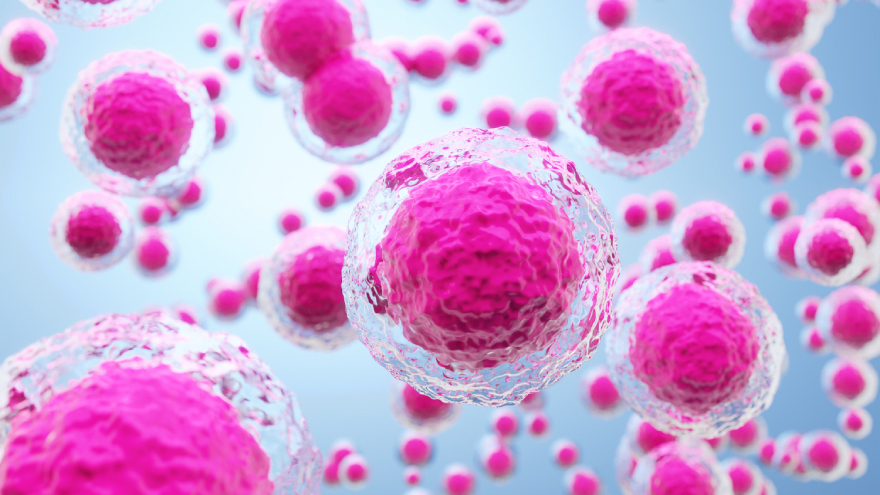
Possible side effects include redness, swelling, bruising, tenderness and irritation. Other risks include infection, pigment changes and scarring. The level of risk varies with the product, how it was processed, and the treatment method — which is another way of saying that the risk profile cannot be stated precisely until the product is named.
The clinic's record does not document a risk-reduction protocol specific to this treatment, and none is described here in its place.
Questions worth asking, anywhere
The International Society for Stem Cell Research publishes guidance aimed at patients considering exactly this kind of treatment, and several of its points convert directly into questions for a consultation.
Does the treatment match the condition? The society's guidance is that different types of stem cells serve different purposes in the body, and advises caution with clinics offering treatments using cells originating from a part of the body unrelated to the condition.
Is "your own cells" being used as a safety claim? The guidance states that cells from your own body are not automatically safe when used in treatments, because the processes by which cells are acquired, grown and reintroduced carry risks of their own.
Is an experimental treatment being presented as a trial? The guidance notes that the fact a procedure is experimental does not automatically mean it is part of a research study, and that responsibly-conducted trials do not charge the participant for the new treatment and its monitoring.
What is standing in for evidence? The guidance warns against clinics using persuasive language, including patient testimonials, instead of science-based evidence.
None of those questions is hostile, and a clinic that answers them straightforwardly has told you something useful about itself.
Travelling for a treatment in this category
Patients from the United States who contact the clinic raise a consistent set of concerns, and several of them bear directly on a treatment whose evidence base is open.
Verifying credentials and evidence. The clinic's record notes that patients prefer verifiable credentials, realistic outcome information and credible clinical evidence, and that they value direct communication without exaggerated promotional claims. For this category, that preference is not a style point — it is the entire basis on which the decision can be made well.
Seeking a second opinion. Patients may consult a specialist at home before travelling, and the clinic's own notes record respect for the patient's right to ask questions, decline treatment, or seek a second opinion as a stated cultural expectation. A treatment described as experimental is exactly the kind to take a second opinion on.
Insurance, and what happens afterwards. Elective cosmetic treatment and its complications are frequently outside what a US policy covers, so the cost of putting something right can land entirely on the patient. Care after the flight home often falls to a local clinician, and what lets them pick it up is paperwork — the procedure record, the medications given, the aftercare plan. Ask for all three in English before you leave.
Consent, in a language you read fluently. Clear English-language explanation of risks, alternatives and limitations is something patients name specifically. For this treatment the alternatives section of that conversation matters more than usual, because better-characterised options exist for most of the concerns patients bring to it.
What the alternatives are
Where the goal is improvement in skin texture, hydration or the look of fine lines, several approaches address it with a clearer evidence trail. The clinic's documentation does not record a comparison specific to this treatment, so what follows is a comparison of categories rather than a recommendation.
Approach | Mechanism | How well characterised it is |
|---|---|---|
Cell-based skin treatment | Varies by product; cell-derived materials applied or delivered to the skin | Evidence, safety and regulatory status vary considerably by product and technique |
Injectable skin-quality treatment | A selected formulation placed in the skin to change hydration or texture | Effects depend on the product; established enough to be discussed product by product |
Resurfacing treatment | Controlled removal and heating of skin to prompt repair and collagen change | Long-standing clinical use, with recovery requirements to match |
A consultation that starts from the concern rather than from the product name will usually move across this table at least once, and that movement is a sign the consultation is working.
The clinic holds Korean business registration number 720-46-00344. It is a Registered Medical Institution for Attracting Foreign Patients under the Ministry of Health and Welfare, in compliance with the Medical Overseas Expansion and Foreign Patients Attraction Act. That is a registration for treating international patients; it is not a facility accreditation.
The Bottom Line
Stem cell skin treatment is a category label, not a single procedure, and the material and method vary by product.
Regulators and the field's own scientific society both describe proven stem cell applications as narrow and the rest as experimental.
The clinic records no approved claim and no proprietary technique for this treatment, and states that benefits cannot be guaranteed.
A session runs roughly 30 to 90 minutes; mild effects settle in one to three days, bruising or irritation in one to two weeks.
Temporary improvement in hydration or surface appearance is not evidence of tissue regeneration, and should not be read as such.
Frequently Asked Questions
Is this treatment proven to work? Not as a category. The field's own scientific society describes applications outside a short established list as highly experimental, and the clinic's documentation records no approved claim for this treatment. Any specific claim about a specific product needs evidence for that product, and asking for it is reasonable.
What will actually be applied to my skin? That depends on the product, and product verification is a listed step of the procedure before anything is applied. Ask what the product is, what it contains, and what it is intended to do, and expect a direct answer.
How long does a session take? Approximately 30 to 90 minutes when consultation, preparation, numbing, treatment and immediate aftercare are counted. The number of sessions and their spacing depend on the protocol and should be confirmed with the clinic.
Is it painful? Discomfort is usually mild to moderate and depends on the technique. Needle-based treatments or microneedling may cause temporary stinging, pressure or tenderness. Non-invasive topical application may need no anesthesia at all.
How long is the recovery? Mild redness, swelling or tenderness usually improves within one to three days. Bruising or irritation may take up to one to two weeks to resolve, particularly after injections or microneedling.
How many days should I plan to be in Korea? Approximately two to three days covers consultation, treatment and an initial follow-up if one is needed. A longer stay may be required depending on the treatment method and the clinic's aftercare protocol.
When can I fly home? After an uncomplicated, minimally invasive session, flying may be possible after two to three days provided your treating clinician confirms you are fit to travel. More invasive procedures, or complications, require a longer stay.
What do I do if something looks wrong after I return? Contact the clinic through its contact page, by phone on +82-2-545-9393, or by email at info@youthandyoungcheongdam.com. If you develop signs of infection or symptoms that are worsening, seek local medical care without waiting for a reply.
Book a Consultation at Youth&Young Clinic Cheongdam
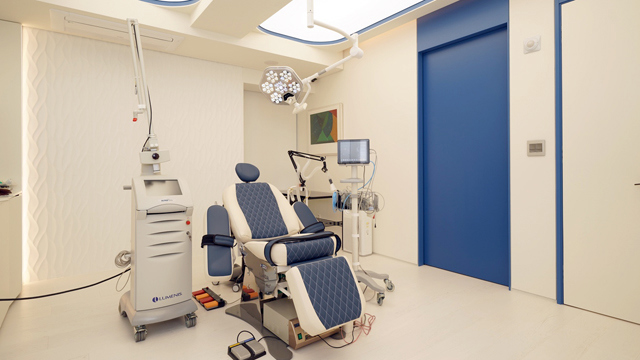
If you are considering this treatment in Seoul, the consultation is where the real decision is made, and the product is what it should be about. Consultations are available in English, and the clinic can explain what is proposed, what it is intended to do, what is known about it and what is not, and what the alternatives would be. A decision taken with the uncertainty on the table is a better decision than one taken without it. Book through the clinic contact page, or call +82-2-545-9393. The clinic is at 2F, 49 Dosan-daero 55-gil, Gangnam-gu, Seoul 06014, Republic of Korea, and is open Monday, Tuesday, Thursday and Friday from 10:00 to 19:00 KST, and Saturday from 10:00 to 15:00 KST, excluding the second and fourth Saturdays of each month.
Disclaimer
This page is for general informational purposes and does not constitute individualized medical advice. Candidacy, technique, and expected outcomes can only be determined through a consultation with a qualified physician.
Sources & Further Reading
Other Services
Explore additional treatments offered by our specialists.

Sub-Brow Lift
A sub-brow lift is a surgical procedure that removes selected excess skin, and sometimes a limited amount of underlying tissue, from the upper eyelid through an incision just below the eyebrow.
Learn More
Stem Cell Skin Treatment
Stem cell skin treatment is a broad term used for aesthetic procedures marketed to improve skin quality, texture, hydration, or visible signs of aging using cell-based materials or products described as stem-cell-derived.
Learn More
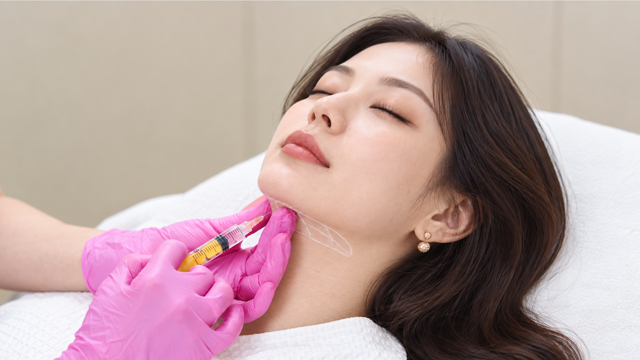
Stellate Ganglion Block
Stellate ganglion block is an injection-based procedure that delivers local anesthetic near the stellate ganglion, a group of sympathetic nerves located in the lower neck, temporarily interrupting certain sympathetic nerve signals.
Learn More