Personalized Medical Care & Dedicated International Patient Concierge


Eyelid & Under-Eye Surgery · Consultation Required
Sub-Brow Lift
A sub-brow lift is a surgical procedure that removes selected excess skin, and sometimes a limited amount of underlying tissue, from the upper eyelid through an incision just below the eyebrow.
Schedule a ConsultationSub-Brow Lift in Seoul

Medically reviewed by Dr. Joong-Ha Ryu, MD, PhD.
Youth&Young Clinic Cheongdam, Gangnam-gu, Seoul
A sub brow lift Korea patients ask about is subbrow surgery done from above rather than from the lid: excess upper-eyelid skin is taken out through an incision placed just under the eyebrow. Compared with other eyebrow lift surgery Seoul clinics offer, its distinguishing feature is restraint — it reduces heaviness and lateral hooding while generally leaving your existing eyelid crease where it is. At Youth&Young Clinic Cheongdam it belongs to Eyelid & Under-Eye Surgery.
What Is a Sub-Brow Lift?
A sub-brow lift is a surgical procedure that removes selected excess skin, and sometimes a limited amount of underlying tissue, from the upper eyelid through an incision just below the eyebrow.
The incision line follows the lower border of the brow, which is where the resulting scar will sit.
Skin is taken from the top of the upper-eyelid unit rather than from the crease, so the crease itself is generally preserved.
The intended effect is on heaviness and on lateral hooding — the fold that gathers toward the outer corner.
The operation takes about one hour.
Sedation anesthesia is used.
The word "lift" does more work in the name than in the operation. This is a skin excision, and it does not raise the eyebrow as a whole. It does not correct true eyelid ptosis, and it does not restore lost vision. Understanding that before you consent is what separates a satisfied patient from a disappointed one, because the disappointment usually comes from an expectation the operation never carried.
Who Performs the Sub-Brow Lift at Youth&Young Clinic Cheongdam
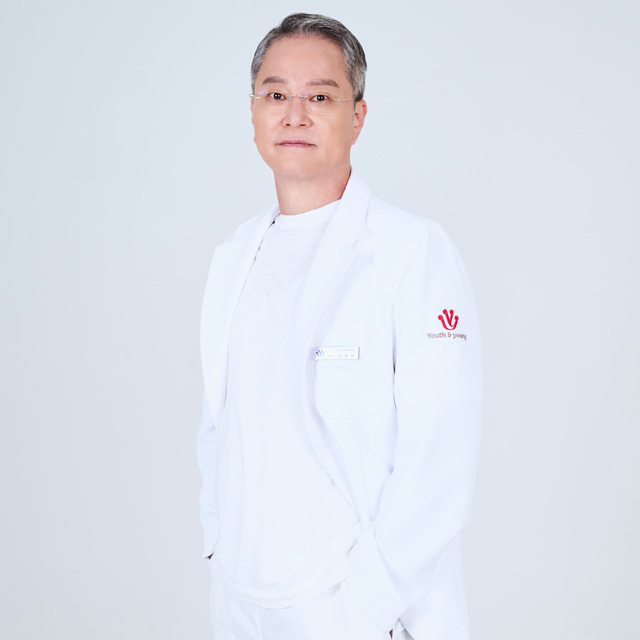
Dr. Joong-Ha Ryu, MD, PhD
Plastic Surgeon
The clinic names Dr. Joong-Ha Ryu for this service.
Dr. Ryu is the clinic’s Director and Medical Advisor, holding MD and PhD degrees, with more than three decades of laser cosmetic surgery behind him and a subspecialty in lower-eyelid work. He also leads Youth&Young Academy, the clinic’s physician training programme, whose curriculum includes patient selection, surgical design, anesthesia and recovery management and complication handling. Patient selection is the first item on that list, and for this operation it is also the most consequential one.
This page does not claim one doctor performs every session.
Who Is a Good Candidate for a Sub-Brow Lift?
Adults with excess upper-eyelid skin, particularly beneath the eyebrow and toward the outer eyelid.
People who want to reduce heaviness without substantially changing their existing eyelid crease.
People with suitable skin and brow anatomy, assessed individually.
People who are medically fit for surgery and hold realistic expectations about the scale of the change.
This is not the right operation where:
The primary problem is significant true eyelid ptosis.
The brow is markedly drooping and a different operation is indicated.
The condition cannot be adequately corrected by removing skin alone.
Surgery may also need to be postponed for an uncontrolled medical condition, an active infection, or an eye-surface problem that requires treatment first. Suitability requires an individual assessment in every case.
What to Expect: Procedure, Recovery, and Results Timeline
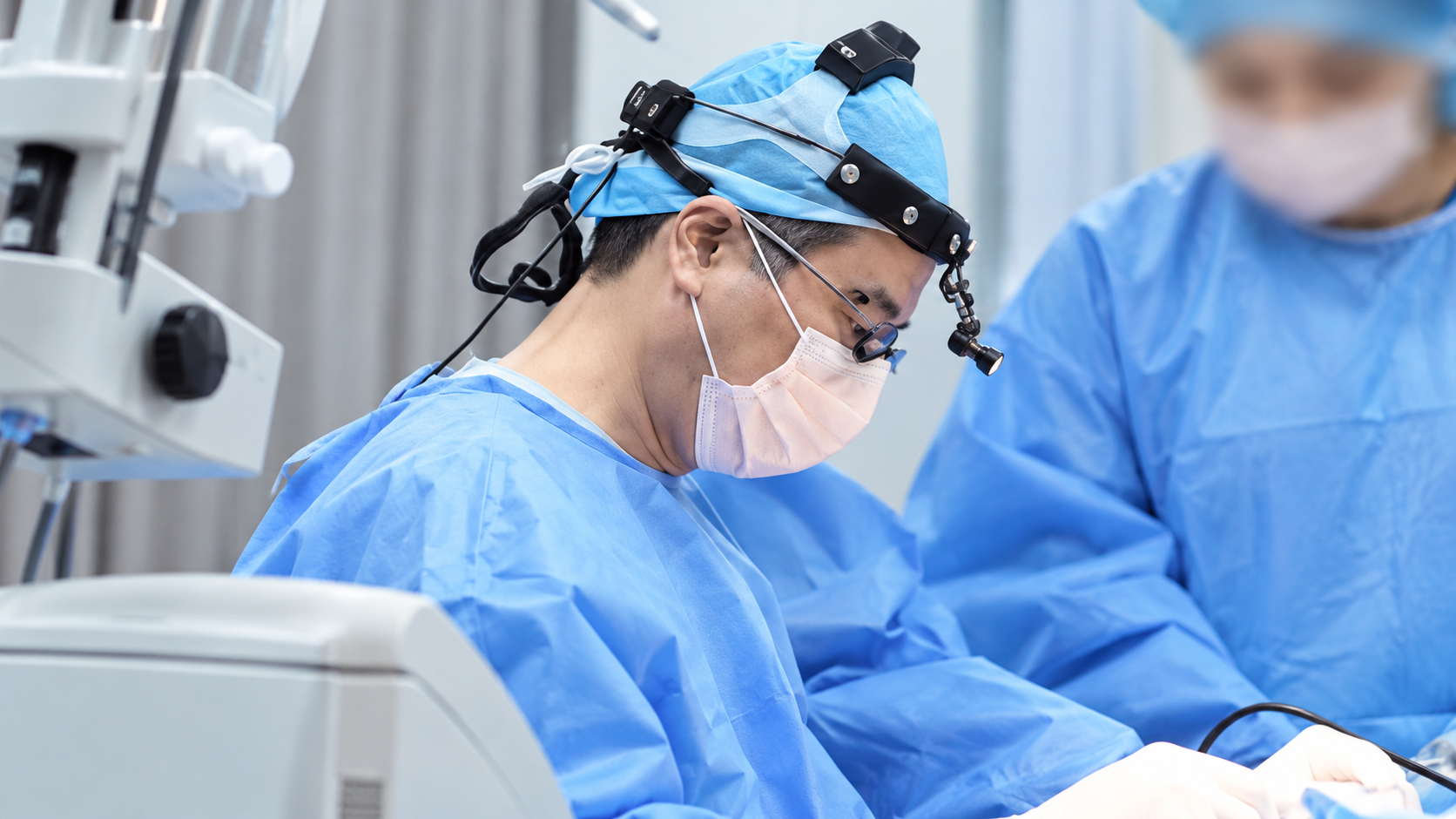
The examination is detailed and worth sitting through. The surgeon evaluates how much upper-eyelid skin is in excess, where the brow sits, where the crease falls, whether the two sides match, how well the eye closes, and how much lateral hooding there is. Medical history, medications, previous eye or eyelid surgery, dry-eye symptoms and your expectations are all reviewed. Standardized photographs and an eye examination may be used where appropriate.
Preparation means handing over a complete medical and medication history — supplements included — together with allergies, any previous eyelid surgery, existing eye conditions and any history of poor wound healing. Follow the surgeon's instructions on medications, smoking and fasting, and arrange a lift home, since sedation is planned. Aspirin, anticoagulants, anti-inflammatory medicines and some supplements can increase bleeding risk, and whether to pause any of them is decided by the surgical team with the prescribing clinician, never unilaterally.
Stage | What typically happens |
|---|---|
Marking | The eyelids are assessed and the planned incision marked, commonly with the patient sitting upright so gravity is acting normally |
In the operating room | Anesthesia is given, an incision is made beneath the eyebrow, the planned excess skin and any indicated underlying tissue is removed, and the wound is closed with sutures |
Immediately after | Wound-care instructions and follow-up appointments are provided |
Around 1–2 weeks | Initial recovery, and the point at which results begin to read |
Around 3–4 months | The final result |
Anesthesia for this operation is sedation. The clinic places that work under Anesthesiology & Pain Medicine. Its specialist in the field is Dr. Young-yeon Hwang, whose stated practice covers anesthesia planning based on a patient's general health, underlying conditions, age and surgical requirements, alongside intraoperative monitoring. The anesthetic reduces pain during surgery. Soreness, tightness, swelling or tenderness afterwards vary from person to person, and the surgeon provides individual pain-management instructions.
Aftercare is simple in content and easy to neglect in practice. Keep the head elevated when resting if that is advised. Avoid strenuous activity until the surgeon says otherwise, attend the follow-up visits, and protect the healing scar from sun exposure. Sudden visual change, severe or rapidly increasing swelling, significant bleeding or severe eye pain all call for prompt medical attention.
Longevity is measured in years rather than decades: results may last for several years, depending on age, skin elasticity, facial anatomy and the ordinary progress of aging. Individual outcomes vary, and a clinic that quotes you a fixed duration is quoting an average that may not be yours.
Travel planning for this operation is comparatively simple. Plan to stay in Korea for approximately seven days, subject to your surgeon's advice, and expect to fly home after about that long provided the surgeon confirms you are fit to travel. Bruising and redness can take several weeks to settle fully, so the flight home is likely to happen while you still look as though you have had something done.
Safety, Precision, and Clinic Standards
Possible effects include swelling, bruising, pain, temporary numbness, bleeding, infection, a noticeable or thickened scar, wound-healing problems, asymmetry, changes in eyebrow or eyelid contour, and dissatisfaction with the result. Excessive tissue removal can contribute to difficulty closing the eyes or eyelid malposition. Injury to nearby nerves or blood vessels is also a potential surgical concern.
Temporary swelling, bruising, tenderness, tightness, itching and changes in skin sensation are ordinary afterwards, and the incision may be visible while it heals. Severity and duration vary. The instruction that matters is simple: if symptoms are getting worse rather than better, contact the surgical team instead of waiting for the next scheduled visit.
The clinic holds Korean business registration number 720-46-00344. It is a Registered Medical Institution for Attracting Foreign Patients under the Ministry of Health and Welfare, in compliance with the Medical Overseas Expansion and Foreign Patients Attraction Act. That is a registration for treating international patients; it is not a facility accreditation.
The scar is the trade-off
Every operation trades something, and here the trade is explicit: the incision is on the outside of the face, below the eyebrow, in exchange for leaving the eyelid crease alone. A noticeable or thickened scar sits on the risk list, and the clinic's aftercare instruction to protect healing scars from sunlight exists because of it. There is no version of this operation without that line. If the eyebrow has a defined lower edge, the scar has somewhere to sit; if it does not, the surgeon should say so during the assessment rather than afterwards.
Choosing between the operations that remove the same skin
Several procedures address a heavy upper eye, and they are not interchangeable.
Procedure | What it does | When it is the better fit |
|---|---|---|
Sub-brow lift | Removes skin through an incision under the brow | Excess concentrated beneath the eyebrow and toward the outer eyelid, with the crease to be preserved |
Upper blepharoplasty | Removes skin through an incision in the upper-eyelid crease | Excess concentrated at the crease itself |
Brow lift | Elevates the eyebrow | Significant descent of the brow |
Ptosis repair | Addresses the eyelid-lifting mechanism | True eyelid ptosis |
Non-surgical treatments generally cannot remove substantial excess skin, whatever is claimed for them. The appropriate option depends on the underlying anatomical problem, and the surgeon may also consider combining sub-brow surgery with eyelid or brow procedures depending on what the assessment finds.
What to settle before the deposit
Guidance for anybody weighing up a cosmetic procedure says the practitioner owes you an account of what will be done, what will be used, and which complications are possible — and that you are entitled to go away and think rather than agreeing on the day (NHS). Patients from the United States bring a recognisable list to this clinic: the surgeon's experience with the specific operation, anesthesia arrangements and emergency protocols, a clear written estimate without unexpected fees, before-and-after cases shown without guaranteed-outcome claims, consent explained in English, how photographs and medical information are stored and used, and the plan for an adverse event.
For a sub-brow lift, add one more. Ask to see exactly where the line will be drawn, and ask it while you are sitting upright in a mirror, because that is the position in which the incision is marked and the only position in which you can judge it.
Once you are back in the United States
Patients who have cosmetic surgery in another country are warned that the aftercare can be missing, or weaker than the standard they are used to, with no obligation on anyone at home to step in. Sort out the complication route, the venue for follow-up and the bill for it before booking (NHS).
The clinic states that it provides aftercare instructions in English, clear downtime expectations, guidance on flying and sun exposure, potential online follow-up after you return home, and a defined process for international patients needing advice once they have left Korea. Take the written procedure details, medication list and aftercare sheet home with you — continuity between a Seoul operating room and a US clinic runs on paper, and elective cosmetic surgery and its complications may fall outside your insurance.
The Bottom Line
A sub-brow lift removes excess upper-eyelid skin through an incision just below the eyebrow, generally preserving the existing crease.
It targets heaviness and lateral hooding; it does not raise the whole brow, correct true ptosis, or restore vision.
The operation takes about one hour under sedation anesthesia, with initial recovery around one to two weeks.
Results may last several years and vary with age, skin elasticity, facial anatomy and ongoing aging.
The external scar beneath the brow is an accepted part of the procedure, and a noticeable or thickened scar is a listed risk.
Frequently Asked Questions
Where is the incision and will people see it? It runs just beneath the eyebrow, on the outside of the face. The brow's lower edge gives it somewhere to sit, but a noticeable or thickened scar is a listed risk, and the line is visible while it heals. Sun protection during healing is part of the aftercare for exactly this reason.
Does it actually lift my eyebrow? No. It removes skin from beneath the brow and reduces upper-eyelid heaviness and lateral hooding. Raising the brow itself is a brow lift, which is a different operation and may be the right one if your brow has descended significantly.
How long is the operation, and what anesthesia is used? About one hour, under sedation anesthesia. The anesthetic reduces pain during the procedure; soreness, tightness, swelling or tenderness afterwards vary between patients, and you will be given individual pain-management instructions.
How many days should I plan in Seoul? Approximately seven, subject to your surgeon's advice, and you may generally fly home after about that long if the surgeon confirms you are fit to travel. Build in margin rather than booking a flight that forces the question.
When will I see the result? Initial recovery runs around one to two weeks and the result begins to read at that point. The final appearance takes roughly three to four months as the last of the swelling and the healing resolve.
How long will it last? Several years is the realistic frame, and it depends on your age, your skin elasticity, your facial anatomy and the aging that continues regardless. Individual outcomes and longevity vary, and nobody can give you a date.
What should I avoid before surgery? Do not smoke if your surgical team advises stopping, and avoid alcohol or particular medications only on the surgeon's instructions. Aspirin, anticoagulants, anti-inflammatory medicines and some supplements may increase bleeding risk, and any change to a prescribed medicine is made by the prescribing clinician.
What if something goes wrong after I fly home? Contact the clinic through its contact page, by phone on +82-2-545-9393, or by email at info@youthandyoungcheongdam.com. Sudden visual change, severe eye pain, heavy bleeding or swelling that is increasing fast need local urgent care first.
Book a Consultation at Youth&Young Clinic Cheongdam

The question a sub-brow consultation should answer is whether your excess skin sits where this incision can reach it, and whether preserving your crease is worth an external scar under the brow. Consultations are available in English, photographs can be reviewed before you travel, and the marking is done with you upright so you can see the plan rather than imagine it. Book through the clinic contact page, or call +82-2-545-9393. The clinic is at 2F, 49 Dosan-daero 55-gil, Gangnam-gu, Seoul 06014, Republic of Korea, and is open Monday, Tuesday, Thursday and Friday from 10:00 to 19:00 KST, and Saturday from 10:00 to 15:00 KST, excluding the second and fourth Saturdays of each month.
Disclaimer
This page is for general informational purposes and does not constitute individualized medical advice. Candidacy, technique, and expected outcomes can only be determined through a consultation with a qualified physician.
Sources & Further Reading
Other Services
Explore additional treatments offered by our specialists.
Sub-Brow Lift
A sub-brow lift is a surgical procedure that removes selected excess skin, and sometimes a limited amount of underlying tissue, from the upper eyelid through an incision just below the eyebrow.
Learn More

Stem Cell Skin Treatment
Stem cell skin treatment is a broad term used for aesthetic procedures marketed to improve skin quality, texture, hydration, or visible signs of aging using cell-based materials or products described as stem-cell-derived.
Learn More
Stellate Ganglion Block
Stellate ganglion block is an injection-based procedure that delivers local anesthetic near the stellate ganglion, a group of sympathetic nerves located in the lower neck, temporarily interrupting certain sympathetic nerve signals.
Learn More