Personalized Medical Care & Dedicated International Patient Concierge


Specialty Overview
Eyelid & Under-Eye Surgery
Eyelid and under-eye surgery is the group of operations that change the amount and position of skin, fat and supporting tissue around the eye in order to alter the eyelid contour.
Schedule a ConsultationEyelid & Under-Eye Surgery in Seoul

Medically reviewed by Dr. Joong-Ha Ryu, MD, PhD.
Youth&Young Clinic Cheongdam, Gangnam-gu, Seoul
Eyelid and under-eye surgery removes or repositions excess skin and fat, and sometimes adjusts muscle tissue, around the eyelids. Upper eyelid surgery addresses excess skin or tissue on the upper lids. Lower eyelid surgery addresses under-eye bags and may reposition fat to improve the contour between the eyelid and the cheek. At Youth&Young Clinic Cheongdam in Seoul this is the specialty the clinic has worked in longest, and the one its founding equipment was bought for.
What Is Eyelid & Under-Eye Surgery?
Eyelid and under-eye surgery is the group of operations that change the amount and position of skin, fat and supporting tissue around the eye in order to alter the eyelid contour.
The surgeon marks the planned incision areas, then anesthesia is administered.
Upper eyelid incisions are generally made in the natural crease; lower eyelid incisions may be placed below the lashes or inside the eyelid.
Excess skin or fat is removed, or fat is repositioned, as the plan requires.
Incisions are closed with sutures or another suitable closure method.
Surgery typically takes 45 minutes to 2.5 hours depending on whether upper, lower or combined surgery is performed, and it is usually an outpatient procedure.
The American Society of Plastic Surgeons lists what the operation is used to treat: loose or sagging skin that creates folds or disturbs the natural contour of the upper eyelid, sometimes impairing vision; fatty deposits that appear as puffiness in the eyelids; bags under the eyes; drooping lower eyelids that reveal white below the iris; and excess skin and fine wrinkles of the lower eyelid (American Society of Plastic Surgeons). It is a short list, and it is worth reading twice, because several of the things people hope eyelid surgery will fix are not on it.
Dark circles are the clearest example. A shadow under the eye can come from protruding fat, from a hollow, from pigmentation, from thin skin, or from visible blood vessels underneath. Only the first two are structural, and only the structural ones are what surgery changes. Which of them is causing the shadow on a particular face is a question for an examination, not for a photograph.
Who Performs Eyelid & Under-Eye Surgery at Youth&Young Clinic Cheongdam
|
|
Dr. Joong-Ha Ryu, MD, PhD | Dr. Young-yeon Hwang, Representative Director |
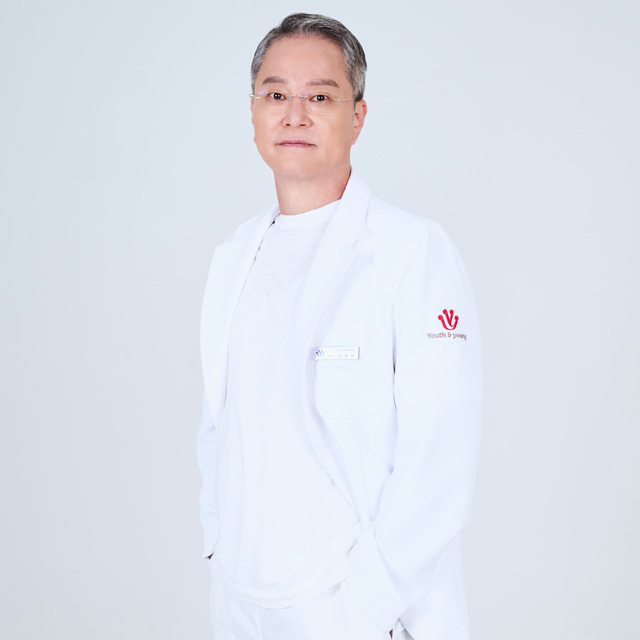
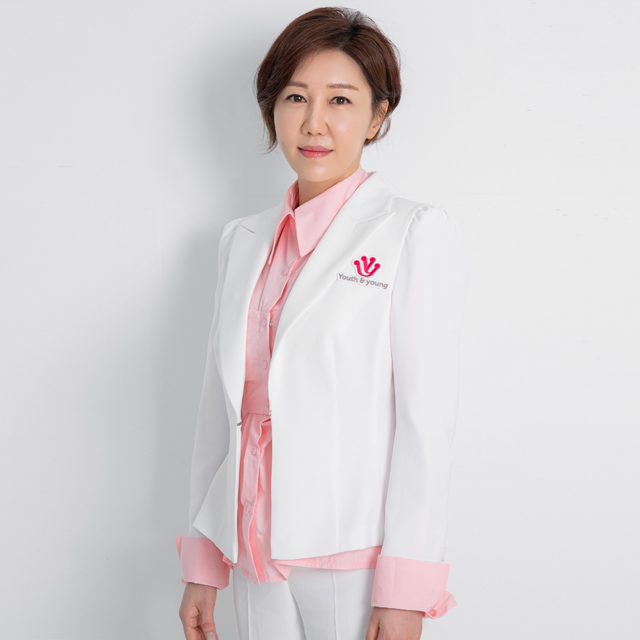
Eyelid and under-eye surgery at the clinic is carried out by Dr. Joong-Ha Ryu.
Dr. Joong-Ha Ryu, MD, PhD, is the clinic's Director and Medical Advisor and has more than thirty years of clinical experience in laser cosmetic surgery. He founded the clinic in 1993. The clinic's record places him at International Society of Cosmetic Laser Surgeons workshops in 1994, presenting the transconjunctival approach to lower-eyelid fat on which this specialty is built, and dates his full membership of that society to 1995, as the first Korean physician admitted. His own training in the field goes back to 1990, under that society's founder, Dr. David Laurence. He also teaches the surgical design, technique, anesthesia and complication management of this work to visiting physicians through Youth&Young Academy.
Anesthesia is planned and monitored by Dr. Young-yeon Hwang, who is Representative Director here and holds board certification in anesthesiology and pain medicine. Neither surgeon is presented as performing every session of every procedure; the clinic assigns the clinician at consultation.
Two of the historical claims above are the clinic's own account of its past. The clinic's source material flags the 1995 society membership and the "first UltraPulse in Korea" claim as points to verify against documentation before publication, and that caution is carried here rather than quietly dropped.
Eyelid & Under-Eye Surgery Procedures Available

The specialty covers eight procedures. They are not variants of one operation — they answer different findings, and more than one may apply to the same patient.
Procedure | What it addresses | Typical duration |
|---|---|---|
Protruding under-eye fat moved into hollow areas, accessed through the inner surface of the lower eyelid, with no external skin incision | 30–60 minutes | |
Under-eye bags, excess lower-eyelid skin, and certain eyelid contour concerns | 1–2 hours | |
Excess upper-eyelid skin, eyelid contour, and visual obstruction caused by that excess skin | 1–2 hours | |
Upper-eyelid heaviness and lateral hooding, through an incision just below the eyebrow | About 1 hour | |
Creating or defining an upper eyelid crease, by suture or incision technique | 30 minutes to 2 hours | |
Under-eye hollows, using the patient's own fat to restore volume | 30–60 minutes | |
Unwanted hyaluronic acid filler, broken down with hyaluronidase | 15–30 minutes | |
Persistent lumps, migrated injectable products or inflammatory reactions beneath the eyes | 30–60 minutes |
Two of these are worth separating from the rest, because they are the reason some patients travel at all. Filler dissolution and foreign material removal are corrective: they exist because something was already injected. Dissolution can make an existing hollow or asymmetry more visible once the filler is gone, which is a result, not a complication, and it should be discussed before the appointment rather than discovered after it.
Who Is a Good Candidate for Eyelid & Under-Eye Surgery?
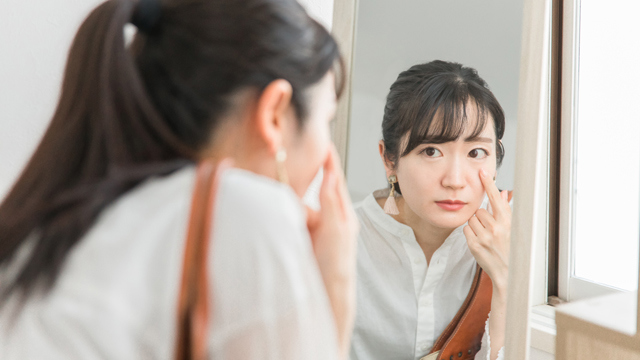
Candidacy is settled by examination. The criteria the clinic works from are:
Healthy adults with realistic expectations who want to address excess eyelid skin, puffiness, or under-eye bags.
Patients whose facial anatomy, eyelid position, eye health, medical history and healing risks have been evaluated by a qualified surgeon.
Further assessment, a different procedure, or postponement may apply to:
Patients with medical conditions that impair healing, or with serious eye conditions.
Patients with dry eye, glaucoma, thyroid disorders, diabetes or cardiovascular conditions, and patients taking medications that affect these — all of which must be disclosed.
Patients whose eyelid drooping is caused by eyelid muscle weakness, which may require a different procedure rather than standard blepharoplasty.
That last point deserves to be read slowly. A lid that sits low because the muscle lifting it is weak is a different diagnosis from a lid that sits low because skin has gathered above it, and the operations are different. The examination evaluates eyelid skin, fat distribution, brow position, eyelid function and eye health precisely to tell them apart. Visual field testing may be added when excess upper eyelid tissue obstructs vision.
What to Expect: Procedure, Recovery, and Results Timeline
Before surgery, the surgeon reviews medical and eye history, medications, allergies, previous surgery and the patient's goals. Patients may need a medical evaluation or laboratory tests, and should disclose medications, supplements, eye conditions, allergies and smoking history. The surgeon may ask for smoking to stop or for medications that increase bleeding risk to be adjusted — but prescribed medication is never stopped without medical guidance. Transportation home and assistance during the first days should be arranged in advance.
Stage | What typically happens |
|---|---|
Day of surgery | 45 minutes to 2.5 hours depending on upper, lower or combined surgery; usually same-day discharge |
First week | Swelling, bruising, irritation and dryness are common; sutures may be removed around one week if non-dissolvable sutures were used |
Around 10–14 days | Many patients feel comfortable appearing in public |
2–4 weeks | Initial results become visible |
3–6 months | The result becomes clearer as swelling settles; scars can continue fading for up to 12 months |
Aftercare follows the surgeon's wound-care instructions, with prescribed eye drops, ointments or medications used as directed. Cold compresses may help reduce swelling. The area is protected from sunlight, and dark sunglasses are useful during healing. Restrictions on exercise and other strenuous activity are followed until cleared. Sudden vision changes, severe eye pain or rapidly worsening swelling are reasons to seek urgent medical care rather than to wait for the next appointment.
For comparison, UK national health guidance notes that most people take about two weeks off work to recover from eyelid surgery depending on their job, that driving is not possible for a number of days afterwards, and that bruising and redness may take several weeks to fade while scarring may be visible and feel tight for a few months (NHS).
Planning the trip from abroad
The clinic's own guidance for international patients is to plan approximately 7 to 10 days in Korea after eyelid surgery. Flying home within that window depends on healing, swelling, the procedure performed and whether any complication has appeared, so the date is confirmed by the surgical team rather than fixed in advance by a ticket.
Patients contacting the clinic from the United States tend to raise a consistent set of questions before booking, and the consultation is built around them: whether the proposed operation is the right one for the concern described, what a realistic outcome looks like and where its limits sit, which risks apply and how anesthesia will be handled, how long swelling and bruising last, when work and exercise resume, how many days to stay, and what happens if a problem appears after returning home. Two of those are better raised early than late — the total cost, because procedure fees, anesthesia, medication, accommodation and travel are separate lines, and continuity of care, because a written treatment plan, a medication list and English aftercare instructions are what let a clinician at home pick up where the surgical team left off.
An initial assessment from photographs may be possible before travel, but an in-person examination is required before any treatment decision is final.
Combining Eyelid & Under-Eye Surgery with Other Treatments
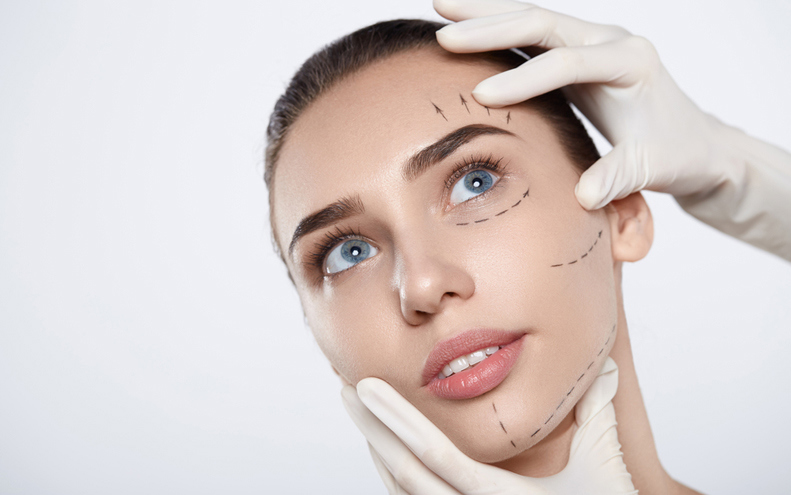
Depending on anatomy and clinical need, eyelid surgery may be combined with:
A brow lift, where a low brow is contributing to upper eyelid heaviness.
Lower eyelid tightening, where eyelid support is part of the finding.
Other procedures around the eyes, when the assessment calls for them.
Combining is not suitable for every patient, and the decision rests on a clinical evaluation rather than on convenience or on fitting more into one trip.
Safety, Precision, and Clinic Standards
Possible complications of eyelid and under-eye surgery include swelling, bruising, bleeding, infection, dry eyes, changes in sensation, difficulty closing the eyes, unfavorable scarring, lower eyelid malposition, asymmetry and a need for revision surgery. Vision changes are rare but serious, and blindness is extremely rare. National health guidance adds that eyelid surgery can occasionally result in blurred or double vision, uneven eyes, noticeable scarring and altered sensation in the eyelids, and that rarer serious problems include injury to eye muscles, the lower eyelid turning outwards, and bleeding into the eye socket.
Anesthesia depends on the procedure and the patient's individual needs; local anesthesia, sedation or general anesthesia may be used as the treating medical team determines. At this clinic that determination is made by a board-certified anesthesiology and pain medicine specialist on staff, who plans around the patient's general health, underlying conditions, age and surgical requirements, monitors during the procedure, and manages pain before and after it.
The clinic holds Korean business registration number 720-46-00344. It is a Registered Medical Institution for Attracting Foreign Patients under the Ministry of Health and Welfare, in compliance with the Medical Overseas Expansion and Foreign Patients Attraction Act. That is a registration for treating international patients; it is not a facility accreditation.
Before booking a cosmetic procedure anywhere, it is reasonable to ask the person who will perform it how many of these procedures they have done, what qualifications and training they hold, what the most common complications are, what aftercare to expect and who will provide it, and what happens if something goes wrong or the result disappoints (NHS). The same guidance says a practitioner should give you time after the consultation to decide, and advises against paying for a procedure before having had one.
The Bottom Line
Eyelid and under-eye surgery changes the amount and position of eyelid skin and fat; it does not stop aging or guarantee the removal of dark circles, fine wrinkles or asymmetry.
Eight distinct procedures sit under this specialty, including two corrective ones for problems caused by previous injections elsewhere.
Two surgeons perform this work at the clinic, each with more than thirty years of clinical experience, and anesthesia is handled by an in-house specialist.
Surgery takes 45 minutes to 2.5 hours and is usually same-day; the clinic advises 7 to 10 days in Korea afterwards.
Initial results appear at 2 to 4 weeks, and the result becomes clearer over 3 to 6 months.
Frequently Asked Questions
Will eyelid surgery get rid of my dark circles? Not necessarily. Under-eye shadowing can come from protruding fat, from hollowing, from pigmentation, from thin skin or from visible vessels, and surgery changes the first two. An examination establishes which of them applies in your case. A procedure chosen before that question is answered is a procedure chosen on a guess.
What is the difference between upper eyelid surgery and a sub-brow lift? Both reduce upper-eyelid heaviness, but they approach it from different places. Upper blepharoplasty removes excess skin through the natural eyelid crease and may adjust underlying tissue. A sub-brow lift removes selected excess skin through an incision just below the eyebrow and generally preserves the existing crease. Which suits you depends on where your heaviness actually sits.
What anesthesia will be used? Local anesthesia, sedation or general anesthesia may be used depending on the procedure and your individual needs. At this clinic the plan is made and monitored by a board-certified anesthesiology and pain medicine specialist, who also manages pain and anxiety before and after surgery.
How long should I stay in Korea? Plan for approximately 7 to 10 days after eyelid surgery. The date you can fly depends on healing, swelling, which procedure was performed and whether any complication has appeared, so confirm it with the surgical team rather than booking a fixed return flight you cannot move.
When will I look normal again? Swelling, bruising, irritation and dryness are common in the first week. Around 10 to 14 days many patients feel comfortable appearing in public. Initial results become visible within two to four weeks, and the result becomes clearer over three to six months as swelling settles.
Can I have the filler under my eyes removed here? Under-eye filler dissolution uses hyaluronidase to break down unwanted hyaluronic acid filler and usually takes 15 to 30 minutes. Results vary with the filler type and individual response. Be aware that existing hollows or asymmetry can become more noticeable once the filler is gone.
I have a lump under my eye from an injection years ago. Is that treatable? That is assessed as under-eye foreign material removal. Treatment depends on the material, its depth and location, and whether inflammation or infection is present. Some cases are treated without surgery and others require surgical removal, and complete removal is not always safely possible.
What should I do if something looks wrong after I get home? Contact the clinic through its contact page, by phone on +82-2-545-9393, or by email at info@youthandyoungcheongdam.com. Sudden vision changes, severe eye pain or rapidly increasing swelling need urgent medical attention — if you cannot reach us quickly, seek local medical care first and contact us afterwards.
Book a Consultation at Youth&Young Clinic Cheongdam
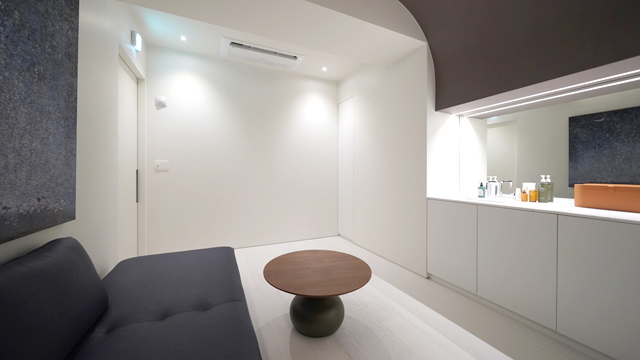
Eyelid and under-eye surgery in Seoul starts with an examination that separates what can be changed structurally from what cannot, and ends with a plan you can take away and think about. Consultations are available in English. Book through the clinic contact page, or call +82-2-545-9393. The clinic is at 2F, 49 Dosan-daero 55-gil, Gangnam-gu, Seoul 06014, Republic of Korea, and is open Monday, Tuesday, Thursday and Friday from 10:00 to 19:00 KST, and Saturday from 10:00 to 15:00 KST, excluding the second and fourth Saturdays of each month.
Disclaimer
This page is for general informational purposes and does not constitute individualized medical advice. Candidacy, technique, and expected outcomes can only be determined through a consultation with a qualified physician.
Sources & Further Reading
Related Services
Procedures available within our clinical departments.

Sub-Brow Lift
A sub-brow lift is a surgical procedure that removes selected excess skin, and sometimes a limited amount of underlying tissue, from the upper eyelid through an incision just below the eyebrow.
Learn More

Stem Cell Skin Treatment
Stem cell skin treatment is a broad term used for aesthetic procedures marketed to improve skin quality, texture, hydration, or visible signs of aging using cell-based materials or products described as stem-cell-derived.
Learn More
Stellate Ganglion Block
Stellate ganglion block is an injection-based procedure that delivers local anesthetic near the stellate ganglion, a group of sympathetic nerves located in the lower neck, temporarily interrupting certain sympathetic nerve signals.
Learn More