Personalized Medical Care & Dedicated International Patient Concierge


Eyelid & Under-Eye Surgery · Consultation Required
Encore Under-Eye Fat Repositioning
Encore Under-Eye Fat Repositioning is a surgical procedure that moves protruding fat beneath the eyes into hollow areas to create a smoother transition between the lower eyelid and cheek.
Schedule a ConsultationEncore Under-Eye Fat Repositioning in Seoul

Medically reviewed by Dr. Joong-Ha Ryu, MD, PhD Youth&Young Clinic Cheongdam, Gangnam-gu, Seoul
Under-eye fat repositioning in Korea is an operation that moves protruding fat from beneath the eye into the hollow sitting just below it, so the step between lid and cheek becomes a slope instead of a ledge. The clinic's Encore under-eye surgery uses a transconjunctival approach, reaching the fat through the inner surface of the lower eyelid rather than through the skin. It is the operation Youth&Young Clinic Cheongdam is best known for, and it sits within Eyelid & Under-Eye Surgery.
What Is Encore Under-Eye Fat Repositioning?
Encore Under-Eye Fat Repositioning is a surgical procedure that moves protruding fat beneath the eyes into hollow areas to create a smoother transition between the lower eyelid and cheek.
The approach is transconjunctival: the surgeon reaches the fat compartments through the inner conjunctival surface of the lower lid, so no incision is made in the skin.
A CO₂ laser is used for that access, and the clinic's current device is the UltraPulse Alpha.
Fat is relocated rather than discarded. The protruding pocket becomes the filler for the groove beneath it.
The target is fat protrusion and the contour irregularity it causes, not loose skin and not surface pigment.
An operation of this kind runs approximately 30 to 60 minutes and is performed under local anesthesia.
The route into the lid is not exotic, whatever the marketing around it suggests. National health guidance on eyelid surgery records that a lower-lid operation is performed through a cut either just below the lashes or on the inside of the lower eyelid, and that fat is then repositioned or removed; the same guidance puts eyelid surgery at roughly 45 minutes to two and a half hours, with most people going home the same day (NHS). This operation sits at the short end of that span. The laser access is the clinic's own account of how it reaches that inner surface, and should be read as the clinic's description rather than as something a national health service has documented.
The distinction that matters most when you are reading clinic websites is between removing lower-eyelid fat and moving it. Removal can flatten a bulge and leave the hollow underneath it untouched, or deepen it if too much is taken. Repositioning spends the same fat on the hollow. Which one suits you is a question about where your fat sits and how much of it there is, and it is answered by examination, not by preference.
Who Performs Encore Under-Eye Fat Repositioning at Youth&Young Clinic Cheongdam
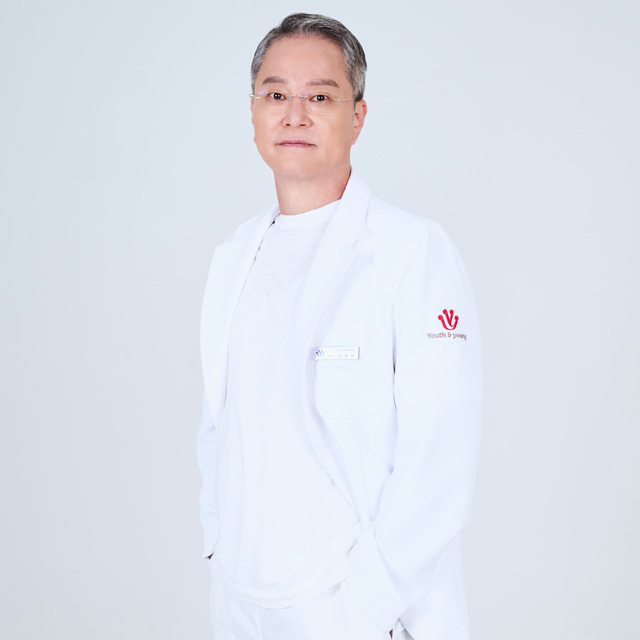
Dr. Joong-Ha Ryu, MD, PhD
Plastic Surgeon
Dr. Joong-Ha Ryu leads this service.
Dr. Ryu holds MD and PhD degrees and is Director and Medical Advisor at the clinic. This procedure is his declared subspecialty: laser lower-eyelid fat repositioning by the transconjunctival approach, within more than thirty years of clinical work in laser cosmetic surgery. He has used UltraPulse equipment since 1993 and has worked through all four generations of it, including the UltraPulse Alpha now in the clinic. In 1990 he completed training under Dr. David Laurence, a cosmetic laser surgeon and the founder of the International Society of Cosmetic Laser Surgeons, as that mentor's first and only Asian disciple according to the clinic.
This page does not claim one doctor performs every session.
Who Is a Good Candidate for Encore Under-Eye Fat Repositioning?
Adults with prominent lower eyelid fat, under-eye bags, and hollowness who want a smoother contour without an external skin incision.
People whose main concern is fat protrusion rather than loose skin, where there is little excess skin that would need removing.
People who have had skin quality, eyelid position, eye health and their own expectations assessed by a surgeon first.
People who understand that the shadow under an eye can come from several sources at once, and that only one of them is fat.
Some situations call for a different plan or a longer look before anyone schedules an operation:
Significant excess lower-eyelid skin, which this approach does not remove and which may need a different or additional technique.
Certain eye conditions, or severe dry eye.
Impaired healing, or a medical condition that is not currently under control.
Eyelid laxity, where the lid's own support is part of the problem.
None of those is an automatic exclusion. They are reasons for a surgeon to assess further before deciding, and that assessment is the point of the consultation.
What to Expect: Procedure, Recovery, and Results Timeline
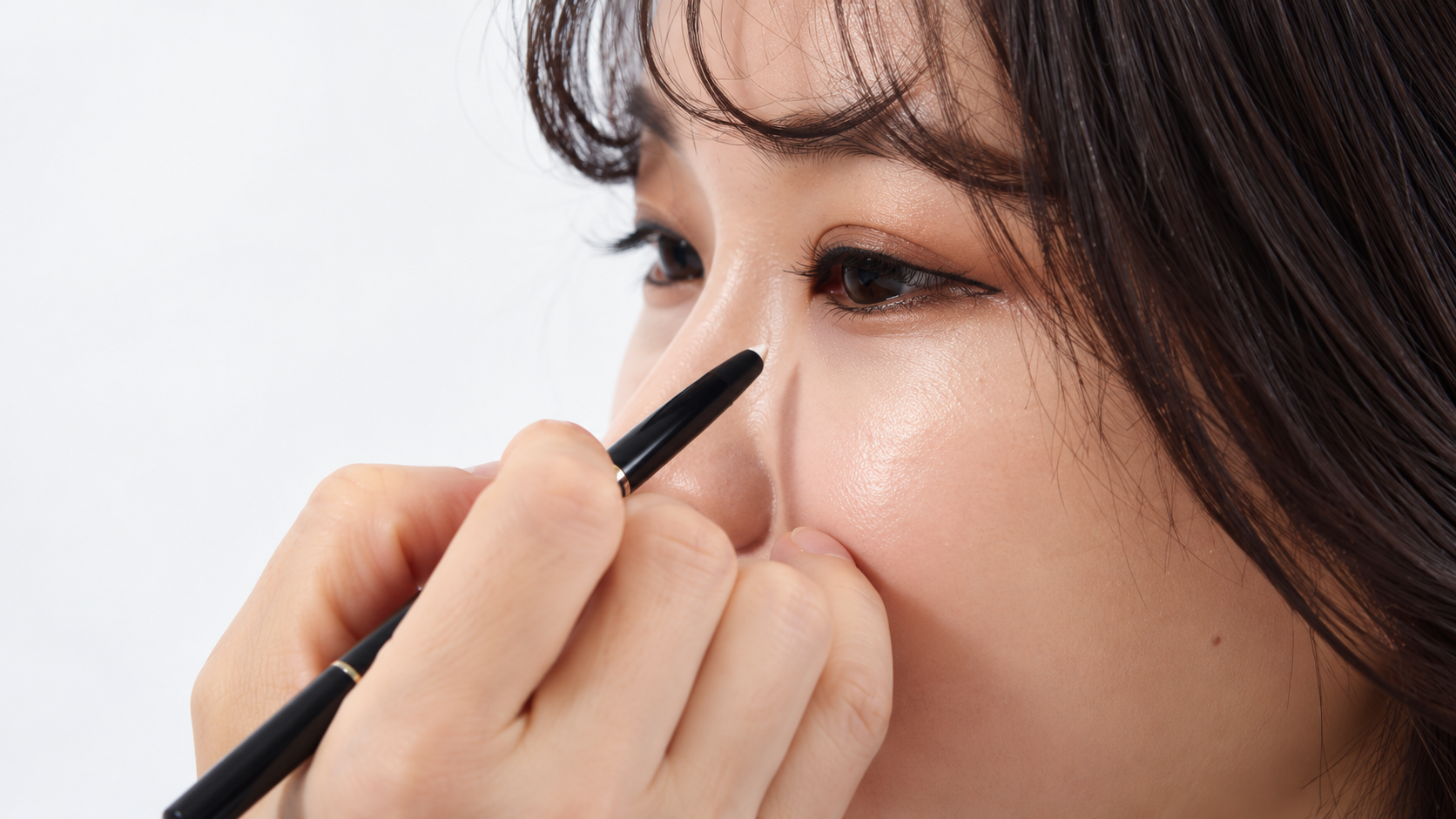
The consultation begins with the three things that decide the plan: how far the fat protrudes, how deep the hollow beneath it runs, and what condition the skin over both is in. A full assessment also covers eye health, medical history, medications, allergies, previous procedures, eyelid position and what you are hoping to see afterwards.
Preparation is mostly disclosure. Tell the surgeon about every medical condition, eye problem, allergy, medicine and supplement. A medical evaluation may be requested, and you may be advised to change certain medicines or supplements that raise bleeding risk — but no prescribed medication is stopped unless a doctor says so. There will be instructions about eating, drinking, smoking and getting yourself home, and they are worth reading before the morning of surgery rather than on it.
National guidance for anyone weighing a cosmetic procedure sets three things the practitioner should tell you: what the procedure involves, which products are going to be used, and how it can fail. It adds that you should be given a cooling-off period and should not be making the decision while still in the room (NHS). For a patient who has flown in with a fixed return date, the cooling-off period is the part most at risk of being compressed, which is a reason to have the consultation early in the trip.
Stage | What typically happens |
|---|---|
In the operating room | Under-eye fat, hollowness and skin are evaluated, the repositioning plan is set for your anatomy, the lower lid is accessed through its inner conjunctival surface with a CO₂ laser, and protruding fat is moved into the hollow areas |
First few days | Swelling, bruising and irritation may occur |
Around 1–2 weeks | Many patients feel comfortable returning to routine activities, depending on how recovery is going |
Several weeks to a few months | Residual swelling continues to settle |
3–4 months | The contour reads clearly, as the last of the swelling resolves |
Aftercare follows the eye-care and medication instructions the clinic gives you. Cold compresses and lubricating products may be recommended. Strenuous activity is avoided for the period the surgeon specifies, the eye area is protected from sunlight, and scheduled follow-ups are kept. Sudden vision changes, severe eye pain, or swelling that is getting rapidly worse are reasons to seek urgent medical care rather than to wait for the next appointment.
On results, the honest sequence is that initial improvement may be noticeable within one to two weeks, and the result becomes clearer across three to four months as swelling settles. Final healing takes several months. What the operation is expected to deliver is less prominence to the bags, a smoother lower-lid contour and less of the shadow that the contour itself was casting. What it is not expected to deliver is the disappearance of dark circles caused by pigmentation, thin skin or visible vessels — those have different causes and the surgery does not address them.
Travel for this one is planned around roughly seven to ten days in Korea, taken as a cautious starting point and subject to what the surgeon decides. Flying home earlier than that is generally not advised, and permission to fly rests on the surgeon confirming you are fit to travel with no complications in progress. Incheon International Airport serves Seoul, and a nonstop flight back is in the region of eleven to thirteen hours to the West Coast and fourteen to sixteen hours to the East Coast — long enough that the margin you leave yourself matters.
Safety, Precision, and Clinic Standards
Possible effects include swelling, bruising, discomfort, dry eyes, irritation, bleeding, infection, asymmetry, persistent contour irregularities, and the need for revision surgery. Less common but serious complications can include eyelid malposition and vision changes. A transconjunctival approach avoids an external skin incision but does not eliminate surgical risks, and any page that implies otherwise is selling you the incision rather than the operation.
The clinic's stated safety practice is that treatment settings are not fixed. Laser intensity, treatment depth and handpiece selection are adjusted according to skin condition, age and treatment goals. The clinic also states that it does not describe its laser work as an exclusive technique without evidence, and this page keeps to that.
The clinic holds Korean business registration number 720-46-00344. It is a Registered Medical Institution for Attracting Foreign Patients under the Ministry of Health and Welfare, in compliance with the Medical Overseas Expansion and Foreign Patients Attraction Act. That is a registration for treating international patients; it is not a facility accreditation.
Where the laser history comes from, and what it is not
The clinic dates to 1993, when Dr. Ryu introduced UltraPulse CO₂ laser technology — reportedly the first of its kind in Korea — and opened a laser clinic. In 1994 he presented transconjunctival laser under-eye fat repositioning at International Society of Cosmetic Laser Surgeons workshops in Seoul and Busan. In 1995 he reportedly became the first Korean physician to achieve full membership of that society, and reportedly performed the first successful laser deep resurfacing on East Asian skin. The clinic itself flags the first two of those as points to verify against historical documentation before publication, and the hedging here is the clinic's own.
That is a history, and history is all it is. None of it is evidence that your operation will go well, and none of it should be read as a claim about outcomes. What a long institutional involvement with one procedure does tell you is that the clinic is unlikely to be learning the technique on you, which is a modest and real thing to know. The clinic also runs Youth&Young Academy, which trains physicians in laser under-eye fat repositioning and laser treatments.
Four ways to approach an under-eye bag
The clinic sets out the alternatives plainly, and the right one depends on what is actually causing the appearance you dislike.
Option | What it does | The catch |
|---|---|---|
Fat removal | Reduces a prominent bag by taking fat out | Can leave hollowness if too much is removed |
Fat repositioning | Moves existing fat into the depressed area next to it | Needs enough protruding fat to work with, and does not remove skin |
Under-eye filler | May help selected hollows | Temporary, and removes neither protruding fat nor excess skin |
Skin resurfacing | May improve selected surface texture or pigmentation | Does not correct fat bulging at all |
A consultation that names which of these four your anatomy calls for, and says why the other three were set aside, is doing the work properly. Patients travelling from the United States tell the clinic their worry is overcorrection — too much hollowing, a result that looks done — and the comparison above is where that worry belongs. The column that produces hollowing is the removal column, and the question to put to the surgeon is how much fat is coming out versus how much is being moved.
Getting home, and what happens if something changes there
Aftercare is the weak joint in treatment abroad. Guidance for patients having cosmetic surgery outside their own country warns that it may be absent, or pitched at a different standard, with nobody at home obliged to take the case on; the same guidance says to agree in advance who handles a complication, where the appointments happen and what the bill is (NHS).
The clinic's stated answers on that point are English aftercare instructions, clear downtime expectations, travel-safe recovery planning covering flying and sun exposure, potential remote follow-up once you are home, and a defined process for international patients who need advice after leaving Korea. Get those in writing. Carrying home written procedure details, a medication list and your aftercare instructions is what allows a physician in the United States to act quickly rather than start from scratch, and US health insurance may not cover an elective cosmetic procedure or a complication arising from one.
The Bottom Line
The operation moves protruding under-eye fat into the hollow beneath it, through the inner surface of the lower eyelid, with no external skin incision.
Access is made with a CO₂ laser; the clinic's current device is the UltraPulse Alpha, and the surgery runs roughly 30 to 60 minutes under local anesthesia.
It suits fat protrusion with little excess skin; significant loose lower-lid skin needs a different or additional technique.
Improvement may show within one to two weeks and the contour reads clearly over three to four months.
Dark circles caused by pigmentation, thin skin or visible vessels are a separate problem and are not treated by this surgery.
Frequently Asked Questions
Will I have a visible scar? There is no external skin incision, because the surgeon works through the inner conjunctival surface of the lower lid. That removes the question of a skin scar on the lid, but it does not make the operation risk-free — swelling, bruising, asymmetry and contour irregularities remain possible.
Can this get rid of my dark circles? Only the part caused by the contour. Where the darkness is a shadow thrown by fat protruding above a hollow, smoothing that transition changes it. Where it comes from pigmentation, thin skin or visible blood vessels underneath, this operation does not reach it, and a surgeon should tell you which you have before you book.
What anesthesia is used, and how much will it hurt? Local anesthesia. Eyelid surgery of this kind usually involves little pain, although discomfort, swelling, bruising, irritation or dry eyes may occur while you recover.
How long should I plan to be in Korea? Approximately seven to ten days is the cautious starting point, subject to what your surgeon decides. Flying home is generally not advised earlier than that, and only once the surgeon confirms you are fit to fly with no complications under way.
What should I avoid before the operation? Follow the individual preoperative instructions you are given. You may be asked to stop smoking and to avoid aspirin, anti-inflammatory medicines and herbal supplements that can increase bleeding or bruising. Do not stop a prescribed medicine unless the clinician who prescribed it says to, and arrange transport for afterwards.
Is a revision ever needed? It can be. Persistent contour irregularities, asymmetry and the need for revision surgery are listed among the possible outcomes, which is why the question of who pays for a second operation is better settled before the first one.
What do I do if something looks wrong after I get home? Contact the clinic through its contact page, by phone on +82-2-545-9393, or by email at info@youthandyoungcheongdam.com. A sudden change in vision or severe eye pain is an emergency: get local medical attention immediately instead of waiting for a reply from Seoul.
Book a Consultation at Youth&Young Clinic Cheongdam
An Encore under-eye consultation should end with you knowing three things: whether fat protrusion is really what is causing the appearance you want changed, whether repositioning or something else is the right answer for it, and what your own recovery and travel schedule looks like. Consultations are available in English, and photographs can be sent for an initial assessment before you book a trip. Book through the clinic contact page, or call +82-2-545-9393. The clinic is at 2F, 49 Dosan-daero 55-gil, Gangnam-gu, Seoul 06014, Republic of Korea, and is open Monday, Tuesday, Thursday and Friday from 10:00 to 19:00 KST, and Saturday from 10:00 to 15:00 KST, excluding the second and fourth Saturdays of each month.
Disclaimer
This page is for general informational purposes and does not constitute individualized medical advice. Candidacy, technique, and expected outcomes can only be determined through a consultation with a qualified physician.
Sources & Further Reading
Other Services
Explore additional treatments offered by our specialists.

Sub-Brow Lift
A sub-brow lift is a surgical procedure that removes selected excess skin, and sometimes a limited amount of underlying tissue, from the upper eyelid through an incision just below the eyebrow.
Learn More

Stem Cell Skin Treatment
Stem cell skin treatment is a broad term used for aesthetic procedures marketed to improve skin quality, texture, hydration, or visible signs of aging using cell-based materials or products described as stem-cell-derived.
Learn More
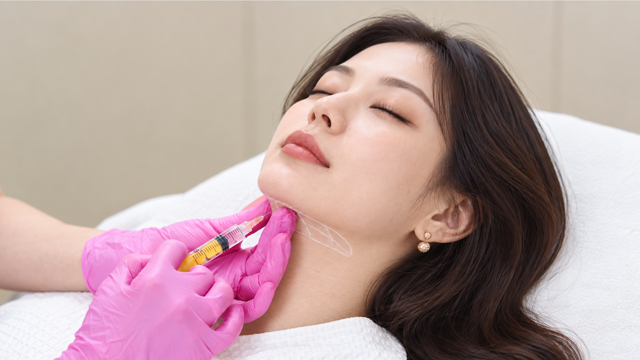
Stellate Ganglion Block
Stellate ganglion block is an injection-based procedure that delivers local anesthetic near the stellate ganglion, a group of sympathetic nerves located in the lower neck, temporarily interrupting certain sympathetic nerve signals.
Learn More