Personalized Medical Care & Dedicated International Patient Concierge


Facial Rejuvenation Surgery · Consultation Required
Facelift Surgery
Facelift surgery is a surgical procedure designed to reduce visible signs of facial aging by repositioning underlying tissues and removing or redraping excess skin.
Schedule a ConsultationFacelift Surgery in Seoul

Medically reviewed by Dr. Joong-Ha Ryu, MD, PhD.
Youth&Young Clinic Cheongdam, Gangnam-gu, Seoul
Facelift surgery is a surgical procedure designed to reduce visible signs of facial aging by repositioning underlying tissues and removing or redraping excess skin. It commonly targets sagging cheeks, jowls, and loss of definition along the jawline. At Youth&Young Clinic Cheongdam in Seoul, facelift surgery is the operation offered under Facial Rejuvenation Surgery, and it is planned around the patient's own anatomy rather than around a standard incision pattern.
What Is Facelift Surgery?
A facelift is an operation that lifts and repositions the deeper tissues of the lower face and neck, then removes or redrapes the skin over the new position.
The surgeon makes incisions, commonly around the ears and sometimes along the hairline.
Underlying tissues may be repositioned or tightened.
Excess skin is removed or redraped before the incisions are closed.
The exact approach depends on the patient's anatomy and on the surgical plan.
Surgery commonly takes approximately two to six hours, depending on the technique and on whether other procedures are performed.
National health guidance describes the same operation from the patient's side: the surgeon makes cuts above the hairline at the temples extending down in front of the ear, underneath the earlobe and behind the ear, makes cuts under the chin if the jawline is also being lifted, removes surplus facial skin, pulls the remaining skin backwards and upwards before stitching it into its new position, sometimes redistributes facial fat and tissue, and bandages the face to minimise bruising and swelling (NHS).
Who Performs Facelift Surgery at Youth&Young Clinic Cheongdam
|
|
Dr. Joong-Ha Ryu, MD, PhD | Dr. Young-yeon Hwang, Representative Director |
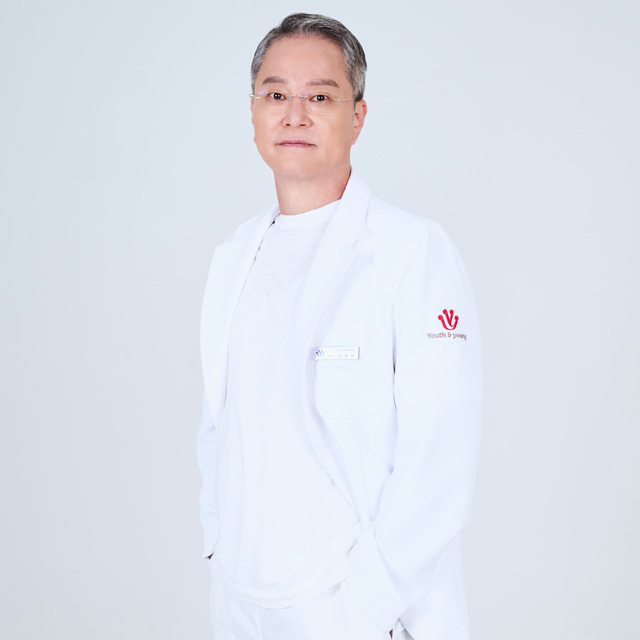
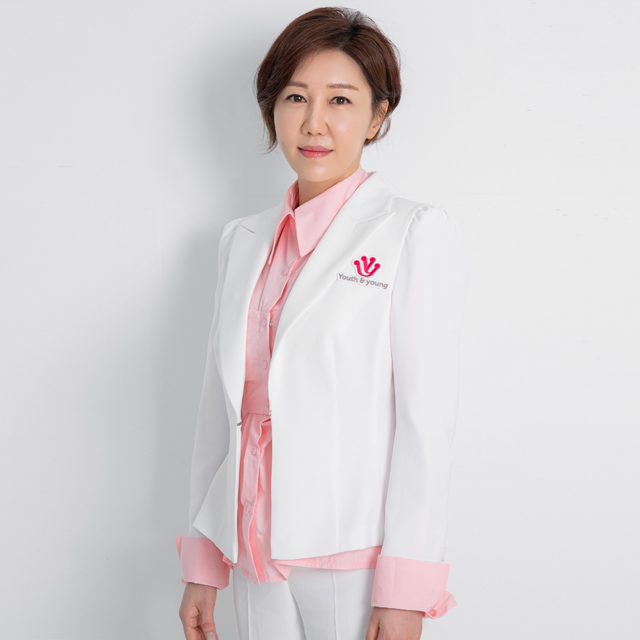
Facelift surgery here is performed by Dr. Joong-Ha Ryu.
Facelift surgery here is performed by Dr. Joong-Ha Ryu. He is the clinic’s Director and Medical Advisor and holds MD and PhD degrees. His separate expertise in skin resurfacing is relevant to a facelift consultation for a narrow and specific reason: an operation repositions tissue but does not change the quality of the skin lying over it, and deciding whether both matter is part of planning.
Anesthesia is the responsibility of Dr. Young-yeon Hwang, the clinic’s Representative Director and a board-certified anesthesiology and pain medicine specialist. She plans anesthesia around each patient’s general health, underlying conditions, age and surgical requirements, and handles intraoperative monitoring together with pre- and postoperative pain management.
Facelift Techniques and the Alternatives
There is no single facelift. The clinic's own description of technique is that it may include repositioning deeper facial tissues, tightening supporting structures, and removing or redraping excess skin, and that the incision pattern and the tissue-repositioning method depend on facial anatomy and on the surgeon's approach. What follows from that is simple and often missed: two people quoted for "a facelift" may be quoted for different operations.
Option | What it changes | Trade-off |
|---|---|---|
Facelift surgery | Repositions deeper tissue and redrapes skin, changing lower-face and jawline contour | Longest recovery; anesthesia; incisions that scar |
Energy-based skin tightening | Firms selected areas of mild laxity | Cannot achieve the same degree of tissue repositioning |
Injectable treatments | Address selected volume loss and line depth | Do not lift descended tissue |
Skin-resurfacing treatments | Improve surface texture and tone | Change the skin, not its position |
Non-surgical options may help selected concerns but generally cannot achieve the same degree of tissue repositioning as surgical facelift procedures. The useful question at consultation is therefore not which treatment is best but which problem you actually have, because the two lists above do not compete for the same one.
Who Is a Good Candidate for Facelift Surgery?
Adults with noticeable facial skin laxity.
Adults with jowls or lower-face sagging.
Patients in suitable health for surgery.
Patients with realistic expectations.
Further evaluation or treatment before surgery may be needed by:
Patients with uncontrolled medical conditions.
Patients with active infections.
Patients with significant anesthesia risks.
Patients with healing problems.
Suitability is determined individually, and none of the second list is an automatic exclusion.
What to Expect: Procedure, Recovery, and Results Timeline
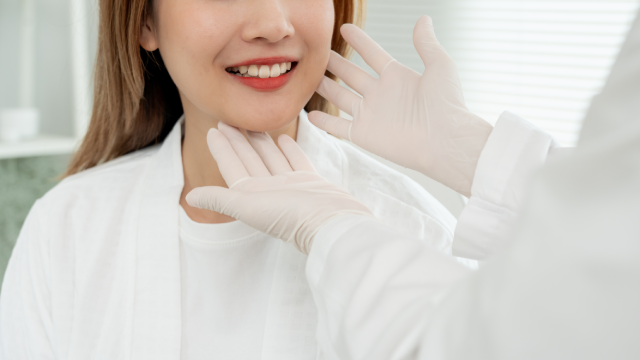
At consultation the surgeon reviews medical history, medications, smoking status, previous procedures, skin elasticity, facial anatomy, and aesthetic goals. Surgical options, incision placement, expected results and potential risks are then discussed. Facelift surgery is commonly performed under general anesthesia, or under local anesthesia with sedation, depending on the procedure and the patient. Postoperative discomfort is managed with prescribed pain relief and aftercare.
Preparation is specific. Disclose all medical conditions, medications, supplements, allergies, smoking and previous facial procedures. Follow the surgeon's instructions on medication adjustments, smoking cessation and fasting. Arrange transportation and postoperative assistance before the day rather than after it.
Stage | What typically happens |
|---|---|
Day of surgery | Approximately two to six hours in theatre, depending on technique and on any combined procedures |
First 1–2 weeks | Swelling and bruising are common |
Weeks 2–4 | Many patients gradually resume normal daily activities, depending on healing and surgical extent |
Following months | Residual swelling settles and tissue refinement continues |
Months 3–6 | Final results generally become clearer; subtle change may continue longer |
Aftercare means following instructions for incision care, prescribed medication, head elevation and activity restrictions. Avoid strenuous exercise until cleared. Attend scheduled follow-ups. Contact the surgical team promptly if increasing pain, sudden swelling, fever or wound changes develop.
Common temporary side effects include swelling, bruising, tightness, tenderness, numbness, and temporary changes in skin sensation. These generally improve during recovery. Improvements become more visible as swelling subsides over several weeks, with further refinement over the following months. Results may last for years, but longevity varies with age, skin quality, lifestyle and individual healing.
What the first fortnight actually involves
National health guidance sets out the practical restrictions in more detail than a surgical description usually does, and they are worth reading before you book time off rather than after.
Expect to take around two to four weeks off work for a full recovery.
Bruising is visible for at least two weeks.
Driving is not possible for a number of days after the operation, and the surgeon advises on when it is.
Showering and getting the bandages wet is avoided for the first two days.
Strenuous activity, saunas and massages are avoided for at least two weeks.
The head is kept propped up with pillows for a couple of days while resting, to reduce swelling.
Stitches are removed after about seven to fourteen days, unless dissolvable stitches were used.
Bruises, scars and skin-colour changes should have faded after several weeks.
The full effect of a facelift can take up to six to nine months to appear.
Some of the common after-effects are not complications and do not need reporting. A swollen or numb face may last a few weeks or months. A stiff feeling in the face and mouth usually goes away within six weeks. Low mood for a few days is common enough to be listed alongside the physical effects, and it is worth knowing in advance so that it is not read as a sign that something has gone wrong. A raised hairline or sideburns, and reduced hair growth at the temples, are also listed among the expected changes rather than among the complications.
Planning the trip from abroad
Patients travelling to Korea are generally advised to plan for around 10 to 14 days, to allow for initial recovery and postoperative follow-up. A longer stay may be necessary depending on healing and on the surgeon's recommendations. Fly home only after your surgeon confirms that it is safe to travel, and allow sufficient time for postoperative checks before booking the return flight.
Two practical points come up repeatedly with patients flying in from the United States. The first is the gap between the flight that brings you here and the one that takes you home: the outbound date is yours to choose and the inbound one is not, so a flexible return ticket is worth more than a cheap one. The second is who looks after you in the first days — the clinic's advice to arrange postoperative assistance applies with more force when you are recovering in a hotel rather than at home.
Combining Facelift Surgery with Other Treatments
A facelift may be combined with other procedures when clinically appropriate:
A neck lift, where sagging below the jawline forms part of the concern.
Eyelid surgery, upper or lower, where periorbital change contributes to a tired appearance.
A brow lift, where brow descent is part of what reads as aging.
Fat grafting, where volume loss accompanies descent.
Combined surgery can increase operating time, recovery needs and risks, so the plan requires individual assessment rather than bundling.
Safety, Precision, and Clinic Standards
Possible risks of facelift surgery include bleeding, infection, scarring, asymmetry, delayed wound healing, nerve injury, skin complications, and dissatisfaction with the outcome. Temporary or persistent changes in sensation are possible. Hairline changes are possible. Anesthesia-related complications are possible. Additional surgery may sometimes be needed.
Occasionally, people find the desired effect was not achieved and feel they need another operation, and how a second operation would be funded is a question to settle before the first one rather than after it. The clinic's position is that a facelift may improve jowls, lower-face sagging and jawline definition, but does not stop aging, remove every wrinkle, or guarantee perfect symmetry.
The American Society of Plastic Surgeons frames the same limit structurally. A facelift is restorative, which means it works on what has changed and leaves your fundamental appearance as it is; the society adds that the operation cannot stop aging (American Society of Plastic Surgeons). The society also notes that some minimally invasive treatments marketed as facelifts are of unproven benefit, which is worth knowing when comparing quotes between clinics.
Choosing where to have it done
Checking a surgeon is a short exercise and a worthwhile one. National guidance for patients considering this operation is to research the surgeon who will carry it out, to ask how many of the procedure they have performed and where there have been complications, and to ask what follow-up to expect if things go wrong. In the United Kingdom that guidance also points patients at the register of the national medical regulator to check a doctor's fitness-to-practise history, and the equivalent step for a clinic abroad is to establish which register applies and whether you can read it.
Patients travelling from the United States raise a consistent set of concerns before booking, and the clinic records them: doctor credentials and procedure-specific experience, anesthesia arrangements and emergency protocols, a clear written estimate without unexpected fees, before-and-after cases presented without guaranteed-outcome claims, informed consent explained in English, how photographs and medical information are stored and used, how the clinic handles an adverse event and when hospital care would be required, and what follow-up exists after you return home. None of these is an awkward question, and a clinic that treats them as awkward has answered one of them.
One further item belongs on that list and is easy to leave off. Elective cosmetic surgery abroad, and complications arising from it, may not be covered by health insurance at home, so the plan for a complication is a plan you pay for. Carrying written procedure details, a medication list and aftercare instructions home with you is what lets a local clinician act on it quickly.
The clinic holds Korean business registration number 720-46-00344. It is a Registered Medical Institution for Attracting Foreign Patients under the Ministry of Health and Welfare, in compliance with the Medical Overseas Expansion and Foreign Patients Attraction Act. That is a registration for treating international patients; it is not a facility accreditation.
The Bottom Line
Facelift surgery repositions underlying facial tissue and removes or redrapes excess skin, targeting sagging cheeks, jowls and jawline definition.
Surgery commonly takes two to six hours; swelling and bruising are common for the first one to two weeks.
Plan around 10 to 14 days in Korea, and do not book a fixed return flight.
Final results generally become clearer over approximately three to six months.
Frequently Asked Questions
How is a facelift different from non-surgical lifting? A facelift repositions tissue that has descended and removes or redrapes the skin over it. Non-surgical treatments work on skin quality and mild laxity without moving the underlying structure. They are not weaker versions of the same operation; they address a different problem.
Where will the scars be? Incisions are commonly made around the ears and sometimes along the hairline, with an additional incision under the chin if the jawline is being lifted. Scars fade but do not disappear completely. Hairline position and hair growth near the scars can also change, and the surgeon should explain how that applies to your own hairline.
Will I be numb afterwards? Numbness and temporary changes in skin sensation are common after a facelift and generally improve during recovery. A stiff feeling in the face is also common early on. Persistent change in sensation is possible, which is why it belongs in the risk discussion rather than the recovery leaflet.
Can I have a facelift and eyelid surgery at the same time? It is possible when clinically appropriate, and brow lift and fat grafting are also combinable. Combining lengthens the operation and increases recovery needs and risk. Whether it is sensible for you is a surgical judgement made at consultation, not a scheduling preference.
How long before the result is the result? Improvements become more visible as swelling subsides over the first weeks. Final results generally become clearer over approximately three to six months, and subtle changes may continue after that. Judging the outcome at two weeks is judging the swelling.
What should I ask before I commit? Ask how many of this procedure the surgeon has performed, and where there have been complications. Ask what follow-up to expect if something goes wrong. Ask what the quoted figure covers and what it does not, since anesthesia, medication and follow-up are separate items from the operation itself.
What if I am not happy with the result? Raise it with the surgeon through the clinic that carried out the operation. Additional surgery is sometimes needed, and the funding question should have been settled in advance. If the concern is a symptom rather than an aesthetic one, treat it as urgent instead.
Who do I contact once I am home? Contact the clinic through its contact page, by phone on +82-2-545-9393, or by email at info@youthandyoungcheongdam.com. Severe pain or any unexpected symptom belongs with the surgical team that operated, and sooner rather than at the next scheduled review. Where that is not possible within a few hours, a local emergency service is the right first call and the clinic the second.
Book a Consultation at Youth&Young Clinic Cheongdam
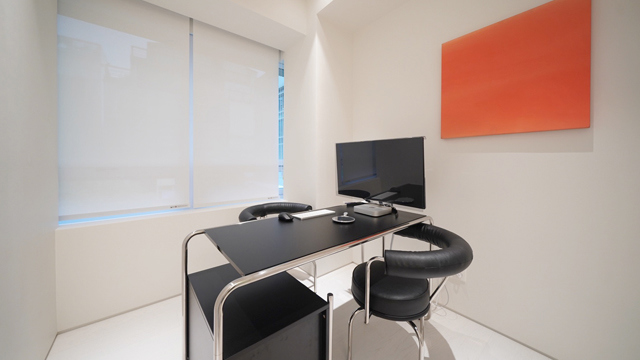
A facelift consultation in Seoul covers facial anatomy, skin elasticity, incision placement and what the operation will and will not change, and it is available in English. Book through the clinic contact page, or call +82-2-545-9393. The clinic is at 2F, 49 Dosan-daero 55-gil, Gangnam-gu, Seoul 06014, Republic of Korea, and is open Monday, Tuesday, Thursday and Friday from 10:00 to 19:00 KST, and Saturday from 10:00 to 15:00 KST, excluding the second and fourth Saturdays of each month.
Disclaimer
This page is for general informational purposes and does not constitute individualized medical advice. Candidacy, technique, and expected outcomes can only be determined through a consultation with a qualified physician.
Sources & Further Reading
Other Services
Explore additional treatments offered by our specialists.

Sub-Brow Lift
A sub-brow lift is a surgical procedure that removes selected excess skin, and sometimes a limited amount of underlying tissue, from the upper eyelid through an incision just below the eyebrow.
Learn More

Stem Cell Skin Treatment
Stem cell skin treatment is a broad term used for aesthetic procedures marketed to improve skin quality, texture, hydration, or visible signs of aging using cell-based materials or products described as stem-cell-derived.
Learn More
Stellate Ganglion Block
Stellate ganglion block is an injection-based procedure that delivers local anesthetic near the stellate ganglion, a group of sympathetic nerves located in the lower neck, temporarily interrupting certain sympathetic nerve signals.
Learn More