Personalized Medical Care & Dedicated International Patient Concierge

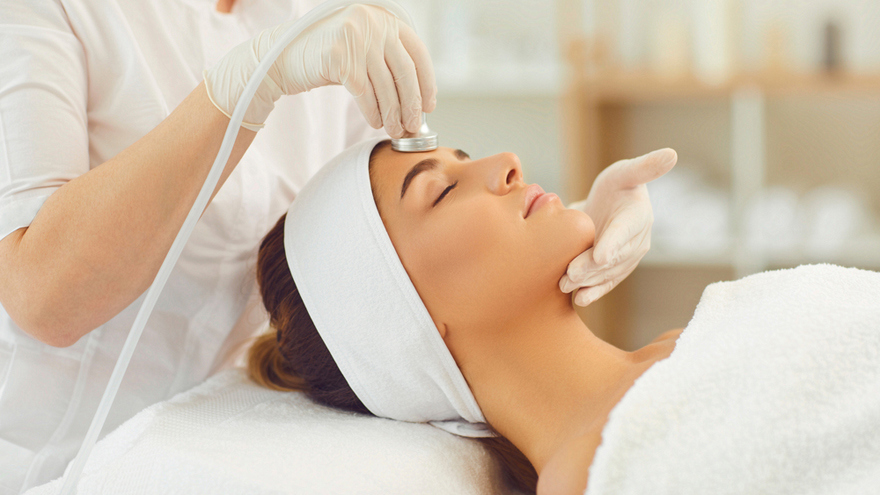
Laser Dermatology · Consultation Required
Laser Scar & Acne Scar Treatment
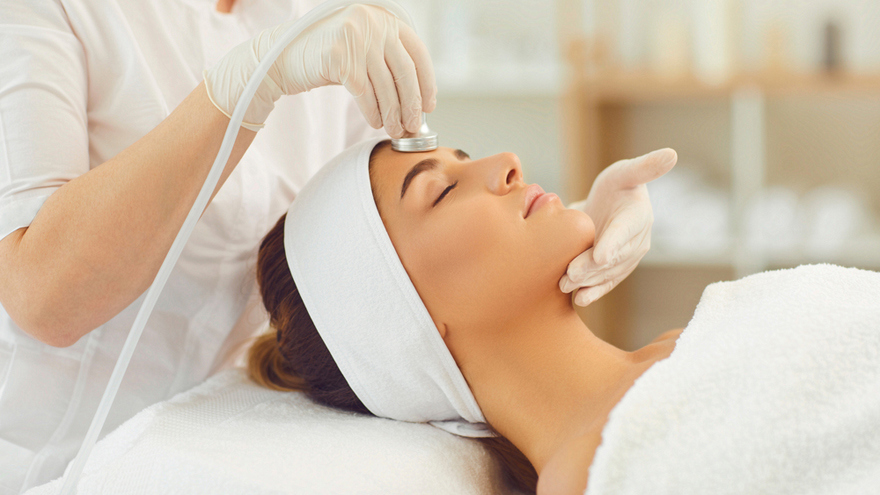
Laser scar and acne scar treatment uses targeted laser energy to improve the appearance of scars, uneven skin texture, and certain types of discoloration.
Schedule a ConsultationLaser Scar and Acne Scar Treatment in Seoul
Medically reviewed by Dr. Joong-Ha Ryu, MD, PhD.
Youth&Young Clinic Cheongdam, Gangnam-gu, Seoul
Laser scar and acne scar treatment uses targeted laser energy to improve the appearance of scars, uneven skin texture, and certain types of discoloration. Depending on the laser used, treatment may stimulate collagen production, resurface the skin, or reduce redness and pigmentation. At Youth&Young Clinic Cheongdam in Seoul it is one of the treatments within Laser Dermatology, and the device chosen follows from what kind of scar you actually have.
What Is Laser Scar and Acne Scar Treatment?
It is the use of laser energy, selected by scar type, to change how a scar looks rather than to remove it.
Devices may include fractional ablative CO₂ lasers, Er:YAG lasers, non-ablative fractional lasers, or pigment-targeting lasers, depending on the treatment plan.
A topical numbing cream is applied before the procedure to reduce discomfort.
The clinician delivers laser energy to the selected areas, with protective eyewear in place.
Soothing products or dressings may be applied afterwards, depending on the laser and skin response.
A session commonly takes around 15 to 60 minutes, depending on the area and the laser type, excluding consultation and preparation.
The limit is worth stating before the benefits. Laser treatment can make a scar less noticeable, but it cannot get rid of a scar: when you have laser scar treatment, you are replacing one scar with another, less noticeable one (American Academy of Dermatology). Alongside appearance, laser treatment can prevent a raised scar forming after surgery, reduce scar pain and itch, and increase range of motion where a scar limits movement.
Who Performs This Treatment at Youth&Young Clinic Cheongdam
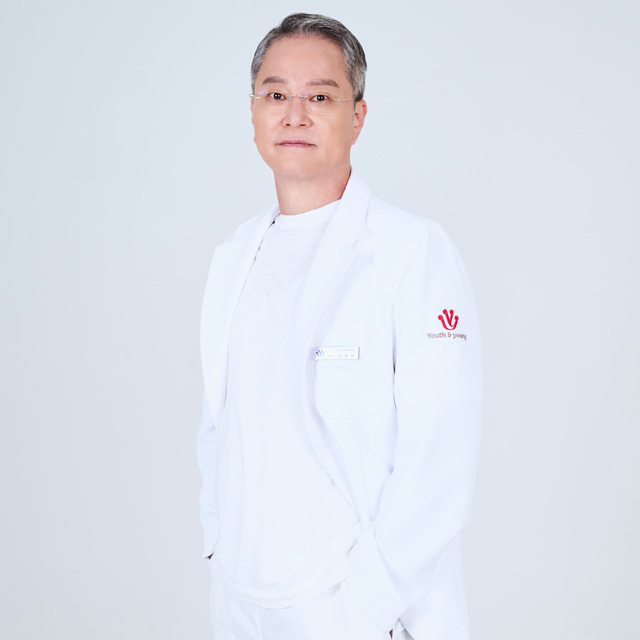
Dr. Joong-Ha Ryu, MD, PhD
Plastic Surgeon
Treatment is delivered by Dr. Joong-Ha Ryu.
Scar work sits at the centre of Dr. Ryu's stated expertise rather than at its edge. His listed subspecialty techniques are laser deep dermabrasion, CO₂ laser skin resurfacing, and laser-assisted skin peeling using TCA — three approaches to the same underlying question of how much tissue to remove and how deeply. The clinic presents the UltraPulse Alpha SCAAR FX mode specifically for deeper scars, including acne, traumatic, surgical and burn scars, and Dr. Ryu has worked with every generation of that device family since 1993.
Who Is a Good Candidate?
People with atrophic acne scars.
People with selected raised scars.
People with certain types of scar-related pigmentation.
Suitability depends on scar type, skin tone, medical history, and individual treatment goals. Treatment may need to be postponed or avoided for:
People with active skin infections, open wounds, or severe skin irritation.
People with certain skin conditions in the treatment area.
People prone to keloids, who require careful assessment.
People prone to post-inflammatory hyperpigmentation or poor wound healing.
People who have tanned recently, or who take medications that affect suitability.
What to Expect: Procedure, Recovery, and Results Timeline
At consultation the clinician reviews medical history, previous acne treatments, medications, skin type, scar characteristics and treatment goals. The skin is examined to determine the scar type and to select an appropriate approach. Potential risks, expected outcomes, costs and the number of sessions are discussed before anything is booked.
Before treatment, avoid sun exposure and tanning. Inform the clinician about medications, allergies and existing skin conditions. Follow instructions about skincare products, and arrive with clean skin free of makeup where advised.
Stage | What typically happens |
|---|---|
During the session | Skin cleansed, photographs possibly taken, numbing cream applied, laser delivered |
Mild non-ablative treatment | Redness for a few hours to several days |
Fractional ablative treatment | Approximately 3–7 days for initial healing, sometimes longer |
Following weeks | Redness and pigment changes can persist beyond initial healing |
Weeks to months | Collagen remodeling continues; improvement becomes assessable |
Aftercare means cleansing gently, applying the recommended moisturizer or prescribed ointment, and using broad-spectrum sunscreen once the skin can tolerate it. Avoid picking, scratching, exfoliation and irritating skincare products until healing is complete. Follow the instructions given about makeup, exercise and sun exposure. Contact the clinician if severe pain, worsening redness, pus or fever develops.
For patients travelling, the recovery profile decides the schedule. A mild non-ablative session fits inside a short trip; a fractional ablative one needs the initial healing period to pass before a long flight is sensible, and the clinician rather than the calendar decides when that is. Booking the first session near the start of a stay, rather than near the end of it, leaves room for the follow-up that assesses healing.
Some improvement may appear after the skin heals, but collagen remodeling can continue for several weeks to months. A series of sessions may be needed, often spaced several weeks apart. Improvements can be long-lasting, although scars do not necessarily disappear completely, and natural aging or new acne can change how the skin looks afterwards. Follow-up visits may be needed to assess healing and results.
Why results take longer than patients expect
It can take months to see the results from laser scar treatment, and there may be little improvement at first. That is not a sign the treatment failed; it is how collagen remodeling behaves. Judging a scar at two weeks measures the swelling and the redness rather than the scar.
A series is often planned deliberately rather than added later, particularly with non-ablative devices, which involve no downtime but need several treatments to reach a useful endpoint. Knowing at the outset how many sessions the plan assumes, and what happens if the response is slower than hoped, is a fair question to ask before paying for the first one.
Preparing properly, and why it is not optional
Several of the preparation instructions exist to prevent a complication rather than to improve a result.
Quit smoking for at least two weeks before laser treatment.
Stop taking vitamin E, aspirin, and other medications and supplements that can delay healing, on medical advice.
Stop using skin care products containing a retinoid or glycolic acid for two to four weeks.
Take preventive medication if you are prone to cold sores.
Avoid the sun, tanning beds and sunlamps; treatment cannot proceed on tanned or sunburned skin.
Disclosing cold sores, diabetes, smoking, and every medication and supplement is part of the consultation for the same reason: to heal well and to prevent the laser from scarring the skin, something may need to be stopped for a while.
What a scar consultation should establish
A consultation that skips classification cannot select a device, and selecting a device first is how the wrong treatment gets delivered competently. Before any laser is proposed, the following should have been settled.
The scar type, established by examining the skin rather than from a description or a photograph sent in advance.
Whether the concern is contour, colour, texture, or more than one of them, since different lasers address different ones.
Your skin tone, and what it implies for the risk of pigment change.
Whether you scar abnormally, including any history of keloids.
Whether the area is currently inflamed, infected, or recently tanned.
What previous acne treatment you have had, and what you are taking now.
What you want the result to be, stated plainly enough to be compared with what the treatment can do.
A medical consultation before any laser treatment is essential, and an offer to treat a scar without providing one is a reason to walk away. Telling the clinician honestly what you expect from treatment is part of that conversation: an expectation nobody hears cannot be corrected, and a mismatch found afterwards is found too late.
Photographs may be taken at the start for comparison. They are also the only reliable way to judge a slow change later, since the skin you see every day is a poor baseline. How those photographs are stored and used is a reasonable thing to ask before they are taken.
Alternatives and Combinations
Alternative | Where it fits |
|---|---|
Microneedling | Uneven texture; a different mechanism with less surface injury |
Chemical peels | Surface-level change, chemically controlled |
Subcision | Releases tethered depressed scars that laser energy alone will not lift |
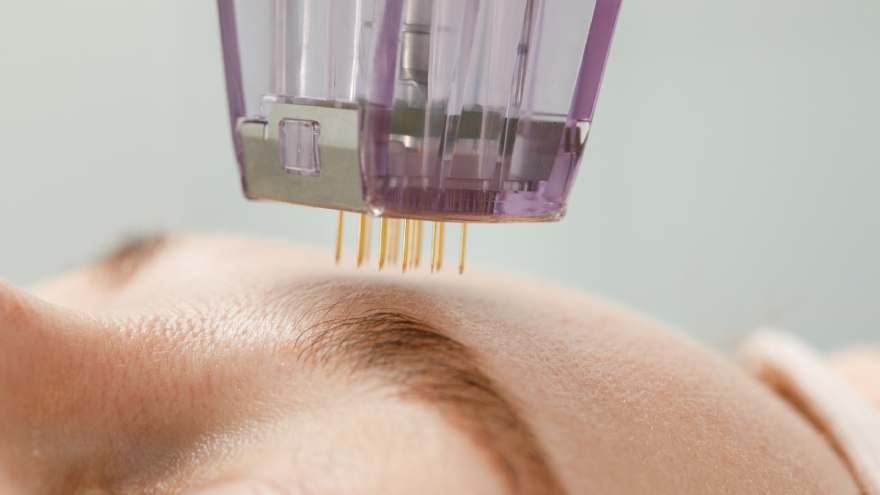
Microneedling radiofrequency | Depth delivered by needle rather than by beam |
Injectable treatments | Selected depressed scars, by restoring contour rather than remodelling |
Surgical scar revision | Specific cases where the scar itself should be re-made |
A treatment plan may include more than laser treatment, and combining is common rather than exceptional: this treatment may be combined with subcision to release tethered acne scars, or with microneedling to target uneven texture. A dermatologist treating deep acne scars may use a laser and an injectable approach together for that reason.
Safety, Precision, and Clinic Standards
Temporary redness, swelling, tenderness, dryness, peeling and crusting may occur. Potential complications include infection, burns, prolonged redness, post-inflammatory hyperpigmentation or hypopigmentation, and scarring. Skin tone is part of the suitability assessment precisely because pigment change is among those risks.
Sun protection is required both before and after. After laser treatment the skin needs protecting from the sun until it heals, and sun exposure on healing skin can produce a new scar — the outcome the treatment was meant to improve.
Pigment change is also where the choice of technique shows. Laser skin resurfacing's targeted approach means there are fewer problems with hypopigmentation, a lightening of the skin, for procedures such as laser acne scar removal (American Society of Plastic Surgeons). Fewer is not none, and the clinic still lists hypopigmentation among the possible complications of this treatment.
Who performs the treatment matters to the result. Results depend largely on the skills of the person performing the laser treatment, and in untrained hands laser treatment may not deliver the result sought and can be dangerous. Against that, the clinic's stated method is to select intensity, depth and handpiece per patient — against skin condition, age and the goal of the treatment — rather than to run a preset.
Scar treatment and why the dermatological assessment comes first
Lasers have become a routine tool for treating scars, and part of what makes them routine is that the people using them research scars as well as treat them. The practical consequence for a patient is narrow: the value is in the assessment that precedes the device, not in the device itself. Two clinics with the same laser can produce different results, and the difference lies in the examination.
The same point applies to what a laser is asked to do. Scar treatment is not only cosmetic — reducing pain and itch, and restoring range of movement where a scar restricts it, are recognised reasons to treat — but a treatment chosen for appearance and one chosen for function may not be the same treatment. Saying which matters to you changes the plan.
The clinic holds Korean business registration number 720-46-00344. It is a Registered Medical Institution for Attracting Foreign Patients under the Ministry of Health and Welfare, in compliance with the Medical Overseas Expansion and Foreign Patients Attraction Act. That is a registration for treating international patients; it is not a facility accreditation.
Cost belongs in the consultation rather than on a price list, because the number of sessions is part of the price and the number of sessions is not known until the scar has been examined. Ask what a quoted figure covers, whether follow-up assessment is included, and what happens if the plan extends.
The Bottom Line
Laser treatment can make a scar less noticeable; it cannot remove a scar.
The device is chosen by scar type, and may be ablative, non-ablative or pigment-targeting.
A session commonly runs 15 to 60 minutes, with 3 to 7 days of initial healing after fractional ablative treatment.
A series spaced several weeks apart is often planned from the outset.
Results take months to appear, with little improvement visible at first.
Frequently Asked Questions
Can laser treatment remove my acne scars completely? No. It can make them less noticeable, and the clinic's own statement is that scars do not necessarily disappear completely. What laser treatment does is exchange a scar for a less noticeable one. A clinic promising removal is promising something the technique does not do.
How many sessions will I need? A series is often recommended, with intervals set by the treatment plan and typically spaced several weeks apart. Non-ablative devices in particular tend to need several treatments. The number depends on scar type, depth and how your skin responds.
Will it work on raised scars as well as indented ones? Selected raised scars are candidates, as are atrophic acne scars and certain types of scar-related pigmentation. Different scar types call for different devices, which is why the scar is examined and classified before a treatment is proposed.
Is laser the right choice, or should I consider something else? That depends on the scar. Subcision releases tethered depressed scars; microneedling addresses texture; surgical revision suits specific cases. These are often combined rather than chosen between, and the plan should say which problem each part is solving.
What can I not do beforehand? Do not tan, and avoid sun exposure. Stop retinoid or glycolic acid skincare for two to four weeks beforehand. Follow medical advice on stopping supplements or medications that delay healing, and do not stop prescribed medicine on your own. Arrive with clean skin, free of makeup.
How soon can I wear makeup or exercise again? Both are covered by the aftercare instructions you are given, and the answer varies with the laser used and the depth treated. Until healing is complete, avoid exfoliation and irritating skincare products as well. Sunscreen begins as soon as the skin tolerates it.
Does insurance cover this? Generally not. Laser treatment of scars is usually classed as cosmetic even where a scar causes pain, itch or restricted movement, and cosmetic treatment is not normally covered. Clarify what your quote includes before treatment rather than after.
What do I do if something looks wrong afterwards? Contact the clinic through its contact page, by phone on +82-2-545-9393, or by email at info@youthandyoungcheongdam.com. Severe pain, spreading redness, pus or a fever are reported the day they appear. If no reply reaches you within a few hours and the symptom is worsening, be seen locally first and tell the clinic afterwards.
Book a Consultation at Youth&Young Clinic Cheongdam
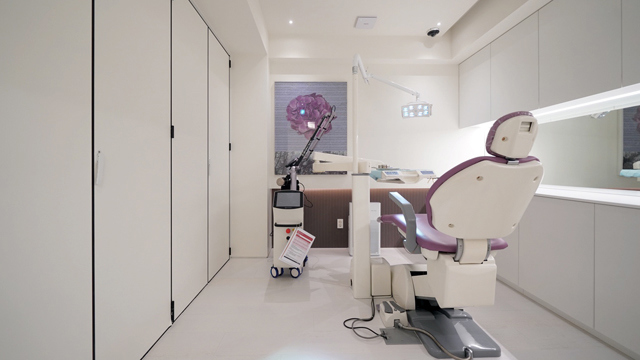
Laser scar and acne scar treatment in Seoul starts with classifying the scar, not with choosing a device, and the consultation covers scar type, skin tone, expected outcome and the likely number of sessions. Consultations are available in English. Book through the clinic contact page, or call +82-2-545-9393. The clinic is at 2F, 49 Dosan-daero 55-gil, Gangnam-gu, Seoul 06014, Republic of Korea, and is open Monday, Tuesday, Thursday and Friday from 10:00 to 19:00 KST, and Saturday from 10:00 to 15:00 KST, excluding the second and fourth Saturdays of each month.
Disclaimer
This page is for general informational purposes and does not constitute individualized medical advice. Candidacy, technique, and expected outcomes can only be determined through a consultation with a qualified physician.
Sources & Further Reading
Other Services
Explore additional treatments offered by our specialists.

Sub-Brow Lift
A sub-brow lift is a surgical procedure that removes selected excess skin, and sometimes a limited amount of underlying tissue, from the upper eyelid through an incision just below the eyebrow.
Learn More

Stem Cell Skin Treatment
Stem cell skin treatment is a broad term used for aesthetic procedures marketed to improve skin quality, texture, hydration, or visible signs of aging using cell-based materials or products described as stem-cell-derived.
Learn More
Stellate Ganglion Block
Stellate ganglion block is an injection-based procedure that delivers local anesthetic near the stellate ganglion, a group of sympathetic nerves located in the lower neck, temporarily interrupting certain sympathetic nerve signals.
Learn More