Personalized Medical Care & Dedicated International Patient Concierge

Aesthetic Injectables · Consultation Required
Skin Botox Treatment
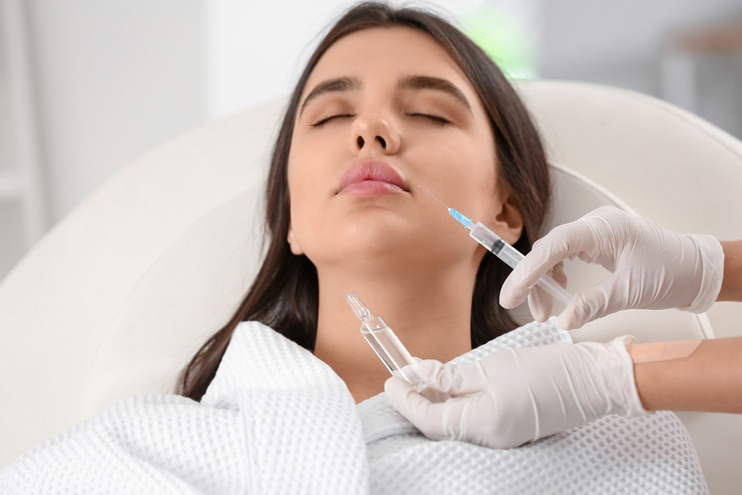
Skin Botox involves injecting small amounts of diluted botulinum toxin into the superficial layers of the skin, with the aim of improving the appearance of enlarged pores, excess oiliness, fine lines and skin texture.
Schedule a ConsultationSkin Botox Treatment in Seoul
Medically reviewed by Dr. Joong-Ha Ryu, MD, PhD Youth&Young Clinic Cheongdam, Gangnam-gu, Seoul
Skin Botox places very small amounts of diluted botulinum toxin into the superficial layers of the skin, and most people searching for skin Botox in Korea are asking about pores, shine and surface texture rather than about frown lines. That is the whole distinction: the needle stays shallow and the target is the skin itself. At Youth&Young Clinic Cheongdam in Seoul the treatment sits under Aesthetic Injectables.
What Is Skin Botox Treatment?
Skin Botox involves injecting small amounts of diluted botulinum toxin into the superficial layers of the skin, with the aim of improving the appearance of enlarged pores, excess oiliness, fine lines and skin texture.
Conventional botulinum toxin injection is directed at a specific muscle; this technique spreads a much weaker dilution across many shallow points, which is why it is also described as a microinjection or intradermal Botox treatment.
The injections are delivered with a fine needle after the area is cleansed, with photographs taken beforehand if you consent to them.
A session commonly runs 15 to 30 minutes, not counting consultation, preparation or numbing time; a topical anesthetic adds roughly another 15 to 30 minutes.
The effect is temporary, often in the region of two to four months, and varies with product, dose, technique, area and individual response.
It does not permanently shrink pores, remove wrinkles, treat every form of acne, or produce the lifting effect of surgery.
That last bullet is the one patients most often arrive without. A treatment aimed at the surface behaviour of skin cannot do the work of a treatment aimed at tissue laxity, and the honest version of this page says so near the top rather than in a footnote. If what bothers you is sagging rather than shine, this is not the entry on the menu that addresses it.
Who Performs Skin Botox Treatment at Youth&Young Clinic Cheongdam
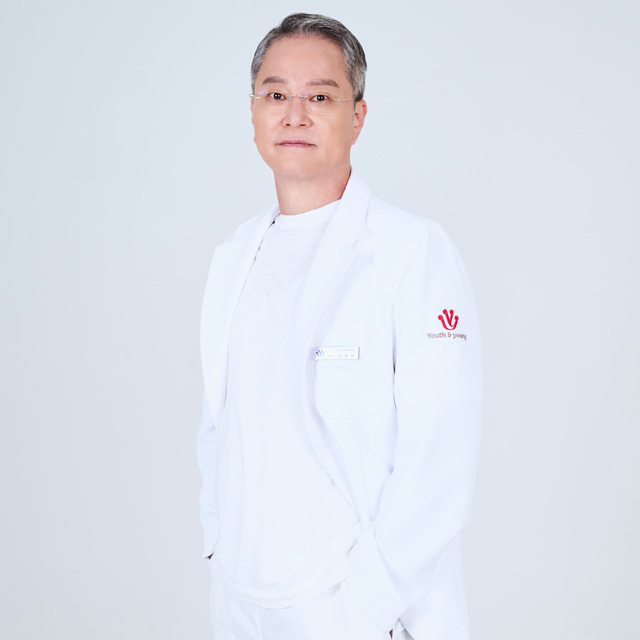
Dr. Joong-Ha Ryu, MD, PhD
Plastic Surgeon
Two clinicians are named for this treatment. Dr. Joong-Ha Ryu leads it.
As Director and Medical Advisor, Dr. Ryu holds both an MD and a PhD. Over three decades of his working life has gone into laser cosmetic surgery, CO₂ resurfacing and laser deep dermabrasion among it, and that background is relevant here in a specific way: judging how much a given patient's skin can tolerate, and at what depth, is the daily work of resurfacing, and a superficial injectable is a decision made on the same reading of the skin.
This page does not claim one doctor performs every session.
Who Is a Good Candidate for Skin Botox Treatment?
Adults who want a temporary improvement in skin texture, superficial fine lines, excess oiliness, or the look of enlarged pores.
People who hold realistic expectations and understand that the effect fades.
People who have been assessed in person by a qualified medical professional before anything is injected.
Treatment may be unsuitable, or may need to wait, in these situations:
A known allergy to the proposed product.
An infection at the intended injection site.
Pregnancy or breastfeeding, where safety data are limited and the decision follows medical advice and the product's own guidance.
Certain neuromuscular disorders, or existing difficulty with swallowing or breathing, both of which call for careful assessment first.
Use of medications that affect neuromuscular transmission, which must be disclosed and reviewed.
None of those is a fixed bar in every case; several are reasons for a longer conversation rather than a refusal. What they have in common is that the clinician cannot weigh them without being told, which is why the medication and history questions at consultation are not a formality.
What to Expect: Procedure, Recovery, and Results Timeline
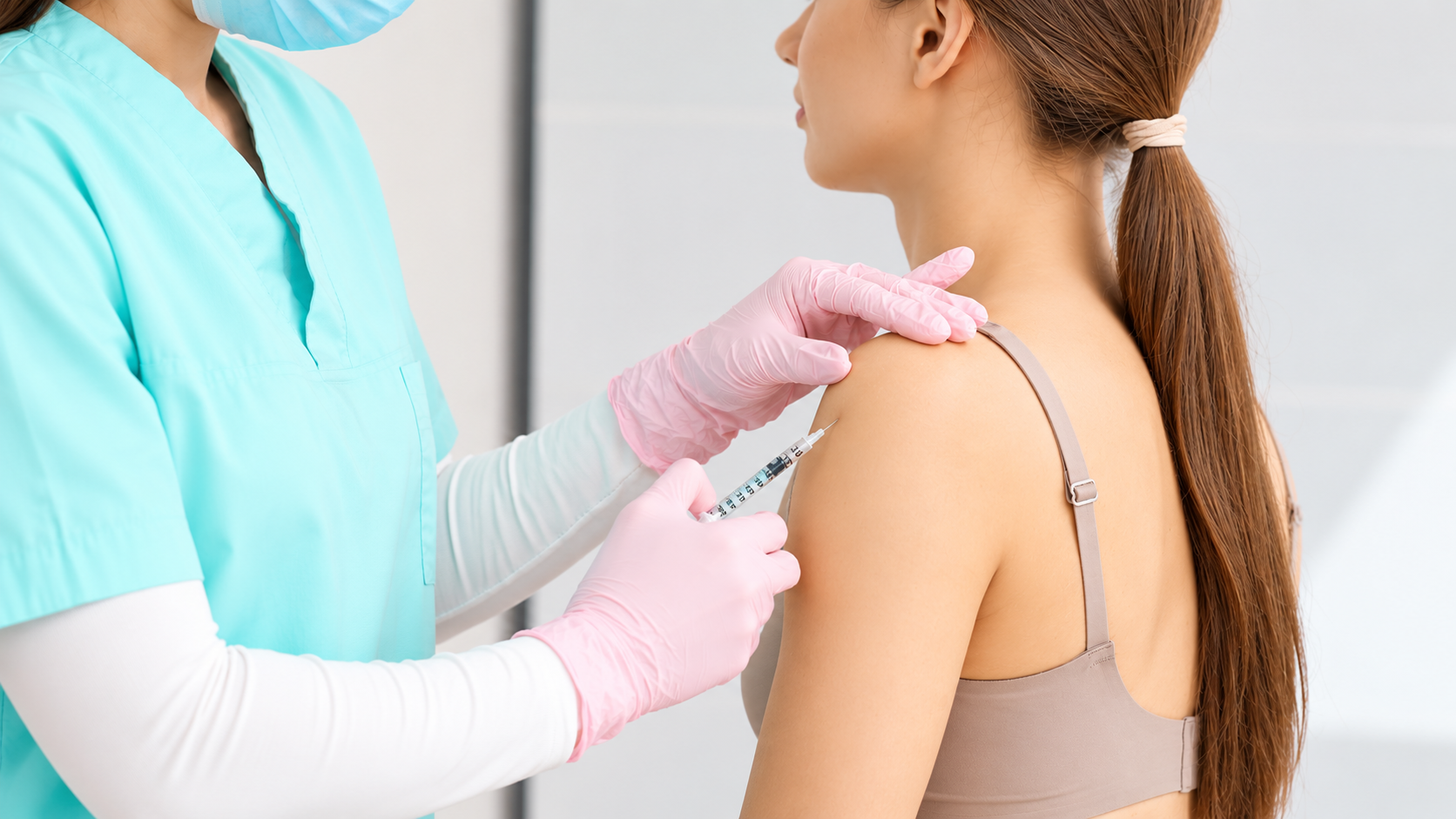
The consultation begins with your medical history, medications, allergies, any previous botulinum toxin treatment, and what you actually want changed. The clinician then examines the skin for oiliness, pore appearance, fine lines and anything else that might point to a different treatment altogether. Expected benefits, limitations, risks, alternatives and an individual plan are explained before you agree to proceed.
NHS guidance for anyone weighing a cosmetic procedure is worth borrowing at that moment. It advises putting three questions to the practitioner — what the procedure involves, which products will be used, and what could go wrong — and it describes a cooling-off period after the consultation as the normal expectation rather than a concession (NHS). A clinic that wants a decision in the room is departing from that standard.
Preparation is short. Tell the clinician about medical conditions, pregnancy or breastfeeding, allergies, all medicines and supplements, and any earlier toxin treatment. Prescribed medication is not something to pause on your own initiative. Arrive with clean skin, hold off on irritating skincare if you have been told to, and raise alcohol and supplements with the clinician rather than guessing.
Stage | What typically happens |
|---|---|
In the room | Skin assessed, area cleansed, optional topical numbing, then multiple shallow injections at selected points |
Same day | Normal daily activity usually resumes soon afterwards |
Hours to a few days | Mild redness and small raised bumps generally settle in this window |
Longer | Bruising, where it occurs, outlasts the other injection-site effects |
One to two weeks | The point at which the effect is usually assessed |
For context on the drug category rather than on this clinic, the American Academy of Dermatology states that most people see results from botulinum toxin therapy within three to seven days, that improvements last about three to four months and sometimes longer, and that treatment is carried out in a single office visit after which patients return to most everyday activities immediately (American Academy of Dermatology). The same page lists the FDA-approved dermatologic uses in the United States as frown lines between the eyebrows, crow's feet, and underarm excessive sweating. That list describes how the drug is approved in one country; a skin-quality indication is not on it, and nothing here should be read as a statement about the product used at this clinic.
Recovery is therefore measured in hours rather than days for most people, and the number worth planning around is the one to two weeks before the effect can be judged fairly. A same-day visit is often enough for an uncomplicated treatment, with extra time allowed if a consultation, a follow-up or other procedures are also in the diary. Many patients fly the same day if they feel well and nothing has gone wrong, though that should follow the clinic's advice, particularly where treatments have been combined.
Combining Skin Botox Treatment with Other Treatments
Selected skincare treatments and chemical peels may be considered alongside it, subject to assessment of how the two interact and in which order.
Where the concern runs deeper than the surface — scarring, uneven texture at depth, pigmentation — the treatments under Laser Dermatology address it by a different mechanism.
Where the goal is hydration and smoothness rather than oil control, Skin Booster Injections are a separate injectable with a separate product class behind them.
Conventional botulinum toxin injection for dynamic expression lines is a distinct use of the same drug and is planned separately.
Timing between treatments is a clinical judgement rather than a diary exercise, and the clinic sets it during the consultation.
Safety, Precision, and Clinic Standards
Temporary redness, swelling, tenderness, pinpoint bleeding, bruising and small bumps at the injection sites are the common findings after this treatment. Less common but more consequential risks are infection, asymmetry, unwanted muscle weakness, drooping of an eyelid or a brow, and altered facial expression.
Those last three deserve a sentence of their own. Even a dilute preparation placed in the skin can reach muscle if it is put in the wrong plane or the wrong place, and the visible consequence is a brow or lid that sits differently for weeks. It is temporary, and it is also the reason the depth and the mapping of the injection points matter more here than the volume does.
The clinic holds Korean business registration number 720-46-00344. It is a Registered Medical Institution for Attracting Foreign Patients under the Ministry of Health and Welfare, in compliance with the Medical Overseas Expansion and Foreign Patients Attraction Act. That is a registration for treating international patients; it is not a facility accreditation.
Travelling from the United States for a short-downtime treatment
The NHS raises a problem with overseas cosmetic treatment that applies even when the treatment itself is minor: aftercare may be unavailable abroad, or available only to a lower standard, and there may be no clinician at home for you to turn to if something develops. Its advice is to fix three things before booking — what happens if there is a complication, where any follow-up will take place, and what that will cost (NHS).
For a treatment with little downtime, that advice lands differently than it does for surgery. The risk is not that you will be too unwell to fly. It is that the effect is assessed at one to two weeks, by which point you will be on another continent, and an asymmetry or a dropped brow noticed at that stage needs a route back to the people who injected you. What the clinic states for international patients is that it provides aftercare instructions in English, clear guidance on expected downtime, a defined process for patients who need advice after leaving Korea, and the possibility of remote follow-up once home. Getting that process described in writing beforehand is the part that makes the one-to-two-week review workable.
What to settle before you agree to the treatment
Patients from the United States who contact the clinic raise a consistent set of concerns before booking, and four of them apply to this treatment with particular force.
Who is injecting, and what they have done. Verifying qualifications and procedure-specific experience is the item patients raise most often. For an intradermal technique, the relevant question is about the injection plan and the depth, not about operating-theatre credentials.
What natural actually means here. Patients consistently describe wanting a subtle change rather than a visibly treated look, and name asymmetry as the specific thing they fear. Ask what asymmetry would look like in your case and how it would be managed.
Clinical photographs and privacy. How images and personal data are stored and used is something patients ask about directly, and before-and-after photography is routine for skin-quality treatments. That conversation belongs before the first set is taken.
Consent you can read. Clear English-language explanation of risks, alternatives and limitations is named explicitly by patients. For this treatment the limitations half of that sentence is the one that matters, because the gap between what the treatment does and what people hope it does is wide.
A fifth point, less often raised but equally practical: patients prefer verifiable information and realistic outcome descriptions over promotional claims. That preference is easy to test in a consultation. Ask what the treatment will not do, and listen to how readily the answer comes.
Where it sits among the alternatives
Several other approaches address overlapping concerns by unrelated mechanisms. Which one fits depends on what is actually bothering you, your skin type, any contraindications, and how much downtime you can absorb.
Approach | Best suited to | What it costs you in downtime |
|---|---|---|
Skin Botox Treatment | Oiliness, pore appearance, superficial fine lines, surface texture | Hours, with injection-site effects over a few days |
Topical skincare and retinoids | Oil control and selected texture concerns, managed continuously | None, but it is an ongoing routine rather than an appointment |
Chemical peel or microneedling | Texture and surface renewal through controlled injury | Days of visible recovery, depending on depth |
Laser or light treatment | Pigmentation, texture and scarring below the surface | Real recovery, in exchange for change the surface cannot reach |
A consultation that moves you across this table has done its job. The treatment you walked in naming is not always the one that matches the concern you described.
The Bottom Line
Skin Botox Treatment puts diluted botulinum toxin into the superficial skin to address oiliness, pore appearance, fine lines and texture.
It is a different use of the drug from conventional injection into a named muscle, and the two are planned separately.
A session commonly takes 15 to 30 minutes, with topical numbing adding roughly 15 to 30 more.
Redness and small bumps settle within hours to days; bruising lasts longer; the effect is judged at one to two weeks.
The result is temporary — often around two to four months — and permanent pore reduction is not among the things it achieves.
Frequently Asked Questions
How is this different from the Botox people get for frown lines? The dilution, the depth and the target. Conventional injection places the product into a specific muscle to reduce its movement; this technique distributes a weaker dilution through many shallow points to act on skin behaviour. They answer different complaints and are not substitutes for each other.
Will it get rid of my pores? No. It may make them less noticeable for a period, which is a smaller claim than the one usually made for it. Pore size is not permanently altered by this treatment, and anyone telling you otherwise is selling rather than explaining.
How long does an appointment take? Around 15 to 30 minutes for the treatment itself, excluding consultation, preparation and numbing. If a topical anesthetic is used, add roughly 15 to 30 minutes to that. Most people are treated in a single visit, with follow-up based on how they respond.
Does it hurt? Expect brief pinpricks, some stinging, and mild discomfort. There are more injection points than in a conventional treatment, but each one is shallow. A topical anesthetic or other comfort measures can be offered depending on your needs and the clinic's protocol.
When will I know whether it worked? Changes may begin to appear over several days, but the sensible review point is approximately one to two weeks after treatment. Judging it earlier tends to produce either premature disappointment or a request for more product than you need.
Can I fly home the same day? Many patients do, provided they feel well and have had no complications. Follow whatever the clinic advises, especially if this was combined with another procedure. The more relevant travel question is how you will be reviewed at the two-week mark from abroad.
What if the result is uneven? Asymmetry is an uncommon but recognised outcome, and so is temporary weakness in a muscle that was not the target, including a drooping eyelid or brow. These effects wear off as the product does. Report them rather than waiting, so the next treatment plan can account for what happened.
What do I do if something looks wrong after I get home? Contact the clinic through its contact page, by phone on +82-2-545-9393, or by email at info@youthandyoungcheongdam.com. If you develop signs of infection, or symptoms that are getting worse rather than better, seek local medical care without waiting for a reply.
Book a Consultation at Youth&Young Clinic Cheongdam
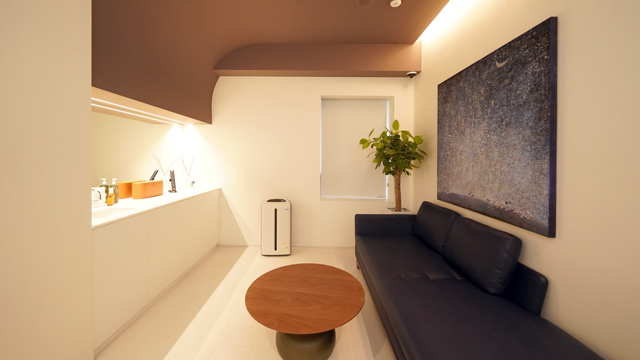
A useful first appointment for this treatment is mostly an examination and a conversation about expectations, because the gap between what intradermal injection does and what people hope it does is where dissatisfaction comes from. Consultations are available in English, and the clinic can set out what is proposed, how the injection points will be mapped, when the result should be reviewed, and what the alternatives would be if the concern turns out to sit deeper than the surface. Book through the clinic contact page, or call +82-2-545-9393. The clinic is at 2F, 49 Dosan-daero 55-gil, Gangnam-gu, Seoul 06014, Republic of Korea, and is open Monday, Tuesday, Thursday and Friday from 10:00 to 19:00 KST, and Saturday from 10:00 to 15:00 KST, excluding the second and fourth Saturdays of each month.
Disclaimer
This page is for general informational purposes and does not constitute individualized medical advice. Candidacy, technique, and expected outcomes can only be determined through a consultation with a qualified physician.
Sources & Further Reading
Other Services
Explore additional treatments offered by our specialists.

Sub-Brow Lift
A sub-brow lift is a surgical procedure that removes selected excess skin, and sometimes a limited amount of underlying tissue, from the upper eyelid through an incision just below the eyebrow.
Learn More

Stem Cell Skin Treatment
Stem cell skin treatment is a broad term used for aesthetic procedures marketed to improve skin quality, texture, hydration, or visible signs of aging using cell-based materials or products described as stem-cell-derived.
Learn More
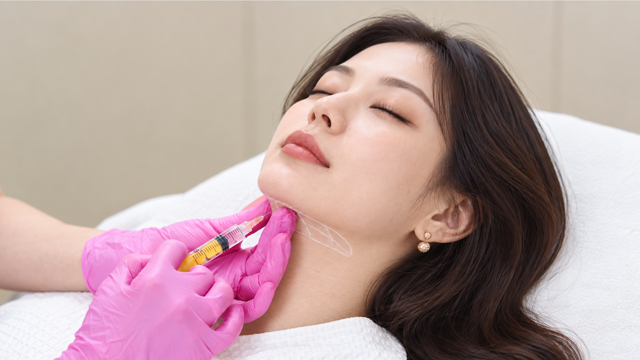
Stellate Ganglion Block
Stellate ganglion block is an injection-based procedure that delivers local anesthetic near the stellate ganglion, a group of sympathetic nerves located in the lower neck, temporarily interrupting certain sympathetic nerve signals.
Learn More