Personalized Medical Care & Dedicated International Patient Concierge


Laser Dermatology · Consultation Required
Skin Tightening & Lifting
Skin Tightening & Lifting refers to treatments intended to improve skin firmness and reduce the appearance of mild to moderate skin laxity.
Schedule a ConsultationSkin Tightening and Lifting in Seoul

Medically reviewed by Dr. Joong-Ha Ryu, MD, PhD.
Youth&Young Clinic Cheongdam, Gangnam-gu, Seoul
Skin Tightening & Lifting refers to treatments intended to improve skin firmness and reduce the appearance of mild to moderate skin laxity. Depending on the method, energy-based devices such as ultrasound or radiofrequency may stimulate collagen remodeling, while surgical procedures remove or reposition tissue for more substantial lifting. At Youth&Young Clinic Cheongdam in Seoul it is offered within Laser Dermatology, and the honest framing is that non-surgical treatments generally produce more subtle changes than surgery.
What Is Skin Tightening and Lifting?
It is a group of treatments that firm skin by heating tissue to prompt collagen remodeling, rather than by removing or repositioning it.
Technologies may include radiofrequency, ultrasound-based devices, or laser systems, depending on the treatment selected.
Many non-surgical treatments require no anesthesia; cooling or topical anesthetic may be used depending on the technology and individual need.
Patients may feel warmth, tingling, pressure, or brief discomfort during treatment.
A session may take approximately 30 to 90 minutes, depending on the device and the treatment area.
Some treatments involve one session; others require a series or maintenance visits.
The most appropriate option depends on the treatment area, degree of laxity, skin quality, medical history, and desired outcome. Results vary by method, and the difference between methods is large enough that comparing two quotes without comparing the underlying technology is not a comparison at all.
Who Performs This Treatment at Youth&Young Clinic Cheongdam
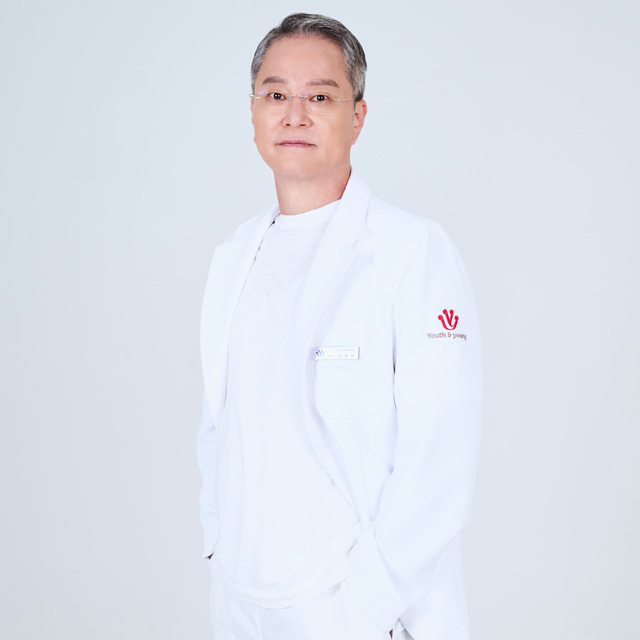
Dr. Joong-Ha Ryu, MD, PhD
Plastic Surgeon
Treatment is carried out by Dr. Joong-Ha Ryu.
The clinic’s stated laser-based approach to laxity covers fine lines, deeper wrinkles and skin laxity, with treatment depth adjusted to skin condition, age and treatment goals. Dr. Ryu, the clinic’s Director and Medical Advisor, holds MD and PhD degrees and has operated UltraPulse systems across four generations since 1993; his assessment of where laxity ends and surface change begins is what decides whether an energy device is the right tool for a given face.
Who Is a Good Candidate?
Adults with mild to moderate skin laxity.
Adults in generally good health.
Patients with realistic expectations about the degree of change.
Suitability depends on the treatment area, skin condition, degree of laxity, medical history, and the specific device or technique. Treatment may be unsuitable or need postponing for:
People with active skin infections or open wounds.
People with certain implanted electronic devices or metal implants near the treatment area, depending on the technology used.
People who are pregnant.
People with specific medical conditions, or who have had recent procedures.
People with significant excess skin, for whom a surgical consultation may be more appropriate.
What to Expect: Procedure, Recovery, and Results Timeline

At consultation the clinician reviews previous cosmetic procedures, your skin concerns and your desired result. The treatment area and the degree of laxity are assessed, and the clinician determines whether ultrasound, radiofrequency, another treatment, or surgery is more appropriate. Expected results, risks, discomfort, number of sessions and costs are discussed before treatment rather than during it.
Preparation is brief: share your medical history, medications, supplements, implanted devices, allergies and previous cosmetic treatments. The implanted-device question is not a formality — it can change which technology is usable.
On the day, the skin and treatment area are assessed and the plan confirmed. The skin is cleansed, and marked where needed. Protective measures appropriate to the device are applied. A coupling gel or other preparation may be used. The device is applied to the planned area. The skin is checked afterwards and aftercare instructions are given. Steps vary by device.
Stage | What typically happens |
|---|---|
Immediately after | Temporary redness, swelling, tenderness or sensitivity may occur |
Days after | Many patients resume normal activities quickly, depending on the treatment |
Weeks to months | Collagen remodeling and gradual change continue |
Months 2–6 | Collagen-related improvement commonly develops over this period |
Beyond | Results may last several months to around a year or longer |
Aftercare is light: keep the treated area clean, moisturize as advised, protect the skin from the sun, and temporarily avoid irritating skincare products. More intensive treatments may require longer recovery.
Some patients notice subtle early changes. Collagen-related improvement commonly develops over two to six months. Results may last several months to around a year or longer, depending on the device, the treatment plan, age and skin condition. Aging continues regardless, and maintenance treatments may be considered where clinically appropriate.
What "modest" actually means here
Patients are often told non-surgical tightening gives "natural" results, which is true and unhelpfully vague. The dermatological description is more specific. Non-invasive procedures leave the skin intact, with no puncture wound, incision or raw skin afterwards; results tend to appear gradually, downtime is little or none, most procedures take an hour or less, and side effects are usually some redness and swelling (American Academy of Dermatology).
The numbers differ by technology, and they are worth knowing before choosing.
Technology | Typical pattern |
|---|---|
Ultrasound | Heat delivered deep into the skin; most people see modest lifting and tightening within two to six months after one treatment |
Radiofrequency | Some tightening felt soon after; best results around six months, as collagen forms; results can last two to three years with the right skin care |
Laser treatment that spares the surface | May need three to five treatments, with results appearing gradually between two and six months after the last |
A surgical lift gives the most dramatic result; the non-surgical options offer less downtime and lower cost, and many can be used on areas of the body beyond the face. Neither statement makes the other one false, and choosing between them is a question about how much laxity you actually have.
It helps to know what the surgical option is being compared against. A facelift is cosmetic surgery to lift up and pull back the skin on the face, and it is aimed at loose skin around the lower half of the face — mainly the jowls — and the neck; it takes two to three hours, most people stay in hospital overnight, and full recovery takes about two to four weeks (NHS). Set beside an hour-long appointment with little or no downtime, the two are clearly not substitutes, and the right question is which one matches the problem.
Where the minimally invasive options sit
Between the non-invasive devices above and surgery there is a middle tier, and it is worth knowing it exists before concluding that the choice is binary. Minimally invasive skin tightening gives more noticeable results than the non-invasive options, while still not matching a surgical procedure such as a facelift, eyelid surgery or a neck lift. It requires less downtime than surgery and carries less risk of side effects. Patients are sedated for it and have a few days of downtime afterwards.
Two approaches sit in that tier. In one form of radiofrequency, a thin tube or needles is inserted into the skin to heat the tissue beneath, which places the heat exactly where tightening is wanted; results tend to appear faster, usually in about a month, and in some studies patients saw gradual tightening and lifting for close to a year. Afterwards someone else has to drive you home, a compression garment may be needed for four or five days, and there is a wound to care for.
The other is laser resurfacing, which is the most effective procedure for tightening loose skin and also the fastest to show results — tightening and fewer wrinkles within two weeks of healing — at the cost of five to seven days at home and a greater risk of side effects such as scarring. At this clinic that option is the separate resurfacing treatment rather than part of this service, and whether it is the better answer for you is a question for the same consultation.
Creams, and what they do not do
It is worth saying plainly because the claims are everywhere. Dermatologists hold that a cream or lotion cannot lift sagging skin, because it cannot penetrate the skin deeply enough to do so. Where a product appears to work immediately, it is usually acting as an effective moisturiser: plumping the skin so that fine lines and wrinkles are less noticeable, temporarily, for as long as it is applied daily. A product containing a retinoid may produce a small change by helping the body make more collagen. Expecting results comparable to a procedure from a jar leads to disappointment, and to money spent that would have paid for part of a consultation.
Alternatives and Combinations
Alternative | Where it fits |
|---|---|
Topical skincare | Generally provides limited lifting |
Injectable treatments where appropriate | Address volume rather than laxity |
A different energy technology | Same category, different depth and sensation |
Thread procedures | Mechanical repositioning without open surgery |
Surgical lifting | The most substantial change, with the longest recovery |
Skin tightening may be combined with selected skincare treatments or other aesthetic procedures depending on need. Combining energy devices, injectables or resurfacing treatments can increase irritation or complications if poorly timed, so sequencing is part of the plan rather than an afterthought.
Outcomes also depend on factors outside the clinic. Being at a healthy weight and maintaining it, eating well, not smoking, drinking little alcohol, protecting the skin from the sun, never tanning indoors, and having only a small amount of sagging skin are all associated with better results from non-surgical tightening. Where there is a great deal of sagging skin, tightening may simply not help.
Safety, Precision, and Clinic Standards
Temporary redness, swelling, tenderness and sensitivity may occur. Depending on the device and technique, possible complications include burns, blistering, pigmentation changes, uneven results, nerve irritation or injury, and unwanted changes to underlying fat or contour. Seek medical advice for severe or worsening pain, blistering, persistent numbness, or other unexpected symptoms.
Two of those deserve emphasis because they are specific to energy devices rather than generic. Unwanted change to underlying fat is a contour problem that treatment cannot easily reverse. Nerve irritation presenting as persistent numbness is a symptom to report rather than to wait out. Both are reasons the device and its settings should be chosen by someone who treats laxity regularly.
Pregnancy, a skin infection, and certain medications are each enough to make a skin-tightening procedure the wrong choice for now. Implanted electronic devices and metal near the treatment area matter for the same practical reason: some technologies interact with them.
The clinic holds Korean business registration number 720-46-00344. It is a Registered Medical Institution for Attracting Foreign Patients under the Ministry of Health and Welfare, in compliance with the Medical Overseas Expansion and Foreign Patients Attraction Act. That is a registration for treating international patients; it is not a facility accreditation.
The Bottom Line
Skin tightening and lifting addresses mild to moderate laxity by stimulating collagen remodeling rather than by removing tissue.
Non-surgical treatments generally produce more subtle changes than surgery, and significant excess skin is a surgical question.
A session typically runs 30 to 90 minutes, and many patients resume normal activity quickly.
Collagen-related improvement commonly develops over two to six months.
Results may last several months to around a year or longer, and maintenance may be considered.
Frequently Asked Questions
How much lifting can I realistically expect? Enough to improve the appearance of mild laxity, create a firmer look and subtly define facial contours. Not enough to match a surgical lift. If what you are describing is substantial sagging, the useful conversation is a surgical consultation rather than a longer course of energy treatments.
When will I see a change? Some patients notice subtle early change, but collagen-related improvement commonly develops over two to six months. The gradual onset is a feature of the mechanism rather than a delay, and it is also why results tend to look unremarkable to other people.
How long will it last? Results may last several months to around a year or longer, depending on the device, the plan, your age and your skin condition. Aging continues throughout, so maintenance treatments may be considered where clinically appropriate.
Is there any downtime? Usually little or none for non-invasive treatments, which leave the skin intact. Temporary redness and swelling are the common after-effects. More intensive treatments may require longer recovery, and the clinician should say which category yours falls into.
Does it hurt? Many non-surgical treatments need no anesthesia. Expect warmth, tingling, pressure or brief discomfort. Cooling or a topical anesthetic may be used depending on the technology and on your own sensitivity.
I have a pacemaker. Can I have this treatment? Tell the clinician before anything else. Certain implanted electronic devices or metal implants near the treatment area can make a technology unsuitable, and which technologies are affected depends on the device. It is an answerable question, but it has to be asked first.
Will one session do it? Some treatments involve a single session; others require a series or periodic maintenance visits. Which applies depends on the technology selected and the degree of laxity. Ask how many sessions the plan assumes before starting it.
What do I do if something looks wrong afterwards? Contact the clinic through its contact page, by phone on +82-2-545-9393, or by email at info@youthandyoungcheongdam.com. Pain that is severe or worsening, blistering, and numbness that does not resolve are all reported rather than tolerated. Where a reply does not arrive within a few hours and the symptom is getting worse, be seen where you are and tell the clinic afterwards.
Book a Consultation at Youth&Young Clinic Cheongdam
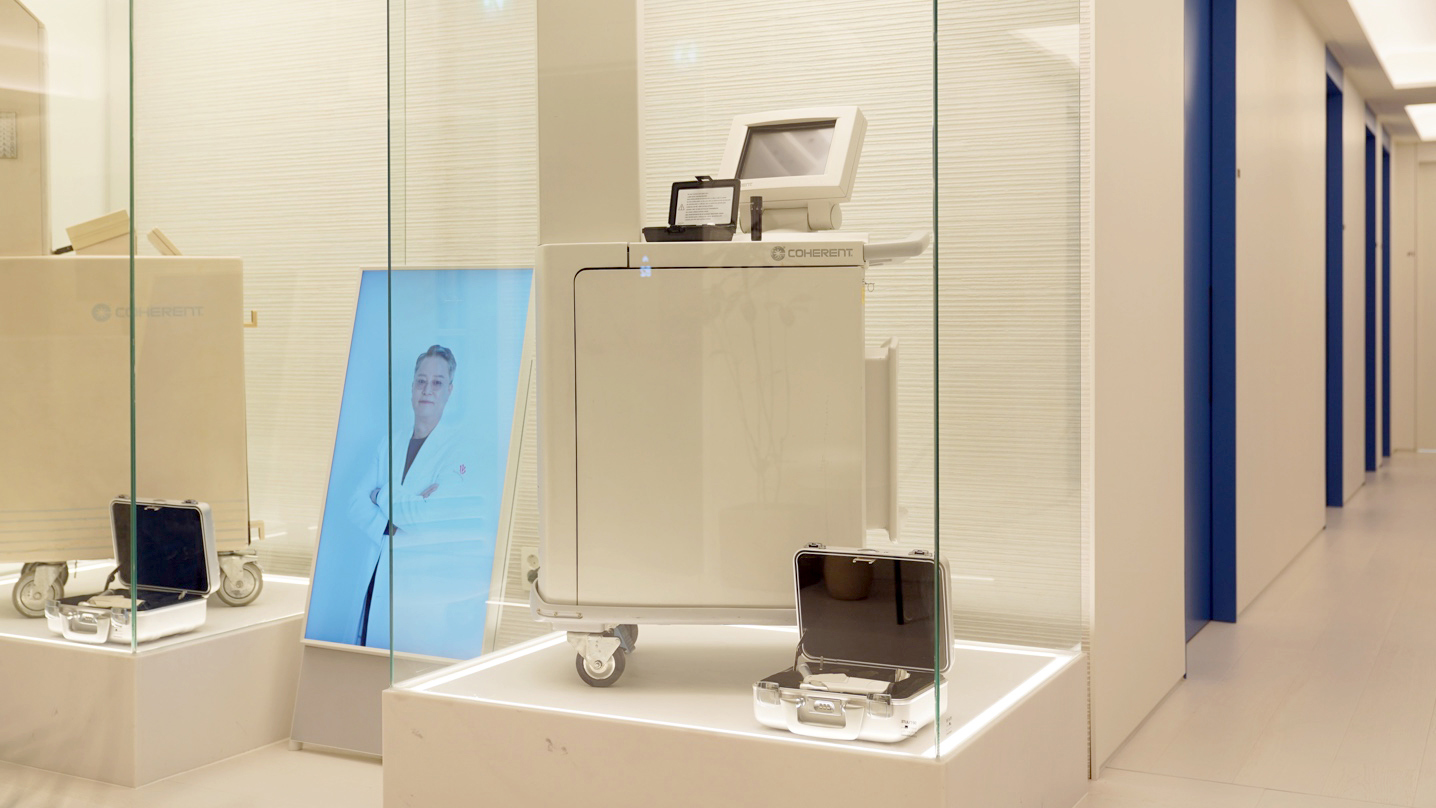
A skin tightening and lifting consultation in Seoul assesses the degree of laxity first and the technology second, and it includes the surgical option where that is the better answer. Consultations are available in English. Book through the clinic contact page, or call +82-2-545-9393. The clinic is at 2F, 49 Dosan-daero 55-gil, Gangnam-gu, Seoul 06014, Republic of Korea, and is open Monday, Tuesday, Thursday and Friday from 10:00 to 19:00 KST, and Saturday from 10:00 to 15:00 KST, excluding the second and fourth Saturdays of each month.
Disclaimer
This page is for general informational purposes and does not constitute individualized medical advice. Candidacy, technique, and expected outcomes can only be determined through a consultation with a qualified physician.
Sources & Further Reading
Other Services
Explore additional treatments offered by our specialists.

Sub-Brow Lift
A sub-brow lift is a surgical procedure that removes selected excess skin, and sometimes a limited amount of underlying tissue, from the upper eyelid through an incision just below the eyebrow.
Learn More

Stem Cell Skin Treatment
Stem cell skin treatment is a broad term used for aesthetic procedures marketed to improve skin quality, texture, hydration, or visible signs of aging using cell-based materials or products described as stem-cell-derived.
Learn More
Stellate Ganglion Block
Stellate ganglion block is an injection-based procedure that delivers local anesthetic near the stellate ganglion, a group of sympathetic nerves located in the lower neck, temporarily interrupting certain sympathetic nerve signals.
Learn More