Personalized Medical Care & Dedicated International Patient Concierge


Eyelid & Under-Eye Surgery · Consultation Required
Upper Blepharoplasty
Upper blepharoplasty Korea enquiries come in two varieties: people who dislike how heavy their lids look, and people whose lids have begun to get in the way of seeing.
Schedule a ConsultationUpper Blepharoplasty in Seoul

Medically reviewed by Dr. Joong-Ha Ryu, MD, PhD.
Youth&Young Clinic Cheongdam, Gangnam-gu, Seoul
Upper blepharoplasty Korea enquiries come in two varieties: people who dislike how heavy their lids look, and people whose lids have begun to get in the way of seeing. Upper eyelid surgery in Seoul answers both from the same incision, taking away excess skin and, where indicated, adjusting the tissue beneath it. This droopy eyelid surgery is offered at Youth&Young Clinic Cheongdam within Eyelid & Under-Eye Surgery.
What Is Upper Blepharoplasty?
Upper blepharoplasty is a surgical procedure that removes excess skin and, when indicated, adjusts underlying tissue of the upper eyelids.
The incision is planned along the natural upper-eyelid crease, so the healed line falls where the lid already folds.
Selected excess skin is removed, and other tissue is removed or adjusted only where the assessment calls for it.
Closure uses sutures or another suitable method, chosen by the surgeon.
The operation typically takes around one to two hours.
It may address sagging eyelid skin, improve eyelid contour, and help reduce visual obstruction caused by excess skin.
Hooding and drooping are two different complaints that patients tend to report with the same words. Excess skin resting on the lid is a skin problem that this operation removes. An eyelid that will not lift properly is a muscle problem, and removing skin does not correct it. Sorting out which one you have is the first job of the consultation, and getting it wrong is how people end up disappointed by a technically good operation.
Who Performs Upper Blepharoplasty at Youth&Young Clinic Cheongdam
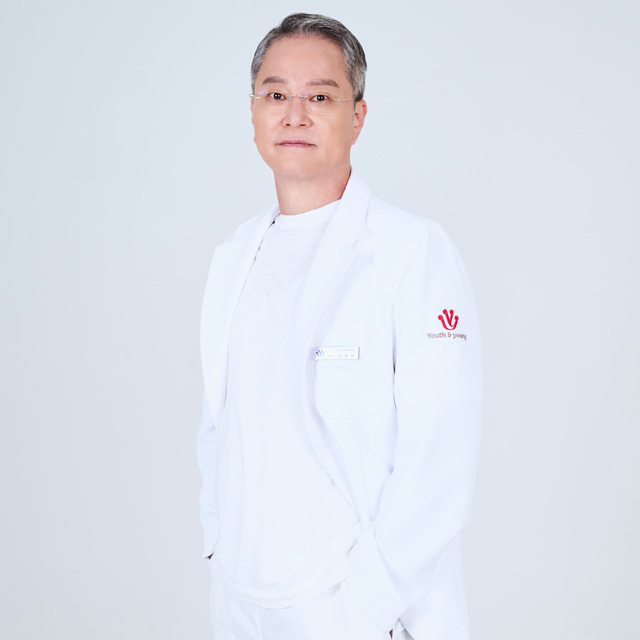
Dr. Joong-Ha Ryu, MD, PhD
Plastic Surgeon
Dr. Joong-Ha Ryu leads this service.
Dr. Ryu, the clinic’s Director and Medical Advisor, holds MD and PhD degrees and brings more than thirty years in laser cosmetic surgery, concentrated on the lower lid and on CO₂ laser resurfacing. On an upper-lid consultation his contribution is largely one of scope: he can say whether a skin-texture or resurfacing concern is being mistaken for a skin-excess one, which is a distinction that decides whether surgery is the right answer at all.
This page does not claim one doctor performs every session.
Who Is a Good Candidate for Upper Blepharoplasty?

Adults with excess or sagging upper-eyelid skin who are in suitable general health.
People who understand the potential risks and hold realistic expectations about the change.
People prepared to attend a consultation, since suitability is determined there and not from a photograph.
Eligibility may be affected, and sometimes decided against, by:
Medical conditions that impair healing.
Significant eye problems.
Other factors that raise surgical risk and need weighing individually.
Eyelid drooping caused by muscle dysfunction, which may require a different or an additional procedure.
Final eligibility requires medical assessment. The fourth item on that list is the one that most often changes the plan rather than cancelling it.
What to Expect: Procedure, Recovery, and Results Timeline
The consultation reviews medical and eye history, current medications, allergies, previous surgery and what you want to look like afterwards. The clinician examines the eyelids and may assess vision, eyelid function and photographs in order to plan. Where excess upper-eyelid tissue is obstructing the visual field, visual field testing may be needed as part of that assessment.
Before surgery, disclose medical conditions, eye symptoms, allergies, previous surgeries and every medicine and supplement you take. A medical evaluation or tests may be requested. You may be advised to change certain medicines or your smoking habits, and some medicines and supplements raise bleeding risk — but prescribed medicines are not stopped without medical guidance from whoever prescribed them.
Anesthesia depends on the planned procedure and on your medical needs; local anesthesia, sometimes with sedation, may be appropriate in selected cases, and the treating clinician sets the pain-control plan. Pain during surgery is reduced by the anesthetic. Afterwards, mild discomfort, tightness, swelling or soreness may occur and can usually be managed with the pain relief the surgeon recommends.
Stage | What typically happens |
|---|---|
In the operating room | The anesthesia plan is set, the natural crease is marked, an incision is made along it, selected excess skin and other tissue are removed or adjusted, and the incision is closed |
First days | Swelling, bruising, tightness, dry or watery eyes, irritation and light sensitivity |
Approximately 10–14 days | Swelling and bruising generally improve, although recovery varies between people |
Weeks to months | Incision healing and scar maturation continue, and the eyelid appearance keeps clarifying |
Aftercare is wound care and medication as instructed, cold compresses if advised, protection of the eyelids from sun exposure, and no strenuous activity until the surgeon says it may resume. Attend the follow-up visits. New vision problems, significant bleeding, or severe eye pain call for urgent medical assessment, not for waiting to see whether they pass.
The eyelids declare themselves slowly. The appearance becomes clearer as swelling and bruising subside, and final healing may take several months. Results can be long-lasting, but eyelid tissues continue to age and sagging may recur in time — this is an operation that resets a position rather than one that freezes it.
There is no fixed stay in Korea that is right for every patient. Plan the visit around postoperative examinations, wound healing and possible suture removal, and confirm the required stay with the operating surgeon before booking travel. Patients commonly fly home around ten to fourteen days after upper blepharoplasty, depending on recovery and on the surgeon's advice. Bruises and redness may take several weeks to fade, and most people take about two weeks off work after eyelid surgery (NHS).
Safety, Precision, and Clinic Standards
Possible risks include swelling, bruising, bleeding, infection, scarring, asymmetry, dry or irritated eyes, difficulty closing the eyes, changes in eyelid sensation, anesthesia-related complications, and the possible need for revision surgery. Serious vision complications are rare but possible.
Common temporary effects sit at the mild end of that range: swelling, bruising, mild discomfort, tightness, dry or watery eyes, irritation and light sensitivity. Sudden vision changes or severe eye pain belong at the other end and require urgent medical attention.
The clinic holds Korean business registration number 720-46-00344. It is a Registered Medical Institution for Attracting Foreign Patients under the Ministry of Health and Welfare, in compliance with the Medical Overseas Expansion and Foreign Patients Attraction Act. That is a registration for treating international patients; it is not a facility accreditation.
When the eyelid is not where the problem starts
Three different anatomical stories produce a heavy upper eye, and only one of them is treated by removing eyelid skin.
What is actually happening | What it may call for |
|---|---|
Excess skin resting on the lid | Upper blepharoplasty, through the natural crease |
The brow sitting low and pushing tissue downward | Assessment of brow position, and possibly a procedure on the brow instead |
The lifting mechanism of the lid itself underperforming | Evaluation for eyelid ptosis, which is a separate correction |
The clinic also lists observation as a legitimate alternative. Non-surgical options may address selected cosmetic concerns, but they do not remove excess eyelid skin in the way that surgery does, and a clinic claiming otherwise is describing a different result than the one you asked about. Where true ptosis is present, a separate or combined correction may be considered after assessment, and combining changes the risks and the recovery.
Scars, and the long tail of healing
The incision is sited in the crease precisely so the scar has somewhere to hide, and the skin of the upper lid is thin enough that lines there usually settle well. That is a tendency, not a promise: noticeable scarring appears on the risk list, and scar maturation runs for months after the swelling has gone. Sun protection during that period is part of the treatment rather than an optional extra, and the clinic's aftercare instruction to keep the eyelids out of the sun applies for longer than most patients expect.
There is a second reason to care about the months rather than the weeks. Eyelid asymmetry sits on the risk list, and asymmetry is routinely diagnosed too early, while one side is simply holding its swelling longer than the other. The sensible response to a lid that looks uneven at three weeks is to photograph it, keep the follow-up, and ask the question again later, rather than to start negotiating a revision while the tissue is still changing shape. A surgeon who declines to judge the result at that stage is being accurate, not evasive.
Asking the questions before you are in the chair
There is a floor under what a cosmetic consultation should contain, and national guidance states it: you hear what will be done, what will be used, and what can go wrong, and you are given time afterwards instead of being pressed to commit before leaving (NHS). Patients from the United States consistently add their own items to that list, and the clinic records them: the surgeon's experience with this specific operation, the anesthesia arrangements, a clear written estimate with no unexpected fees, before-and-after material presented without guaranteed-outcome claims, informed consent explained in English, how clinical photographs and personal information are handled, and what the clinic does if something goes wrong.
Asking an upper-lid surgeon how much skin they intend to remove is also fair. Taking too little leaves the complaint in place; taking too much contributes to difficulty closing the eyes, which is on the risk list for a reason.
Treatment abroad and the follow-up you will actually have
Operating outside your own country changes the aftercare arithmetic in three ways: it may not be offered, it may be offered to a different standard, and there may be no local professional willing to inherit it. Resolve all three before any deposit, together with where the follow-up happens and what it costs (NHS).
The clinic's stated provision for international patients covers English aftercare instructions, clear downtime expectations, advice on flying and sun exposure, potential online follow-up once you are home, and a defined process for patients who need post-treatment advice after leaving Korea. Written procedure details, a medication list and the aftercare instructions travel with you and are what a clinician in the United States will ask for first. Elective cosmetic surgery and its complications may not be covered by US health insurance, so the contingency plan is one you fund yourself.
The Bottom Line
Upper blepharoplasty removes excess upper-eyelid skin through an incision in the natural crease, adjusting other tissue where indicated.
It typically takes one to two hours, with swelling and bruising generally improving over about ten to fourteen days.
Drooping caused by muscle dysfunction is a different diagnosis and may need a different or additional procedure.
It may improve visual obstruction caused by excess skin in suitable patients; visual field testing may form part of the assessment.
Results can be long-lasting, but eyelid tissues keep aging and sagging may recur.
Frequently Asked Questions
Will the scar show? The incision is placed along the natural upper-eyelid crease, so the line sits in a fold that is already there. Noticeable scarring remains a listed risk, and scars continue maturing for months. Keeping the healing eyelid out of the sun is the part of scar care that is in your hands.
Can this help if my eyelids block my vision? In suitable patients, yes — surgery may improve visual obstruction caused by excess skin. The assessment may include vision and eyelid-function testing, and where excess upper tissue obstructs the visual field, formal visual field testing may be needed before any plan is made.
What if my eyelid droops because of the muscle rather than the skin? Then this is not the operation you need, or not the only one. Drooping caused by muscle dysfunction may require a different or additional procedure, and a separate or combined ptosis correction may be considered after assessment.
How long until I look normal? Swelling and bruising generally improve over roughly ten to fourteen days, which is why most people take about two weeks off work after eyelid surgery. The eyelids keep settling afterwards, and several months may pass before the final appearance is clear.
How soon can I fly home? Patients commonly fly about ten to fourteen days after this operation, depending on their recovery and on the surgeon's advice. There is no stay that is right for everyone, so plan around your postoperative examinations and possible suture removal and confirm the dates with the operating surgeon.
Does it hurt? The anesthetic reduces pain during the operation. Afterwards, mild discomfort, tightness, swelling or soreness may occur and can usually be managed with the pain relief the surgeon recommends. Individual experiences vary more than patients expect.
Will I need it done again one day? Possibly. Results can be long-lasting, but natural aging continues and eyelid tissues change, so sagging may recur. Revision surgery also appears on the risk list for reasons other than aging, including asymmetry.
What do I do if something looks wrong after returning to the US? Contact the clinic through its contact page, by phone on +82-2-545-9393, or by email at info@youthandyoungcheongdam.com. For a new vision problem, heavy bleeding or severe eye pain, get urgent assessment locally first and tell the clinic afterwards.
Book a Consultation at Youth&Young Clinic Cheongdam
The outcome of a good upper-lid consultation is a diagnosis, not a quote: whether your heaviness is skin, brow or lifting mechanism, and what each of those would mean for the operation, the recovery and your time in Seoul. Consultations are available in English, and photographs can be reviewed for an initial assessment before you travel. Book through the clinic contact page, or call +82-2-545-9393. The clinic is at 2F, 49 Dosan-daero 55-gil, Gangnam-gu, Seoul 06014, Republic of Korea, and is open Monday, Tuesday, Thursday and Friday from 10:00 to 19:00 KST, and Saturday from 10:00 to 15:00 KST, excluding the second and fourth Saturdays of each month.
Disclaimer
This page is for general informational purposes and does not constitute individualized medical advice. Candidacy, technique, and expected outcomes can only be determined through a consultation with a qualified physician.
Sources & Further Reading
Other Services
Explore additional treatments offered by our specialists.

Sub-Brow Lift
A sub-brow lift is a surgical procedure that removes selected excess skin, and sometimes a limited amount of underlying tissue, from the upper eyelid through an incision just below the eyebrow.
Learn More

Stem Cell Skin Treatment
Stem cell skin treatment is a broad term used for aesthetic procedures marketed to improve skin quality, texture, hydration, or visible signs of aging using cell-based materials or products described as stem-cell-derived.
Learn More
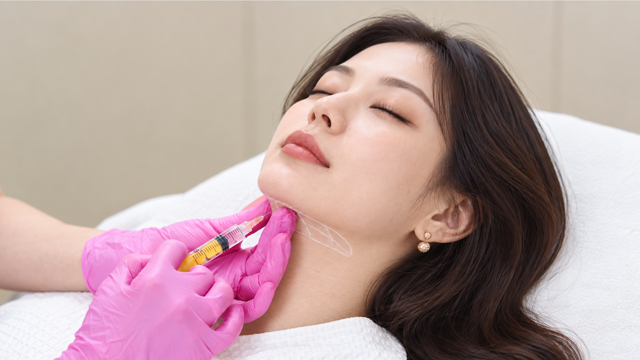
Stellate Ganglion Block
Stellate ganglion block is an injection-based procedure that delivers local anesthetic near the stellate ganglion, a group of sympathetic nerves located in the lower neck, temporarily interrupting certain sympathetic nerve signals.
Learn More