Personalized Medical Care & Dedicated International Patient Concierge


Specialty Overview
Body Contouring
Body contouring is the general name for treatments that change the shape of a selected area of the body, by addressing localized fat deposits, excess skin, or contour itself.
Schedule a ConsultationBody Contouring in Seoul

Medically reviewed by Dr. Joong-Ha Ryu, MD, PhD.
Youth&Young Clinic Cheongdam, Gangnam-gu, Seoul
Body contouring refers to procedures designed to reshape selected areas of the body by reducing localized fat, removing excess skin, or improving body contours. At Youth&Young Clinic Cheongdam in Seoul the specialty is deliberately narrow: the clinic offers a Non-Surgical Body Line Program and does not present itself as a body surgery practice, which makes the first useful question not which treatment to book but whether a non-surgical approach fits the concern at all.
What Is Body Contouring?
Body contouring is the general name for treatments that change the shape of a selected area of the body, by addressing localized fat deposits, excess skin, or contour itself.
The appropriate treatment depends on individual anatomy, health and goals.
Results vary, and body contouring is not a substitute for weight management or a guarantee of a particular body shape.
Non-surgical treatments may require no anesthesia or a topical anesthetic; surgical methods are a different matter and carry their own anesthesia requirements.
A session in the clinic's program generally takes approximately 30 to 90 minutes.
Steps depend on the method chosen: the clinic's program may involve injectable treatments, thread-lifting materials, and other non-surgical body-contouring products.
Patients ask for body contouring to improve body proportions, to address localized fat deposits, or to reduce loose skin following weight loss or pregnancy. Those three motivations do not all lead to the same place, and the third in particular usually does not lead to a non-surgical treatment at all.
Approach | What it addresses | Where it stops |
|---|---|---|
Non-surgical contouring | Localized areas of concern where modest contour change is the goal | Effects may be modest or temporary; it does not remove excess skin |
Surgical fat removal | Larger volumes of localized fat in one procedure | Requires anesthesia, incisions and a surgical recovery |
Skin-removal surgery | Loose skin after weight loss or pregnancy | A surgical operation with scars, not a contour treatment |
Nutrition and exercise | Overall weight and general body composition | Does not target one localized deposit |
The American Society of Plastic Surgeons puts the limitation of non-surgical methods plainly: while none of these treatments are a replacement for liposuction, they provide options for patients unwilling or unable to undergo surgery (American Society of Plastic Surgeons). The same page notes that patients who are pregnant or breastfeeding should not have any of them.
It is equally worth knowing what the surgical comparator is actually like before ruling it in or out. UK national health guidance describes liposuction as usually carried out under general anaesthesia, taking one to three hours, with most people needing to stay in hospital overnight, a compression garment worn constantly for several weeks, strenuous activity avoided for 10 to 12 weeks, and up to six months for the area to settle completely (NHS). That is the scale of commitment a non-surgical program is being chosen instead of, and reading the two side by side is usually more clarifying than reading either alone.
One more line from that guidance belongs here regardless of which route a reader takes: liposuction is not a treatment for obesity, and it will not remove cellulite or stretch marks. Nothing in non-surgical contouring does those things either.
Who Performs Body Contouring at Youth&Young Clinic Cheongdam
|
|
Dr. Joong-Ha Ryu, MD, PhD | Dr. Young-yeon Hwang, Representative Director |
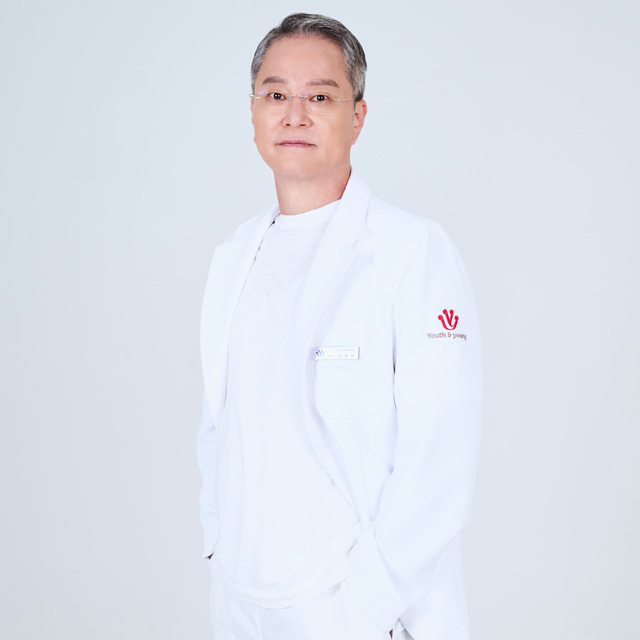
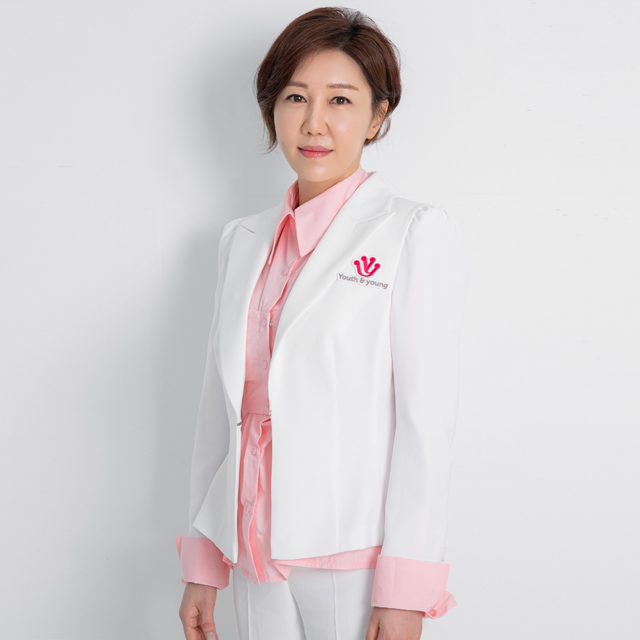
This specialty is led by Dr. Joong-Ha Ryu.
Dr. Joong-Ha Ryu, the clinic's Director and Medical Advisor, holds MD and PhD degrees and has practised laser cosmetic surgery for upwards of thirty years. He founded the clinic in 1993. His relevance to a contouring consultation is the habit the rest of his work demands: deciding what a treatment can reach before choosing it, rather than after.
Dr. Ryu is presented as performing every session of this program; the clinic assigns the clinician at consultation. Where a treatment plan calls for anesthesia beyond a topical anesthetic, responsibility for it falls to Dr. Young-yeon Hwang — Representative Director here, and board-certified in anesthesiology and pain medicine.
Who Is a Good Candidate for Body Contouring?
Candidacy depends on the procedure. The criteria the clinic works from are:
Adults with specific contouring concerns rather than general weight-loss goals.
Patients at a stable weight.
Patients with realistic expectations.
Patients in good overall health.
For the clinic's non-surgical program specifically, adults with localized areas of concern who want modest contour change and pass a medical assessment.
Assessment or postponement applies to:
Patients with certain uncontrolled medical conditions.
Patients with active infections, or skin problems in the treatment area.
Patients with significant anesthesia risks.
Patients with relevant allergies or bleeding risks, or taking medicines that affect bleeding.
Patients who are pregnant or breastfeeding.
Patients whose weight is unstable, or whose expectations are not realistic.
Stable weight is doing more work in that list than it appears to. Fat cells removed surgically are generally gone for good, but the cells that remain can enlarge with weight gain, and a contour achieved at one weight is not a contour locked in at every weight.
What to Expect: Procedure, Recovery, and Results Timeline
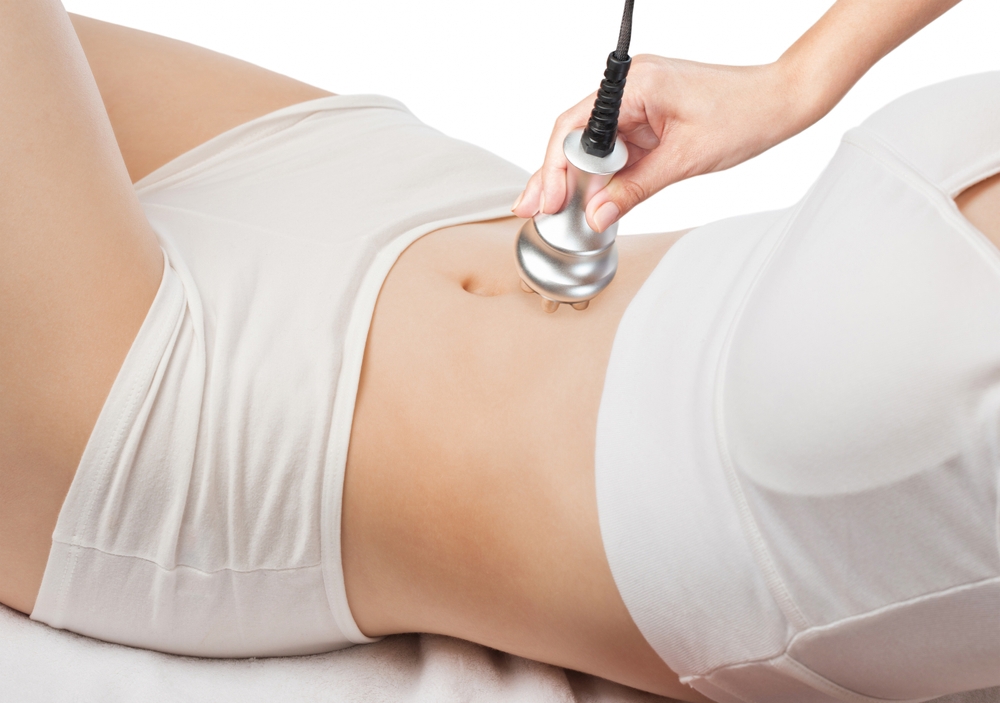
The clinician reviews medical history, medications, weight stability, skin elasticity, fat distribution, previous procedures and treatment goals, then assesses the suitable options and explains the expected results, the limitations, the risks and the recovery. For the non-surgical program the assessment also establishes the treatment area, identifies the exact product to be used and the intended injection sites, and states whether botulinum toxin or thread lifting is part of the plan.
The session itself follows a predictable order: consultation, marking of the treatment area, preparation and cleansing of the skin, administration of the selected treatment, and aftercare instructions. Botulinum toxin or thread lifting, where included, add their own steps.
Stage | What typically happens |
|---|---|
Session | Approximately 30 to 90 minutes |
First days | Possible pain, tenderness, redness, swelling and bruising at injection sites |
Several days to a few weeks | The recovery window for the clinic's non-surgical program, and the window in which results develop |
First weeks | Initial contour change may become noticeable as swelling decreases |
3–6 months | Final results often become clearer; some procedures take 6 to 12 months for swelling to fully settle |
Aftercare means following the clinician's instructions on touching or massaging treated areas, on exercise, alcohol and skin products, and on follow-up. Compression garments are required after certain procedures. Spreading redness, severe pain or fever are reasons to seek medical advice rather than to wait, and symptoms such as chest pain, sudden shortness of breath or severe leg swelling need urgent care.
Planning the trip and the stay
The clinic's general advice for body contouring is to plan around two weeks in Korea for initial recovery and postoperative follow-up, with more extensive procedures requiring longer depending on healing and the surgeon's recommendation. Fly home only after the treating clinician confirms that travel is safe; timing depends on the procedure, on mobility, on healing and on the risk of complications, so medical clearance comes before the return booking rather than after it.
Patients travelling from the United States consistently raise the same practical points, and they are reasonable ones: the total cost including every line rather than the headline fee, a realistic account of how much change to expect, what the recovery actually asks of a working schedule, and what the plan is if something develops once they are home. Written procedure details, a medication list and aftercare instructions in English are what make the last of those answerable, because they are what a clinician at home can read.
After you return home
Recovery advice is built around the treatment you actually had, rather than handed over as a standard sheet.
English-language instructions set out skin care, any prescribed medicine, and the precautions that apply while things settle.
How much downtime to plan for is explained beforehand, including likely redness, swelling and tenderness.
Flights, sun exposure and a return to exercise are all dealt with before you leave Seoul.
Follow-up from a distance may be arranged once you are back in your own country.
You leave knowing which symptoms warrant contacting us rather than waiting them out.
Combining Body Contouring with Other Treatments

Within the clinic's non-surgical program, combinations may include botulinum toxin and thread lifting for the calves and upper arms, and botulinum toxin injections for the trapezius muscles. More broadly, body contouring may be combined with other area-specific treatments where that is clinically appropriate. Combining increases treatment time and complication risk, so the plan requires individual assessment rather than being assembled from a list of wishes.
Safety, Precision, and Clinic Standards
Risks vary by method and may include swelling, bruising, pain, numbness, contour irregularities, asymmetry, infection, bleeding, fluid accumulation, scarring and anesthesia-related complications. Surgical procedures carry additional risks, including blood clots. For the clinic's injectable-based program the relevant risks are injection-related: pain, tenderness, redness, swelling, bruising and infection, with the specific risk profile depending on the ingredients used and the technique. Botulinum toxin and thread lifting each carry their own distinct risks, which is a reason to know in advance whether either is in your plan.
Before treatment, patients should disclose medications, supplements, allergies, bleeding disorders, relevant medical conditions, pregnancy or breastfeeding, and any previous procedures in the treatment area. Instructions on medication changes and skin preparation come from the treating clinician, and prescribed medicines are never stopped independently.
The clinic holds Korean business registration number 720-46-00344. It is a Registered Medical Institution for Attracting Foreign Patients under the Ministry of Health and Welfare, in compliance with the Medical Overseas Expansion and Foreign Patients Attraction Act. That is a registration for treating international patients; it is not a facility accreditation.
The specialist who handles anesthesia here is on the clinic's own staff, not brought in for the day, and the plan she makes takes account of a patient's general health, underlying conditions, age and the demands of the particular treatment. For most non-surgical contouring sessions no anesthesia beyond a topical agent is involved, and that is the honest description of the service rather than an understatement of it.
The Bottom Line
The clinic's body contouring offer is a Non-Surgical Body Line Program; it is not a body surgery practice.
Non-surgical contouring may produce modest or temporary effects and is not a replacement for surgical fat removal.
Loose skin after weight loss or pregnancy is a surgical concern, not something a non-surgical program addresses.
Sessions run approximately 30 to 90 minutes, with recovery ranging from several days to a few weeks.
Stable weight matters, because remaining fat cells can enlarge and change a result achieved earlier.
Frequently Asked Questions
Does the clinic perform liposuction? The clinic's listed body contouring service is the Non-Surgical Body Line Program. Surgical fat removal is a different procedure with a different recovery — generally a general anaesthetic, an overnight stay, weeks in a compression garment, and months before the area settles. If your assessment points that way, you need a practice that offers it.
Will this remove loose skin after weight loss? No. Excess skin is addressed by skin-removal surgery, not by non-surgical contouring. A consultation that assesses skin elasticity separately from fat distribution is what tells the two apart, and it is worth insisting on that distinction before committing to anything.
How much change should I expect? The degree of change varies by treatment and by individual, and general non-invasive contouring treatments may produce modest or temporary effects. The aim is a more defined appearance in selected areas and a reduction in the fullness or uneven texture being targeted — not a particular body shape on request.
What will actually be injected? That depends on the plan, and you are entitled to know before the appointment. The assessment identifies the exact product, the intended injection sites, and whether botulinum toxin or thread lifting is included. Each of those carries its own risks, so the answer changes what you are consenting to.
How long do I need to stay in Korea? The clinic's general advice is around two weeks for initial recovery and follow-up, with longer for more extensive procedures. For a straightforward non-surgical session the practical stay is shorter, but the return date is confirmed by the treating clinician rather than assumed.
Is it painful? Anesthesia helps manage pain during a procedure, and afterwards swelling, soreness, bruising and tightness are common and usually manageable with prescribed medication. For injectable treatment specifically, injection-site pain and tenderness are the usual experience.
Can I have this while pregnant or breastfeeding? No — treatment should be postponed. Patients who are pregnant or breastfeeding should not have non-surgical fat reduction procedures, and the same caution applies to the injectable components of the clinic's program.
What should I do if something looks wrong after I get home? Contact the clinic through its contact page, by phone on +82-2-545-9393, or by email at info@youthandyoungcheongdam.com. Spreading redness, severe pain or fever need prompt attention, and symptoms such as chest pain, sudden shortness of breath or severe leg swelling are emergencies — seek local medical care first and contact us afterwards.
Book a Consultation at Youth&Young Clinic Cheongdam
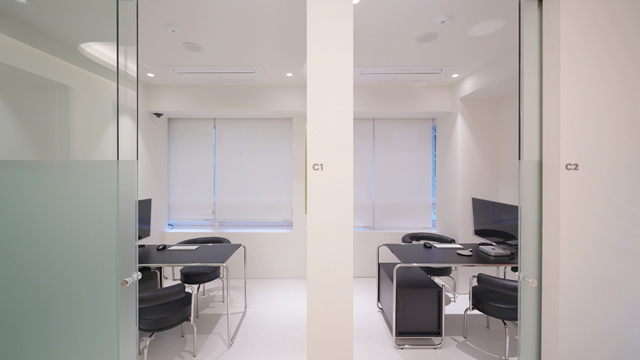
Body contouring in Seoul starts with deciding whether a non-surgical treatment can reach the concern you want changed, which is a different question from which treatment to book. Consultations are available in English, and the clinic can set out the proposed plan, the products involved, the expected degree of change and the recovery before you commit. Book through the clinic contact page, or call +82-2-545-9393. The clinic is at 2F, 49 Dosan-daero 55-gil, Gangnam-gu, Seoul 06014, Republic of Korea, and is open Monday, Tuesday, Thursday and Friday from 10:00 to 19:00 KST, and Saturday from 10:00 to 15:00 KST, excluding the second and fourth Saturdays of each month.
Disclaimer
This page is for general informational purposes and does not constitute individualized medical advice. Candidacy, technique, and expected outcomes can only be determined through a consultation with a qualified physician.
Sources & Further Reading
Related Services
Procedures available within our clinical departments.

Sub-Brow Lift
A sub-brow lift is a surgical procedure that removes selected excess skin, and sometimes a limited amount of underlying tissue, from the upper eyelid through an incision just below the eyebrow.
Learn More

Stem Cell Skin Treatment
Stem cell skin treatment is a broad term used for aesthetic procedures marketed to improve skin quality, texture, hydration, or visible signs of aging using cell-based materials or products described as stem-cell-derived.
Learn More
Stellate Ganglion Block
Stellate ganglion block is an injection-based procedure that delivers local anesthetic near the stellate ganglion, a group of sympathetic nerves located in the lower neck, temporarily interrupting certain sympathetic nerve signals.
Learn More