Personalized Medical Care & Dedicated International Patient Concierge


Recovery & Wellness Support · Consultation Required
Hyperbaric Oxygen Recovery Therapy
Hyperbaric oxygen therapy is a pressure treatment, not an oxygen supplement: the chamber's raised pressure is what allows the lungs to take up substantially more oxygen than breathing oxygen at ordinary pressure would.
Schedule a ConsultationHyperbaric Oxygen Recovery Therapy in Seoul

Medically reviewed by Dr. Joong-Ha Ryu, MD, PhD.
Youth&Young Clinic Cheongdam, Gangnam-gu, Seoul
Hyperbaric oxygen therapy involves breathing medical-grade oxygen in a specially designed chamber at a pressure higher than normal atmospheric pressure. It is used for selected medical conditions where increased oxygen delivery to tissues may support treatment and healing. At Youth&Young Clinic Cheongdam in Seoul it is offered under Recovery & Wellness Support, and eligibility is a medical question rather than a preference.
What Is Hyperbaric Oxygen Recovery Therapy?
Hyperbaric oxygen therapy is a pressure treatment, not an oxygen supplement: the chamber's raised pressure is what allows the lungs to take up substantially more oxygen than breathing oxygen at ordinary pressure would.
The patient enters the chamber, pressure is raised gradually, prescribed oxygen is administered while the patient is monitored, and pressure is returned to normal before the patient exits.
A typical session may last approximately 90 to 120 minutes, though protocols vary by indication and facility.
The number of visits depends on the diagnosis and the treatment response.
General anesthesia is not routinely required and patients remain awake throughout.
Equipment comprises a hyperbaric chamber, a prescribed medical oxygen delivery system, pressure controls, patient-monitoring equipment, and fire-prevention and safety systems.
Breathing oxygen at ordinary pressure, or applying oxygen to part of the body, is not the same treatment under any recognised definition. The pressure, delivered to the whole patient inside a chamber, is the mechanism.
Eligibility: what it is established for
This is a treatment with a defined indication list, and the list does not include "faster recovery in general".
The conditions for which it is an established option, per the clinic's documentation, are selected non-healing wounds, decompression sickness, carbon monoxide poisoning, radiation-related tissue injury, and certain serious infections. Eligibility against any of those must be confirmed by a qualified clinician, working from a diagnosis rather than from a request.
Even within that list, national health systems differ on what they will fund. NHS England's clinical reference group for this therapy lists policies covering carbon monoxide poisoning, diabetic lower limb ulceration, soft tissue radiation damage after pelvic irradiation, necrotising soft tissue infections and malignant otitis externa among those not routinely commissioned (NHS England). That is a funding position in one country, not a safety finding, and it reflects how the evidence is weighed there. It is included because a patient told that the indication list is settled everywhere has been told something that is not true.
Where this therapy is being considered as supportive care after an elective procedure, that is what it should be called. The clinic's own material is explicit that the therapy is an adjunct when indicated, not a replacement for necessary standard treatment, and that specific indications should be mentioned only where the applicable regulatory guidance and the patient's clinical context support them.
Who Oversees Hyperbaric Oxygen Recovery Therapy at Youth&Young Clinic Cheongdam
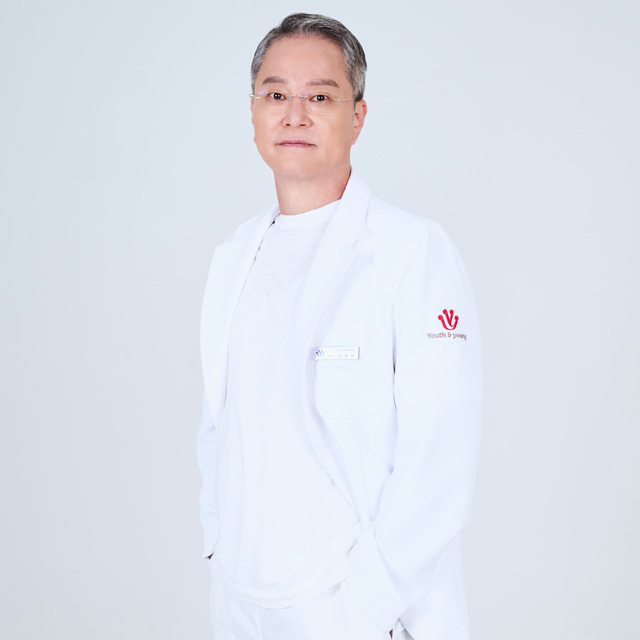
Dr. Joong-Ha Ryu, MD, PhD
Plastic Surgeon
The clinic assigns this service to Dr. Joong-Ha Ryu as lead.
Dr. Ryu, who holds MD and PhD degrees, is the Director and Medical Advisor, with a career of more than thirty years in laser cosmetic surgery.
His relevance to this service is the eligibility decision and the aftercare judgement rather than the chamber itself: whether a patient’s situation is one this therapy is indicated for, what else should be happening alongside it, and when a symptom during recovery stops being expected. This page does not claim one specific doctor personally performs every session of this service.
Who Is a Good Candidate for Hyperbaric Oxygen Recovery Therapy?
Patients with a physician-diagnosed condition for which this therapy is an established treatment option.
Patients whose eligibility has been confirmed by a qualified clinician after reviewing the diagnosis, history, medications and relevant test results.
Patients for whom it is being used alongside the condition-specific care that the diagnosis actually requires.
It is not suitable, or needs evaluation first, for:
Patients with an untreated pneumothorax, who must not undergo this therapy. This is an absolute exclusion, not a cautious one.
Patients with certain lung diseases.
Patients who have difficulty equalising ear pressure.
Patients taking some medications, and patients with specific heart conditions.
Tell the team about any implanted medical device before the first session, not on the day.
What to Expect: Procedure, Recovery, and Results Timeline
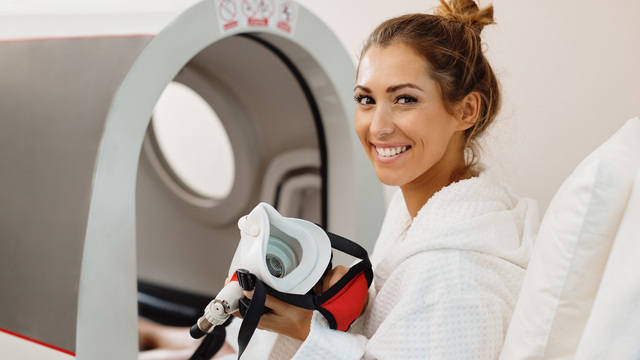
The clinician reviews your diagnosis, medical history, medications, previous treatments and relevant test results. A physical examination and further investigations may be required to confirm the indication, assess the risks and establish a treatment plan.
On the day, the care team completes a safety assessment and prepares you for the chamber. You enter, pressure is increased gradually, and prescribed oxygen is administered while you are monitored. Pressure is returned to normal before you exit, and you receive follow-up instructions.
Preparation is unusually specific because the chamber environment is unforgiving. Provide a complete medical history and medication list. Disclose lung, ear and heart conditions. Inform the team about implanted devices. Follow the facility's instructions regarding clothing, food, personal items and prohibited materials. Do not independently discontinue prescribed medication.
Stage | What typically happens |
|---|---|
A session | Approximately 90 to 120 minutes, protocols varying by indication and facility |
During | Pressure changes may cause ear or sinus discomfort; swallowing or yawning often relieves it |
0 to 24 hours | Many patients resume usual daily activities immediately; temporary fatigue, light-headedness or ear discomfort may occur |
0 to 14 days | An initial assessment point set by the clinician's reassessment schedule, not a guaranteed time to improvement |
Weeks or longer | For some conditions, tissue-healing changes may develop gradually over repeated sessions |
Aftercare means following the clinician's instructions and attending the scheduled reviews. Report persistent ear pain, unusual visual changes, breathing difficulties or other concerning symptoms promptly. Continue prescribed wound care and other treatments unless the treating clinician advises otherwise — this therapy supplements them rather than replacing them.
The recovery figures above describe recovery after a session, not the time needed to treat the underlying condition. Those are two different clocks and conflating them is how expectations go wrong. The number of sessions, and whether a course is worth continuing, is a clinical judgement made against the diagnosis.
For patients travelling from the United States, the length of stay depends on the treatment plan, the medical condition, the number of sessions and any additional care required — confirm the schedule with the treating medical team before travelling. Air travel timing should also be confirmed with the treating doctor, and patients treated for decompression sickness or other pressure-related conditions may face specific travel restrictions.
Combining Hyperbaric Oxygen Recovery Therapy with Other Treatments
It may be used alongside condition-specific care such as wound management, surgery or other prescribed treatment where clinically indicated.
There is no universal combination protocol; the treating team determines compatibility and sequencing.
Alternatives depend on the underlying condition and may include standard wound care, appropriate antibiotics and surgical management for infections, established treatment for carbon monoxide poisoning, or specialist care for radiation injuries.
Where recovery follows a skin treatment rather than a diagnosed medical condition, the aftercare that actually applies is set by Laser Dermatology and follows the procedure performed.
Safety, Precision, and Clinic Standards
The recognised risks are pressure injury to the ear or sinuses, vision changes that are usually temporary, claustrophobia inside the chamber, and oxygen toxicity, of which seizures are a rare expression. How much of that applies to any one patient depends on their medical history and on the protocol being used.
Fire is the serious equipment-related hazard, and it is the reason the preparation rules about clothing and personal items are rules rather than suggestions. A letter from the U.S. Food and Drug Administration to health care providers, dated August 2025, records reports of serious injuries and deaths involving these devices and, among them, fires whose cause has not yet been established. The agency's own assessment is that such events remain rare.
Alongside that record the agency gives providers eight specific instructions, and they double as questions a patient may ask of any facility:
Review and follow the manufacturer's instructions for each device in use.
Maintain fire prevention and safety measures, recognising the heightened fire risk where oxygen is used at high concentration.
Use proper grounding equipment.
Provide and maintain staff training on the devices.
Monitor and supervise the patient for the duration of the treatment.
Keep to the manufacturer's cleaning procedures, maintenance intervals and safety checks.
Exclude potentially prohibited items, including electrical or static devices, some of which may need additional grounding measures.
Ensure patients wear hyperbaric-compatible clothing such as cotton, bearing in mind that wool and synthetic fabrics may produce more static electricity.
Asking a facility how it handles those eight items is neither rude nor unusual. It is the same list the regulator addressed to the clinicians.
The clinic has not documented a chamber protocol of its own, and none is described here in its place.
Recovery after a session, and recovery of the condition
The two numbers on this page that are most often confused deserve separating explicitly.
Question | The answer | What it is not |
|---|---|---|
How long until I can go about my day? | Many patients resume usual activities immediately after an uncomplicated session, within 0 to 24 hours | Not a statement about the underlying condition improving |
When will the condition be reassessed? | An initial assessment window of 0 to 14 days, set by the clinician's schedule | Not a guaranteed time to improvement |
How long until benefit, if there is any? | For some conditions, weeks or longer, with tissue-healing changes developing across repeated sessions | Not a figure that can be promised before treatment begins |
Temporary fatigue, light-headedness or ear discomfort after a session are the common short-term effects, and they belong in the first row rather than being read as a sign about the third.
Aftercare from a distance
For an international patient, a course of sessions ends with a flight rather than with a final appointment, and the gap between those two things is where problems become difficult to manage. The clinic's stated approach for patients travelling from abroad covers aftercare instructions written in English, clear expectations about downtime, guidance on when to make contact if unexpected symptoms appear, potential online follow-up after returning home, and a defined process for international patients who need post-treatment advice once they have left Korea.
Those are worth converting into specifics before treatment rather than after it. Who to contact, through which channel, within what hours, and what the clinic will do with the answer. Patients from the United States consistently raise access to local care as a concern, and the realistic answer is that both routes are needed: a way back to the treating clinic, and a local clinician who has the written record. Continuing prescribed wound care and other treatments through all of that remains the instruction unless the treating clinician says otherwise.
One scheduling consequence follows from all of this. Because the number of sessions is set by the diagnosis rather than by preference, a course cannot be compressed to fit a trip, and a trip planned around a fixed number of days may not accommodate the course that is actually indicated. Settle the schedule with the treating medical team first, and book the travel around it rather than the other way round. Where an indication turns out to be urgent, it requires specialist management rather than an appointment in several weeks' time, and that is a conversation to have immediately rather than by email.
The clinic holds Korean business registration number 720-46-00344. It is a Registered Medical Institution for Attracting Foreign Patients under the Ministry of Health and Welfare, in compliance with the Medical Overseas Expansion and Foreign Patients Attraction Act. That is a registration for treating international patients; it is not a facility accreditation.
The Bottom Line
The treatment is breathing medical-grade oxygen inside a chamber at above-normal pressure; the pressure is the mechanism.
Its established indications are specific physician-diagnosed conditions, and eligibility must be confirmed by a clinician.
Health systems differ on which of those indications they routinely fund, which is worth knowing before assuming the list is settled.
A session runs roughly 90 to 120 minutes, and most patients resume usual activities the same day.
Untreated pneumothorax is an absolute exclusion, and fire safety inside the chamber is a regulator-level concern rather than a formality.
Frequently Asked Questions
Is this a recovery booster after cosmetic treatment? That is not what its established indications cover, and this page does not present it that way. It is used for selected physician-diagnosed conditions where increased oxygen delivery to tissues may support treatment and healing. Where it is being considered as supportive care, the clinician should say so plainly.
How long is a session? Approximately 90 to 120 minutes, although protocols vary by indication and by facility. The number of sessions depends on the diagnosis and on how the condition responds.
Does it hurt? It is generally not painful. You may feel ear fullness or pressure as the chamber pressure changes, and swallowing or yawning often relieves it. The clinical team can explain pressure-equalisation techniques and assess any discomfort that persists.
Will I be asleep? No. General anesthesia is not routinely required and patients remain awake for a typical session.
Who absolutely cannot have it? Anyone with an untreated pneumothorax. Beyond that, certain lung diseases, difficulty equalising ear pressure, some medications and specific heart conditions all require medical evaluation before treatment.
What should I not bring into the chamber? Follow the facility's instructions exactly. For fire safety, lighters, heat-generating electronic devices and other prohibited items must stay outside. Ask the medical team about clothing, skin-care products, medications and meals before the session.
How long should I plan to be in Korea? It depends on the treatment plan, your condition, the number of sessions and any additional care required. Confirm the schedule with the treating medical team before you book travel.
What do I report after a session? Persistent ear pain, unusual visual changes, breathing difficulties, or any other concerning symptom — promptly, rather than at the next appointment. Contact the clinic through its contact page, by phone on +82-2-545-9393, or by email at info@youthandyoungcheongdam.com, and seek local medical care if symptoms are severe.
Book a Consultation at Youth&Young Clinic Cheongdam
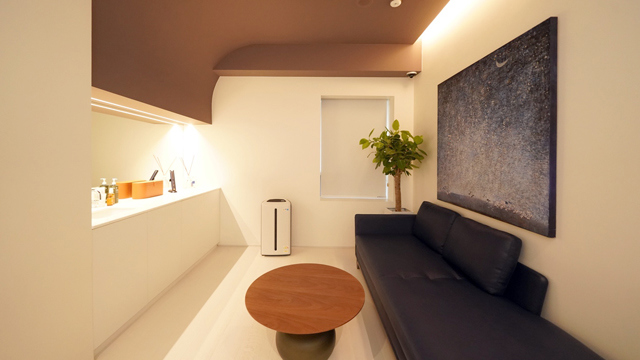
This therapy begins with a diagnosis and an eligibility assessment, and those come before any discussion of a schedule. Consultations are available in English, and the clinic can review whether your situation is one the treatment is indicated for, what would need to happen alongside it, and how many sessions a plan would involve. Book through the clinic contact page, or call +82-2-545-9393. The clinic is at 2F, 49 Dosan-daero 55-gil, Gangnam-gu, Seoul 06014, Republic of Korea, and is open Monday, Tuesday, Thursday and Friday from 10:00 to 19:00 KST, and Saturday from 10:00 to 15:00 KST, excluding the second and fourth Saturdays of each month.
Disclaimer
This page is for general informational purposes and does not constitute individualized medical advice. Candidacy, technique, and expected outcomes can only be determined through a consultation with a qualified physician.
Sources & Further Reading
Other Services
Explore additional treatments offered by our specialists.

Sub-Brow Lift
A sub-brow lift is a surgical procedure that removes selected excess skin, and sometimes a limited amount of underlying tissue, from the upper eyelid through an incision just below the eyebrow.
Learn More

Stem Cell Skin Treatment
Stem cell skin treatment is a broad term used for aesthetic procedures marketed to improve skin quality, texture, hydration, or visible signs of aging using cell-based materials or products described as stem-cell-derived.
Learn More
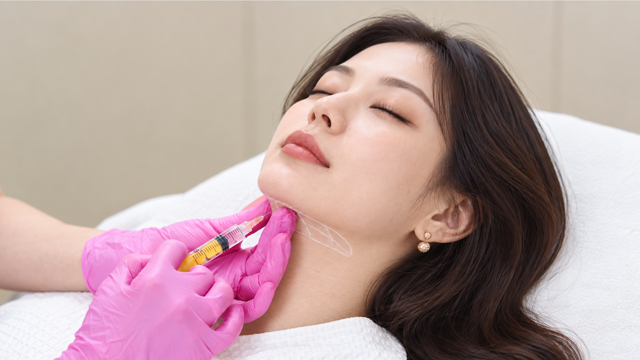
Stellate Ganglion Block
Stellate ganglion block is an injection-based procedure that delivers local anesthetic near the stellate ganglion, a group of sympathetic nerves located in the lower neck, temporarily interrupting certain sympathetic nerve signals.
Learn More