Personalized Medical Care & Dedicated International Patient Concierge


Specialty Overview
Recovery & Wellness Support
Recovery and wellness support is the supportive care arranged around a procedure or an illness: an assessment of where the patient actually is, a plan built from that, and follow-up that adjusts it.
Schedule a ConsultationRecovery & Wellness Support in Seoul

Medically reviewed by Dr. Joong-Ha Ryu, MD, PhD
Youth&Young Clinic Cheongdam, Gangnam-gu, Seoul
Recovery and wellness support focuses on helping patients maintain their well-being through the services the clinic offers for it, which are hyperbaric oxygen recovery therapy and a personalised Inner Beauty Program. Which of them suits a patient, and whether either does, depends on their needs and on a medical assessment. At Youth&Young Clinic Cheongdam in Seoul this sits beside the treatment specialties rather than inside them.
What Is Recovery & Wellness Support?
Recovery and wellness support is the supportive care arranged around a procedure or an illness: an assessment of where the patient actually is, a plan built from that, and follow-up that adjusts it.
It begins with a review of health, medical history and recovery needs rather than with a chosen therapy.
A personalised plan follows from the assessment, and recommended services are provided according to the patient's condition.
Follow-up visits monitor progress and adjust the plan.
A session typically runs 30 to 60 minutes, though a hyperbaric session is longer.
It generally requires no anesthesia and is generally not painful, although some supportive activities may cause mild, temporary discomfort.
The reason a clinic puts this in its own category is practical. Recovery is the part of treatment that happens after the clinician has finished and the patient has gone home — and for someone who has flown in from another continent, "gone home" means something very different from what it means for a local patient.
Who Oversees Recovery & Wellness Support at Youth&Young Clinic Cheongdam
|
Dr. Joong-Ha Ryu, MD, PhD |
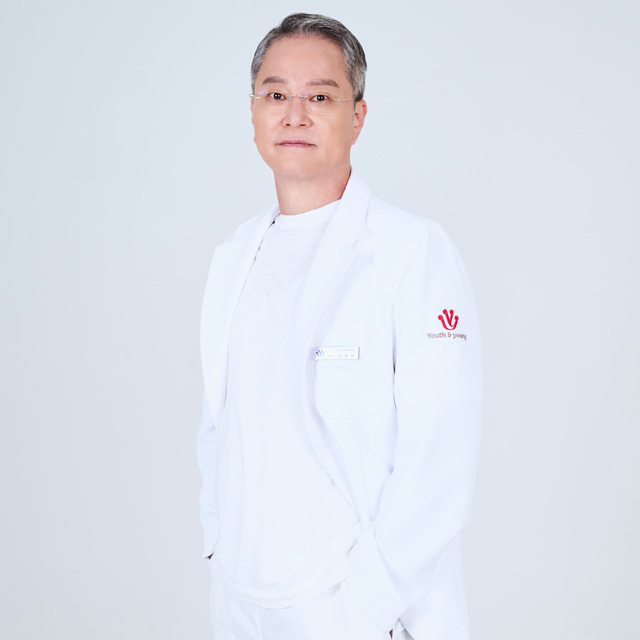
The clinic assigns this specialty to Dr. Joong-Ha Ryu.
Dr. Joong-Ha Ryu holds MD and PhD degrees and serves as Director and Medical Advisor, with a career in laser cosmetic surgery running past the thirty-year mark. His relevance here is not the devices: it is that recovery guidance has to come from whoever knows what was done and how deep it went. Recovery-focused design is part of how the clinic describes its laser work, and the follow-through belongs to the same person.
Dr. Ryu is presented as personally delivering every session of every supportive service. This page does not claim one specific doctor personally performs every session of these services; the clinic assigns the clinician at the time of care.
Recovery & Wellness Support Services Available

Two services sit under this specialty, and they have almost nothing in common except the word "recovery".
Service | What it is | Session length |
|---|---|---|
Breathing medical-grade oxygen in a specially designed chamber at a pressure higher than normal atmospheric pressure | Approximately 90 to 120 minutes, though protocols vary by indication and facility | |
A personalised programme built around individual aesthetic and wellness goals, with the contents set at consultation | From a short session to several hours, depending on what it includes |
The first of these is a medical treatment with a defined mechanism and a defined risk profile. The second is a plan, and what it actually contains is decided per patient — which means the expected benefits, the risks and any maintenance requirements all depend on the specific services included and have to be discussed at consultation rather than read off a page.
What can and cannot be said about hyperbaric oxygen therapy
This treatment is widely marketed, and the gap between how it is marketed and what health systems commission for it is wide enough to be worth stating plainly.
Hyperbaric oxygen therapy is used for selected medical conditions where increased oxygen delivery to tissues may support treatment and healing. Eligibility is confirmed by a qualified clinician against a diagnosis, not against a general wish to recover faster. The clinic's own record lists the conditions for which it is an established option as selected non-healing wounds, decompression sickness, carbon monoxide poisoning, radiation-related tissue injury and certain serious infections.
How health systems treat those indications is not uniform. NHS England's clinical reference group for hyperbaric oxygen therapy lists hyperbaric oxygen therapy for carbon monoxide poisoning, for diabetic lower limb ulceration, for soft tissue radiation damage following pelvic irradiation, for necrotising soft tissue infections and for malignant otitis externa among its policies as not routinely commissioned (NHS England). That is a commissioning position in one country rather than a safety finding, but it is a useful corrective for any patient who has been told the indication list is settled everywhere.
Routine recovery after elective aesthetic treatment is not on any of those lists, in either direction. Where a patient asks about hyperbaric oxygen therapy in that context, the honest framing is that it is being considered as supportive care, and the clinician should say so rather than borrowing the authority of the established indications.
Who Is a Good Candidate for Recovery & Wellness Support?

People recovering from a medical procedure or an illness who need structured support rather than only a follow-up appointment.
People seeking help with recovery-related discomfort.
People who want guidance on general wellness, subject to their individual needs and medical suitability.
For the Inner Beauty Program specifically, people whose goals align with the services the programme can actually include.
Support may need to wait, or a different pathway may be needed, for:
Patients with severe or worsening symptoms, or unstable medical conditions, until they have been medically assessed.
Patients whose complications require urgent medical attention — these need treatment, not supportive care.
For hyperbaric treatment, patients with an untreated pneumothorax, who must not undergo it at all; and patients with certain lung diseases, difficulty equalising ear pressure, specific heart conditions or relevant medication use, who require medical evaluation first.
For the programme, patients with active infections, uncontrolled medical conditions or relevant allergies, and patients who are pregnant or breastfeeding, where eligibility depends on what the programme includes.
What to Expect: Procedure, Recovery, and Results Timeline

The process starts with an assessment of your health, medical history and recovery needs. A personalised plan is developed from it, recommended services are provided according to your condition, and follow-up visits monitor progress and adjust the plan as needed. Before anything begins, share your medical history, current medications, allergies, previous treatments and any relevant test results, and follow the preparation instructions given for your specific service.
For hyperbaric treatment the preparation list is longer and more specific, because the chamber environment is unforgiving of small omissions. Disclose lung, ear and heart conditions and any implanted medical device. Follow the facility's instructions on clothing, food, personal items and prohibited materials. Do not stop a prescribed medicine on your own initiative.
Stage | What typically happens |
|---|---|
Assessment | Health, history and recovery needs reviewed; additional examinations or tests if medically necessary |
A supportive session | Typically 30 to 60 minutes; a hyperbaric session approximately 90 to 120 minutes |
After a hyperbaric session | Many patients resume usual daily activities immediately; temporary fatigue, light-headedness or ear discomfort may occur |
First days to two weeks | Initial improvement may become noticeable; recovery typically takes one to two weeks |
Several weeks or longer | Patients recovering from major procedures or complex conditions may need this long |
Aftercare means following the plan you were given: take medications only as directed, maintain appropriate hydration and nutrition, and attend the recommended follow-up appointments. Seek medical assessment if symptoms worsen or something unexpected happens. After hyperbaric treatment specifically, report persistent ear pain, unusual visual changes or breathing difficulties promptly rather than waiting for the next appointment, and continue any prescribed wound care unless your treating clinician says otherwise.
The timelines above are planning estimates, not promises. Initial improvement may be noticed within a few days to two weeks, while further progress may take several weeks or longer depending on the condition and the support required. For hyperbaric treatment, an initial assessment point of zero to fourteen days reflects the clinician's reassessment schedule rather than a guaranteed time to improvement, and tissue-healing changes may develop gradually over repeated sessions.
For patients travelling from the United States, a stay of roughly 14 to 16 days is generally recommended for this specialty, depending on the support required, the patient's condition and any scheduled follow-up. Where hyperbaric treatment is involved, the number of sessions governs the stay, and the flight home should be confirmed with the treating doctor — patients treated for pressure-related conditions may face specific travel restrictions.
Combining Recovery & Wellness Support with Other Treatments
Supportive care may be combined with medical follow-up, rehabilitation, nutritional guidance or other appropriate services when clinically indicated.
Hyperbaric treatment may be used alongside condition-specific care such as wound management or surgery when clinically indicated, as an adjunct rather than a replacement for necessary standard treatment.
The Inner Beauty Program may be combined with other aesthetic or wellness treatments, though doing so can increase the risk of side effects and extend recovery.
Where the underlying treatment was resurfacing, recovery guidance comes from Laser Dermatology, which sets the wound care the skin actually needs.
Where it was surgery, the recovery plan belongs with Facial Rejuvenation Surgery and follows the operation performed.
There is no universal combination protocol, and the treating team determines compatibility and sequencing.
Safety, Precision, and Clinic Standards

Supportive care itself carries modest risks: temporary discomfort, fatigue or muscle soreness during certain recovery activities, with other effects depending on the therapies used and the patient's condition. The programme's risks are the risks of whatever it includes — redness, swelling, bruising, tenderness or irritation commonly, and rarely infection, allergic reaction or other treatment-specific adverse effects.
Hyperbaric treatment is a different category of risk and should be described as one. Possible risks include ear or sinus pressure injury, temporary vision changes, claustrophobia, and oxygen toxicity including rare seizures. Fire is a serious equipment-related hazard requiring strict safety procedures.
That last item is not theoretical. The United States Food and Drug Administration issued a letter to health care providers in August 2025 stating that it is aware of reports of serious injuries and deaths with the use of hyperbaric oxygen therapy devices, including recent reports of fires whose root cause is not yet known, while noting that it believes serious adverse events associated with these devices are rare (U.S. Food and Drug Administration). The same letter sets out what a facility is expected to do about it: follow the manufacturer's instructions for each device, maintain fire prevention and grounding measures, train staff, monitor and supervise the patient for the duration of treatment, keep to the recommended cleaning and maintenance intervals, exclude prohibited items such as electrical or static devices, and ensure patients wear hyperbaric-compatible clothing such as cotton.
Those are reasonable things to ask a facility about before a first session, anywhere in the world. A patient who asks how a chamber is maintained and who supervises the session is asking the same questions the regulator asks.
The clinic has not documented a proprietary technique for this specialty, and no approved claim is recorded for either service in its source material. Neither gap is filled in here by inference.
The clinic holds Korean business registration number 720-46-00344. It is a Registered Medical Institution for Attracting Foreign Patients under the Ministry of Health and Welfare, in compliance with the Medical Overseas Expansion and Foreign Patients Attraction Act. That is a registration for treating international patients; it is not a facility accreditation.
The Bottom Line
This specialty is supportive care arranged around recovery, built from an assessment rather than from a fixed programme.
Two services sit under it: hyperbaric oxygen recovery therapy, and a personalised Inner Beauty Program.
Hyperbaric oxygen therapy is used for selected physician-diagnosed conditions; routine recovery after elective aesthetic treatment is not among the established indications.
Fire and pressure-related injury are the serious hyperbaric risks, and a regulator has published specific facility precautions against them.
A stay of roughly 14 to 16 days is generally recommended for international patients using this specialty, with the flight home confirmed by the treating doctor.
Frequently Asked Questions
Is this a treatment or a plan? Both, depending on which service is involved. Hyperbaric oxygen recovery therapy is a defined medical treatment delivered in a chamber. The Inner Beauty Program is a plan whose contents are decided at consultation, which is why its expected benefits and risks cannot be stated in advance.
How long is a session? A supportive session typically lasts 30 to 60 minutes. A hyperbaric session is longer, approximately 90 to 120 minutes, and protocols vary by indication and facility.
Does it hurt? It is generally not painful and generally requires no anesthesia. Some supportive activities may cause mild, temporary discomfort. In the chamber, pressure changes may cause ear fullness or pressure; swallowing or yawning often relieves it, and the clinical team can explain pressure-equalisation techniques.
Will it speed up my recovery after a cosmetic procedure? That is not a claim the clinic's documentation supports, and it is not made here. Hyperbaric oxygen therapy's established indications are physician-diagnosed conditions, and recovery after elective treatment is not one of them. Supportive care can help you manage recovery; it is not a shortcut through it.
How long should I stay in Korea? Roughly 14 to 16 days is the general recommendation for this specialty, depending on the support required, your condition and your follow-up schedule. Where hyperbaric sessions are planned, the treatment plan sets the stay, and it should be confirmed with the medical team before you travel.
When can I fly home? Generally within 14 to 16 days, provided you are medically stable and without complications. For hyperbaric treatment the timing depends on the reason for treatment and your condition, and patients treated for decompression sickness or other pressure-related conditions may need specific travel restrictions.
Who should not go in the chamber? Anyone with an untreated pneumothorax must not undergo hyperbaric oxygen therapy. Certain lung diseases, difficulty equalising ear pressure, some medication use and specific heart conditions all require medical evaluation before treatment.
What do I do if something looks wrong after I get home? Contact the clinic through its contact page, by phone on +82-2-545-9393, or by email at info@youthandyoungcheongdam.com. Where symptoms are worsening and the clinic is not reachable straight away, get local medical care without waiting for a reply.
Book a Consultation at Youth&Young Clinic Cheongdam
Recovery and wellness support in Seoul starts with an assessment of where your recovery actually is, and it is worth arranging before treatment rather than after it. Consultations are available in English, and the clinic can set out what each service involves, what it can reasonably do, what it cannot, and how long it asks you to stay. Book through the clinic contact page, or call +82-2-545-9393. The clinic is at 2F, 49 Dosan-daero 55-gil, Gangnam-gu, Seoul 06014, Republic of Korea, and is open Monday, Tuesday, Thursday and Friday from 10:00 to 19:00 KST, and Saturday from 10:00 to 15:00 KST, excluding the second and fourth Saturdays of each month.
Disclaimer
This page is for general informational purposes and does not constitute individualized medical advice. Candidacy, technique, and expected outcomes can only be determined through a consultation with a qualified physician.
Sources & Further Reading
Related Services
Procedures available within our clinical departments.

Sub-Brow Lift
A sub-brow lift is a surgical procedure that removes selected excess skin, and sometimes a limited amount of underlying tissue, from the upper eyelid through an incision just below the eyebrow.
Learn More

Stem Cell Skin Treatment
Stem cell skin treatment is a broad term used for aesthetic procedures marketed to improve skin quality, texture, hydration, or visible signs of aging using cell-based materials or products described as stem-cell-derived.
Learn More
Stellate Ganglion Block
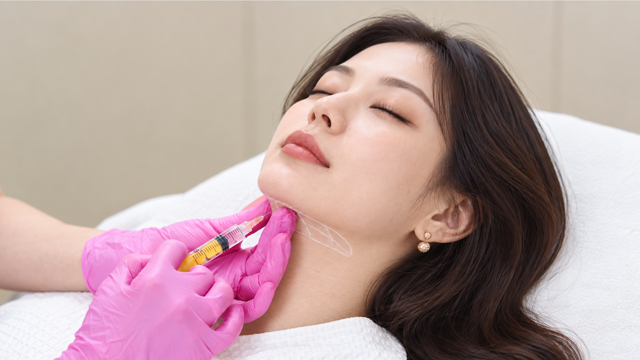
Stellate ganglion block is an injection-based procedure that delivers local anesthetic near the stellate ganglion, a group of sympathetic nerves located in the lower neck, temporarily interrupting certain sympathetic nerve signals.
Learn More