Personalized Medical Care & Dedicated International Patient Concierge

Eyelid & Under-Eye Surgery · Consultation Required
Under-Eye Dermal Fat Grafting
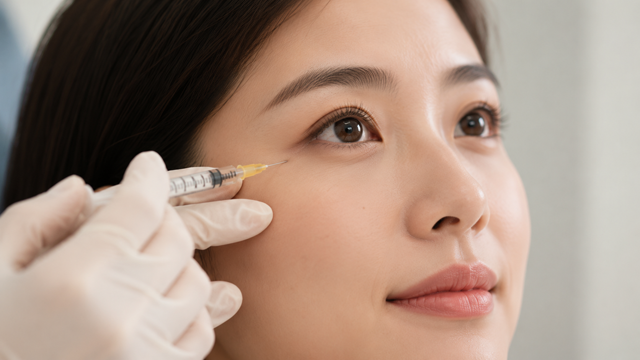
Under-eye dermal fat grafting is a procedure in which fat is harvested from a suitable donor area of the patient's own body, prepared, and transferred into the hollow beneath the lower eyelid.
Schedule a ConsultationUnder-Eye Dermal Fat Grafting in Seoul
Medically reviewed by Dr. Joong-Ha Ryu, MD, PhD.
Youth&Young Clinic Cheongdam, Gangnam-gu, Seoul
Under-eye dermal fat grafting uses the patient's own fat to restore volume beneath the eyes, and most people searching for under eye fat grafting Korea are describing a hollow rather than a bulge. The intention is to reduce the appearance of under-eye hollows and leave a smoother transition from the lower lid into the cheek. At Youth&Young Clinic Cheongdam it belongs to Eyelid & Under-Eye Surgery, the clinic's longest-standing area of work.
What Is Under-Eye Dermal Fat Grafting?
Under-eye dermal fat grafting is a procedure in which fat is harvested from a suitable donor area of the patient's own body, prepared, and transferred into the hollow beneath the lower eyelid.
The graft is autologous. The material placed under the eye is your own tissue, taken during the same visit, rather than a manufactured product.
The target is lost volume. Under-eye volume restoration is the purpose of the operation; it is not a way of removing a bulge or treating pigment.
The procedure usually takes around 30 to 60 minutes, which varies with the harvesting step and whether anything else is being done at the same time.
Local anesthesia may be used to numb both the donor area and the under-eye area. Sedation or general anesthesia may be considered depending on the plan and the patient's needs.
A portion of the transferred fat is reabsorbed while the area heals. This is ordinary graft behaviour rather than a sign that something went wrong.
That last point deserves a moment before you book a flight. A dermal fat graft Seoul patients travel for is a living tissue transfer, and living tissue either takes up a blood supply in its new site or is gradually cleared by the body. Nobody can tell you in advance what proportion will survive in your particular case. A surgeon who describes the retained volume as predictable is describing something the biology does not offer, and the honest version of the conversation is the one that names reabsorption as a normal outcome you may need to plan around.
Who Performs Under-Eye Dermal Fat Grafting at Youth&Young Clinic Cheongdam
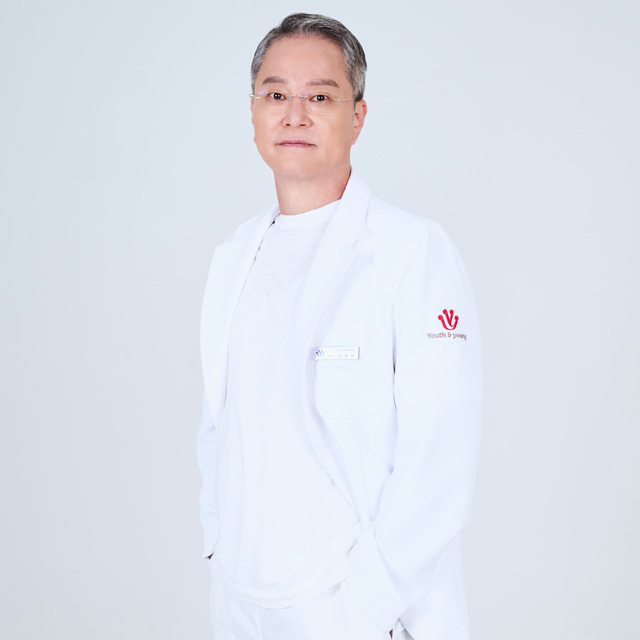
Dr. Joong-Ha Ryu, MD, PhD
Plastic Surgeon
Dr. Joong-Ha Ryu leads this service.
Dr. Ryu holds MD and PhD degrees and serves as the clinic’s Director and Medical Advisor. His clinical life has been spent in the lower eyelid: more than thirty years of laser cosmetic surgery centred on laser-assisted under-eye fat repositioning through the transconjunctival approach, which he presented at International Society of Cosmetic Laser Surgeons workshops held in Seoul and Busan in 1994. Fat grafting adds volume where repositioning redistributes it, but the anatomy being navigated is the same, and the relevant experience is the daily handling of fat compartments in that specific pocket of the face.
This page does not claim one doctor performs every session.
Who Is a Good Candidate for Under-Eye Dermal Fat Grafting?
Adults with noticeable hollowness beneath the eyes caused by volume loss.
People with enough donor fat available at a suitable harvesting site.
People in good general health, with expectations that match what a graft can do.
People who accept in advance that some of the transferred fat may be reabsorbed as the area heals.
People who have had their under-eye anatomy, skin quality, existing eye bags, medical history and previous procedures assessed by a qualified surgeon before anything is scheduled.
Not suitable, or needing another plan: people with insufficient donor fat to harvest.
Not suitable, or needing postponement: people with an active infection, or with medical conditions that raise surgical risk.
Needing individual assessment first: people taking blood-thinning medication, and people who have had previous eye surgery.
Likely better served by a different treatment: people whose main concern is prominent eye bags, or dark circles caused by pigmentation rather than by a hollow.
What to Expect: Procedure, Recovery, and Results Timeline
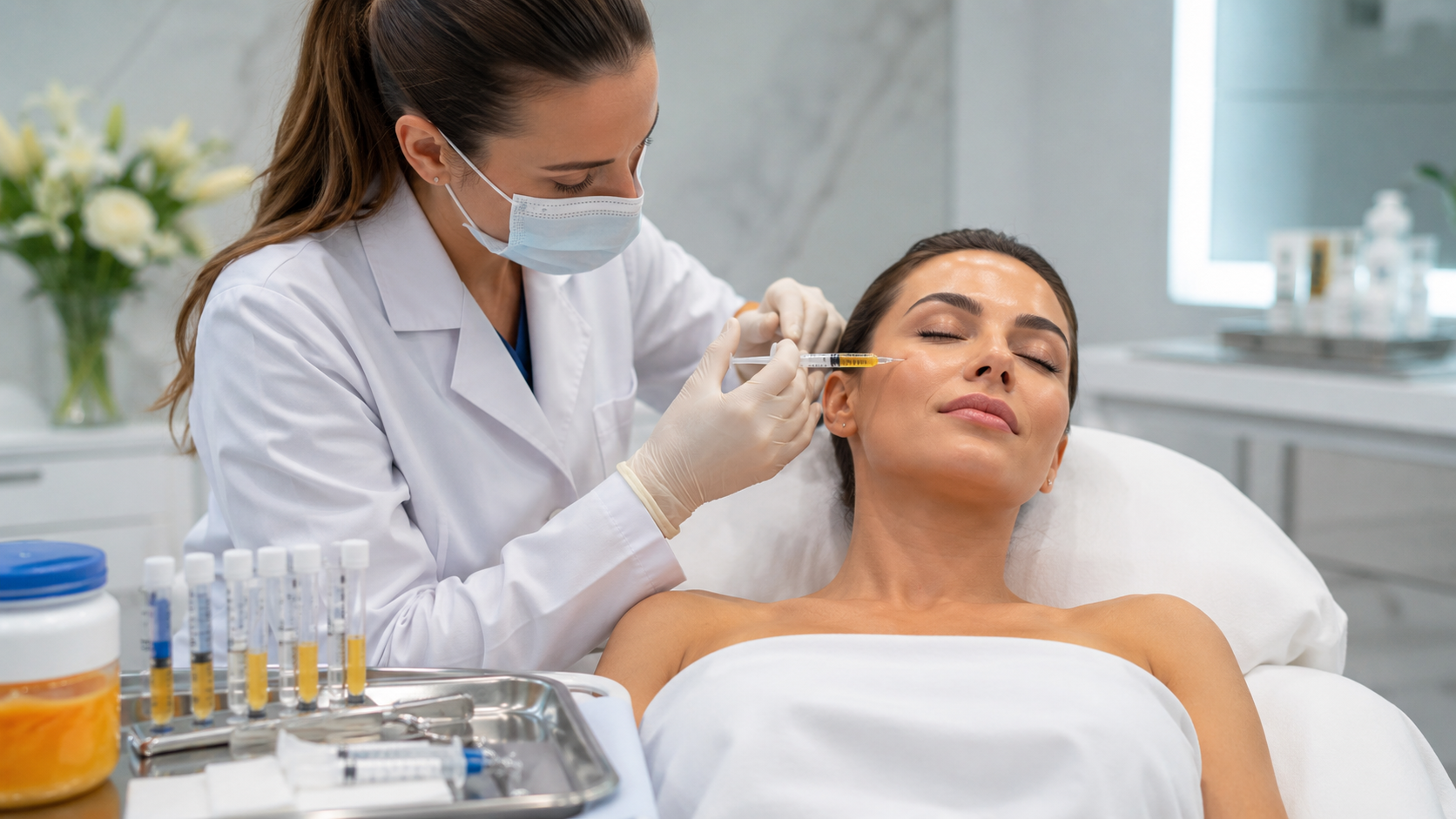
The consultation starts with your medical history. The surgeon then examines the degree of hollowness, the quality of the lower-eyelid skin and the presence of any eye bags, and separately assesses whether you have a donor area with enough usable fat. Suitable treatments, the risks involved and the results you can realistically expect are discussed before any decision is made.
Preparation is practical. Give a full medical history, disclose every medication and allergy, avoid smoking as your surgeon advises, and follow the fasting instructions if they apply to your anesthesia plan. Arrange transport for the day if sedation or general anesthesia is planned, because you should not expect to make your own way back. Do not stop a prescribed medicine or supplement on your own judgement; ask the clinician who prescribed it.
Stage | What typically happens |
|---|---|
On the day | Preoperative examination, anesthesia, fat harvested from the donor area, the harvested fat processed and prepared |
Transfer | Fat placed into the under-eye area, with contour and symmetry checked before the incisions are cared for |
First few days | Swelling and bruising at both the under-eye area and the harvesting site, with monitoring afterwards |
One to two weeks | Swelling and bruising gradually improve; initial results start to be visible as they subside |
Several months | Residual swelling settles and the graft stabilises; three to six months is when the final result can be judged |
Aftercare follows the wound-care instructions you are given, which cover two sites rather than one. Cold compresses may be recommended. Avoid rubbing the treated area, and stay away from strenuous activity until you are cleared for it. Take prescribed medication as directed and keep your follow-up appointments. Vision changes or severe pain are not symptoms to wait out, and need urgent medical attention rather than an email the next morning.
For a patient flying in from the United States, the clinic's general planning guide is a stay of roughly 7 to 14 days, covering the procedure, the early recovery and a follow-up appointment before departure. That range is a starting point for booking, not a rule: the appropriate stay depends on how swelling and bruising behave, on the surgical plan, and on whether your surgeon clears you to travel. Confirm your own itinerary with the clinic before you buy a ticket, and understand that flying early is a problem specifically when a complication develops or a follow-up is still needed.
Combining Under-Eye Dermal Fat Grafting with Other Treatments
Lower eyelid surgery may be performed alongside grafting where excess skin or protruding fat is part of the picture as well as hollowing.
Fat grafting to the cheek is sometimes done in the same session, since the donor fat is already harvested and the mid-face transition is part of what the under-eye result depends on.
Other procedures under Facial Rejuvenation Surgery may be considered together where clinically appropriate.
Where sedation or general anesthesia forms part of the plan, it is handled through Surgical & Procedural Anesthesia with the clinic's in-house anesthesiology specialist.
Whether to combine is a clinical judgement based on your anatomy, your goals and the surgeon's assessment, and it is reached at consultation rather than negotiated at the front desk.
Safety, Precision, and Clinic Standards
Possible risks include swelling, bruising, pain, infection, asymmetry, lumps, contour irregularities and absorption of the transferred fat. Temporary unevenness can appear around the treated area or at the harvesting site. Rare but serious complications include vascular blockage and vision loss.
Those last two change how you should behave after the procedure. Sudden vision changes or severe pain require urgent medical assessment immediately, wherever you are and whatever the hour. That instruction is not a formality attached to the end of a consent form; it is the single piece of aftercare that has to survive the flight home with you.
The clinic holds Korean business registration number 720-46-00344. It is a Registered Medical Institution for Attracting Foreign Patients under the Ministry of Health and Welfare, in compliance with the Medical Overseas Expansion and Foreign Patients Attraction Act. That is a registration for treating international patients; it is not a facility accreditation.
Before you consent: the questions that are yours to ask
NHS guidance for anyone weighing a cosmetic procedure sets out three things to put to the practitioner: what the procedure involves, which products are going to be used, and what could go wrong. The same guidance says you should be given a cooling-off period, instead of being asked to commit during the appointment itself (NHS). For a graft the equivalent of the "products used" question is the donor site: where the fat is coming from, how it will be processed, and what the harvesting area will look like and feel like afterwards. That second incision is easy to forget during a conversation about your eyes.
A cooling-off period matters more, not less, when you have flown a long way. Travel creates its own pressure to decide, and a clinic that treats the consultation as a scheduling formality is removing the part of the process that protects you.
Planning around the distance
The NHS also warns about aftercare when treatment happens abroad. An overseas clinic may not supply follow-up at all; where it does supply it, the standard may not match what you would get at home. Back in your own country there may be nobody — no healthcare professional of your own — to take a problem to (NHS). Three things are therefore worth settling at booking time rather than afterwards: the plan if a complication arises, the location of your follow-up visits, and the bill attached to them.
What the clinic states about its own arrangements is that international patients receive aftercare instructions in English, clear downtime expectations, a defined route for advice after leaving Korea, and potentially remote follow-up once they are home. Ask for those specifics in writing while you are still choosing a clinic. A graft that is still settling at three months is a graft whose assessment happens entirely after you have returned, which makes the follow-up arrangement part of the treatment rather than an extra.
What American patients raise before booking
The clinic keeps a record of what prospective patients from the United States want settled first, and three items apply with particular force to a fat graft.
Natural-looking results, and the fear of overcorrection. Avoiding excessive hollowing and visible asymmetry is named directly as a concern. For a graft the asymmetry risk is real and two-sided, because the two eyes do not have to retain the same volume, and this is worth discussing as a possibility before it is a surprise.
Anesthesia and who is managing it. Patients ask about anesthesia arrangements, monitoring and complication management as part of assessing safety. The clinic's team includes Dr. Young-yeon Hwang, a board-certified specialist in anesthesiology and pain medicine whose stated focus covers anesthesia planning, intraoperative monitoring and pain management around surgery.
How photographs and records are handled. Before-and-after photography is routine in this work, and patients ask specifically how images and personal data are stored and used. The moment to ask is before the first set is taken.
Two further items are worth adding to your own list: a written treatment plan, and a clear statement of what a revision would involve if one side retains more volume than the other. Both are reasonable to request, and both are easier to agree before a deposit than after one.
What the clinic says about its approach
The clinic's stated general position is that treatment should be planned according to each patient's anatomy, skin condition and concerns rather than applied as a fixed protocol, and it describes individualized under-eye treatment planning in those terms. No reduction protocol specific to this procedure has been documented by the clinic, and none is invented here in its place.
The Bottom Line
Under-eye dermal fat grafting moves your own fat into the hollow beneath the lower eyelid to restore lost volume.
It treats hollowing. Prominent eye bags and pigment-based dark circles usually need something else.
The procedure takes roughly 30 to 60 minutes, under local anesthesia, with sedation or general anesthesia considered case by case.
Some of the graft is reabsorbed during healing; initial results show at one to two weeks and the final result is judged at three to six months.
Sudden vision changes or severe pain after the procedure require urgent medical attention, not a wait-and-see approach.
Frequently Asked Questions
Where does the fat come from? From a donor area on your own body, assessed at consultation for whether it holds enough usable fat. It is harvested, processed and prepared during the same operation, and the donor site is a second area that will be sore and may bruise. Patients without sufficient donor fat may not be suitable for the procedure.
Will all of the transferred fat stay? No. Some of the injected fat is reabsorbed during healing, which is why the final volume and contour vary between patients. The amount that survives cannot be predicted for an individual in advance, and the fat that does establish itself may give a long-lasting result.
How painful is it? Expect a sensation of pressure during the procedure rather than sharp pain, followed by temporary soreness, swelling, bruising and tenderness in both the under-eye area and the harvesting site. Pain levels differ between people. The anesthesia plan is set in advance based on the technique and your needs.
When can I judge the result? Initial results may be visible within one to two weeks as swelling subsides. The final assessment is generally made after several months, once most of the swelling has gone and the transferred fat has stabilised, with three to six months as the usual window.
How long should I be in Korea? Around 7 to 14 days is the general planning guide, covering the procedure, early recovery and a follow-up visit before you leave. The right number for you depends on swelling, bruising, the surgical plan and your surgeon's travel clearance, so confirm it with the clinic before booking flights.
What should I avoid before the procedure? Avoid smoking and alcohol as your surgeon directs, and follow the clinic's fasting instructions if anesthesia or sedation is planned. Do not stop prescribed medications or supplements without medical guidance. Share your full medical history, allergies and medication list at the consultation rather than on the day.
What do I do if something looks wrong after I get home? Contact the clinic through its contact page, by phone on +82-2-545-9393, or by email at info@youthandyoungcheongdam.com. Sudden vision changes or severe pain are different: seek urgent local medical care immediately rather than waiting for a reply from Seoul.
Book a Consultation at Youth&Young Clinic Cheongdam
An under-eye fat graft begins with a question that is not really about fat: is a hollow what you are actually looking at? Consultations are available in English, and the clinic can assess your under-eye anatomy, donor fat availability and skin quality, and set out the plan, the recovery and the limits of what a graft retains before you commit to anything. Book through the clinic contact page, or call +82-2-545-9393. The clinic is at 2F, 49 Dosan-daero 55-gil, Gangnam-gu, Seoul 06014, Republic of Korea, and is open Monday, Tuesday, Thursday and Friday from 10:00 to 19:00 KST, and Saturday from 10:00 to 15:00 KST, excluding the second and fourth Saturdays of each month.
Disclaimer
This page is for general informational purposes and does not constitute individualized medical advice. Candidacy, technique, and expected outcomes can only be determined through a consultation with a qualified physician.
Sources & Further Reading
Other Services
Explore additional treatments offered by our specialists.

Sub-Brow Lift
A sub-brow lift is a surgical procedure that removes selected excess skin, and sometimes a limited amount of underlying tissue, from the upper eyelid through an incision just below the eyebrow.
Learn More

Stem Cell Skin Treatment
Stem cell skin treatment is a broad term used for aesthetic procedures marketed to improve skin quality, texture, hydration, or visible signs of aging using cell-based materials or products described as stem-cell-derived.
Learn More
Stellate Ganglion Block
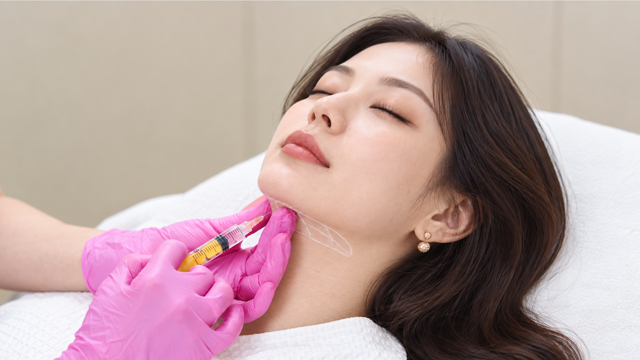
Stellate ganglion block is an injection-based procedure that delivers local anesthetic near the stellate ganglion, a group of sympathetic nerves located in the lower neck, temporarily interrupting certain sympathetic nerve signals.
Learn More